
Ownership graphs and the 50 Percent Rule
Follow blocked ownership through direct and indirect relationships.
Ownership can block an unlisted company
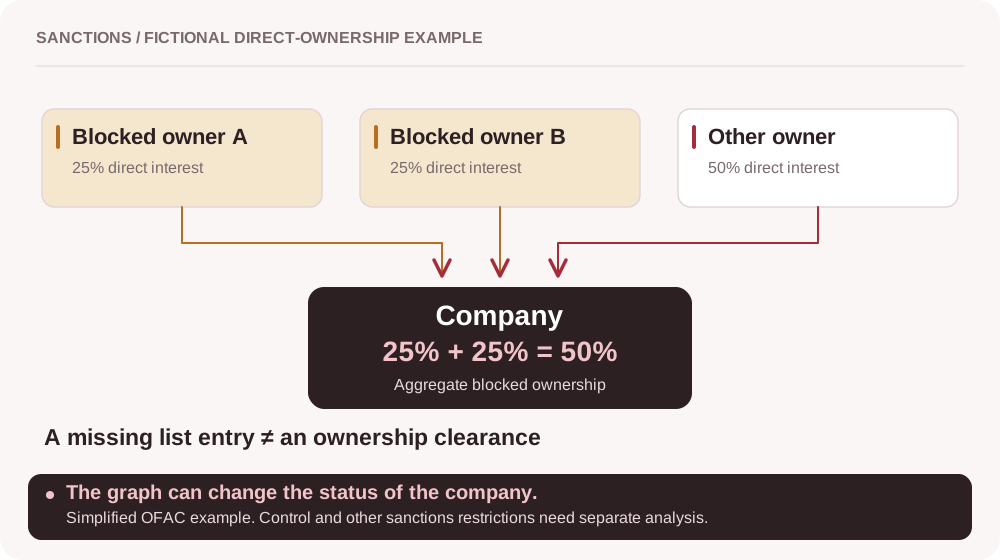
Enlarge to read every label and explore the connections
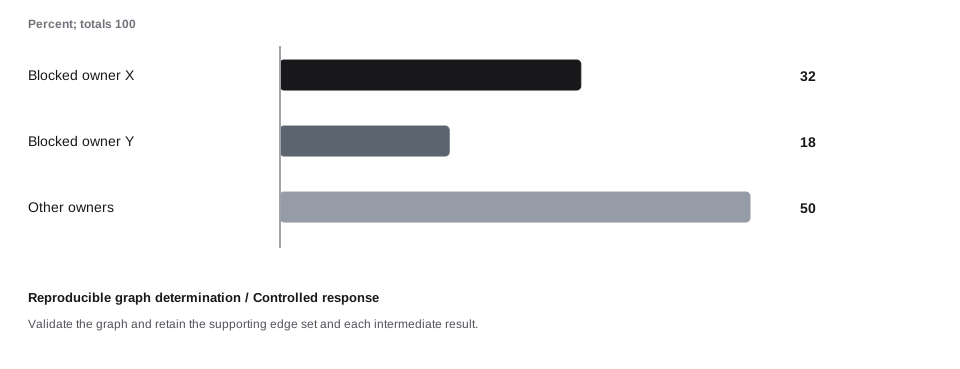
In this simplified U.S. example, two blocked owners each hold 25% of a company. Their direct interests aggregate to 50%.
Aggregate relevant interests on a common basis.
Retain dated evidence and avoid double counting.
Keep ownership and control analyses distinct.
The company is absent from the list. Two blocked owners each hold 25 percent. Looking only for the company name misses the legal consequence of the ownership structure. This is where a spreadsheet becomes a graph problem.
Aggregate relevant blocked ownership
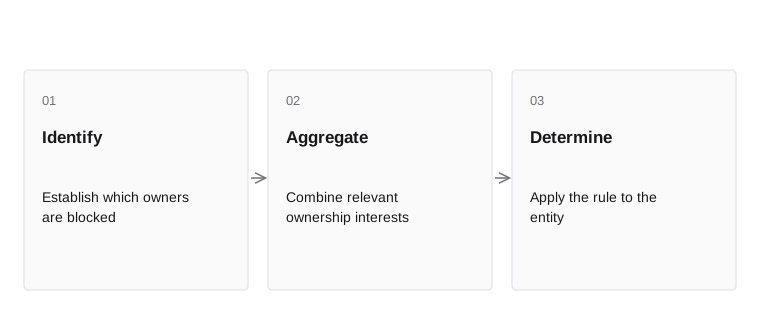
- IdentifyEstablish which owners are blocked
- AggregateCombine relevant ownership interests
- DetermineApply the rule to the entity
OFAC’s 50 Percent Rule treats entities owned, directly or indirectly, 50 percent or more in the aggregate by one or more blocked persons as blocked. The company does not need its own separate list entry for this consequence. Apply the rule within the relevant sanctions analysis.
In a simple direct-ownership example, two blocked people hold 25 percent each. Their combined ownership is 50 percent. Do not check each owner against 50 percent separately and conclude that neither matters. Preserve share classes and evidence where relevant; a simplified cap table may not capture every legal detail.
Aggregation is a legal ownership analysis, not a generic risk score. In the simplified U.S. example in this chapter, two blocked owners holding 25% each reach 50% in aggregate. The implementation must identify the relevant owners and avoid counting the same interest twice through duplicated records. Percentages need a common basis and a clear effective date.
A spreadsheet total is only as reliable as the ownership facts it represents. If one source describes voting interests and another describes economic interests, combining them without review can produce a false precision. Record the nature and source of each holding, preserve uncertain or incomplete information, and escalate structures that exceed the approved calculation method. The software should expose the unresolved issue rather than invent a convenient percentage.
Inside the mechanism. For the simplified U.S. OFAC 50 Percent Rule example, combine relevant ownership interests of blocked persons at the entity being assessed. Keep each legal interest unique so duplicate documents do not count the same stake twice. The calculation needs supported percentages, effective dates, and identity resolution. Do not infer a precise aggregate from missing or conflicting stakes. Other restrictions and jurisdiction-specific rules require their own analysis.
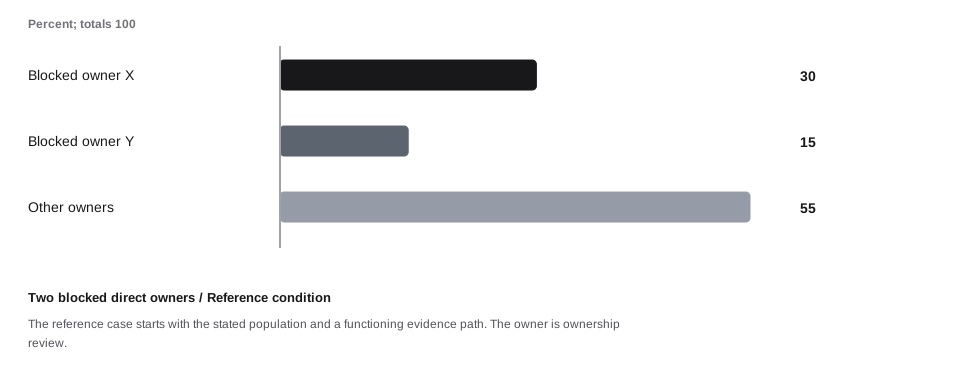
A concrete example. A customer’s intermediate parent has two assumed blocked owners. Their separate interests must be evaluated together under the stated ownership rule. Assumed blocked owners hold 30% and 15% of Intermediate A. Their aggregate is 45%. A then owns 60% of Customer B. The worked determination is: Not shown blocked by this ownership calculation alone. The simple economic product of 27.00% is retained only to show why multiplication and rule-specific status propagation are different operations.
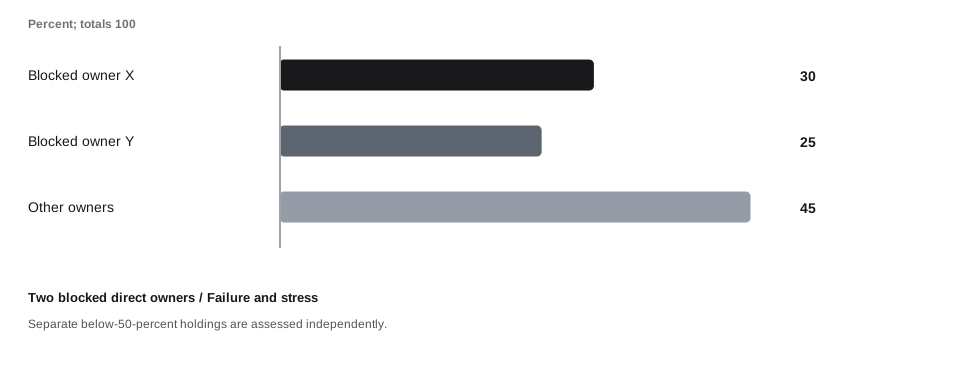
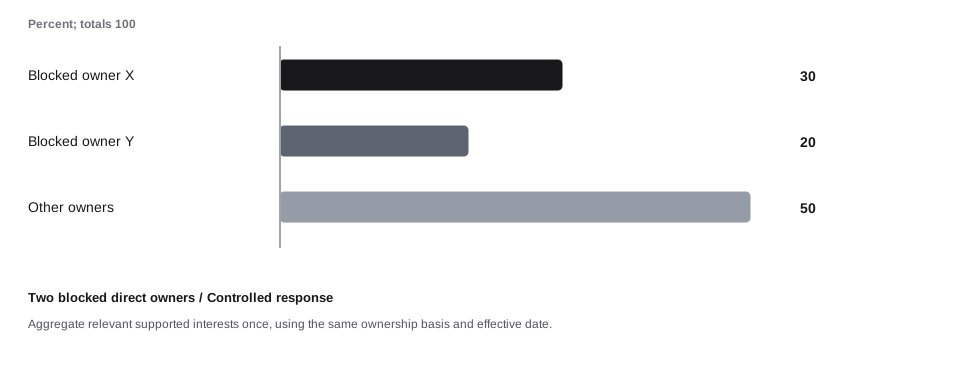
When the assumption fails. Separate below-50-percent holdings are assessed independently. Aggregate relevant supported interests once, using the same ownership basis and effective date. The following worked sequence shows the reference condition, a stress condition, and a response condition with explicit synthetic data. These are comparative assumptions, not measured causal effects.
A customer’s intermediate parent has two assumed blocked owners. Their separate interests must be evaluated together under the stated ownership rule.
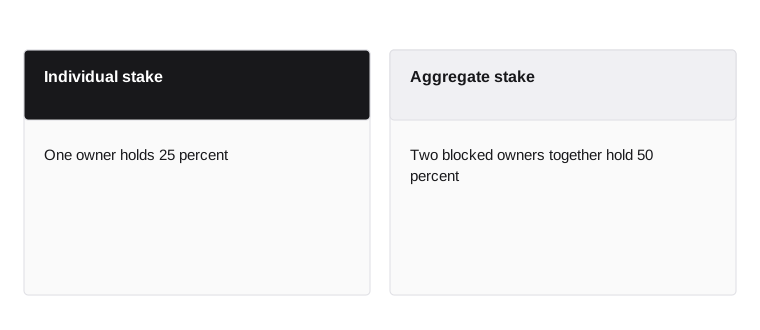
- Individual stake
- One owner holds 25 percent
- Aggregate stake
- Two blocked owners together hold 50 percent
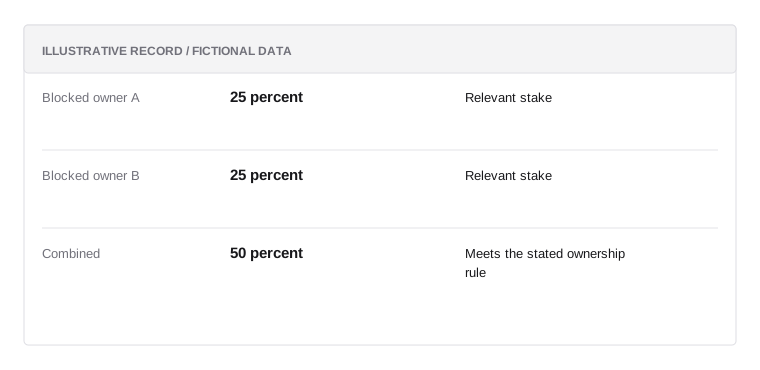
Direct ownership example
Illustrative data; not a real customer record or a prescribed policy.
- Blocked owner A25 percent
Relevant stake
- Blocked owner B25 percent
Relevant stake
- Combined50 percent
Meets the stated ownership rule
Separate sub-50-percent stakes can meet the rule together
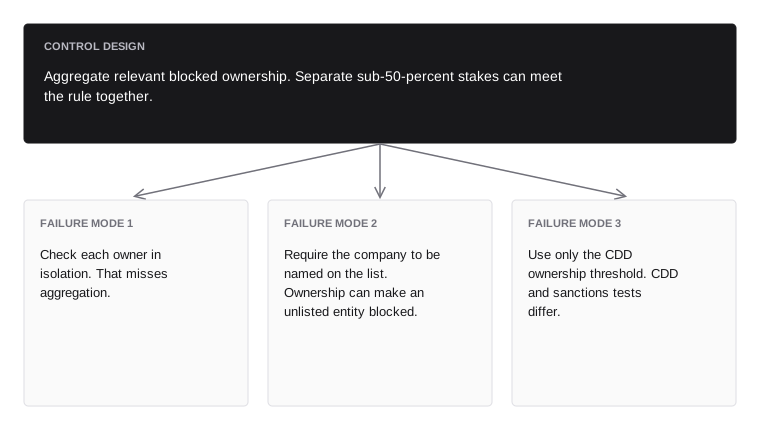
Aggregate relevant blocked ownership. Separate sub-50-percent stakes can meet the rule together.
- Failure mode 1avoid
- Check each owner in isolation. That misses aggregation.
- Failure mode 2avoid
- Require the company to be named on the list. Ownership can make an unlisted entity blocked.
- Failure mode 3avoid
- Use only the CDD ownership threshold. CDD and sanctions tests differ.
Propagate blocked status through the graph
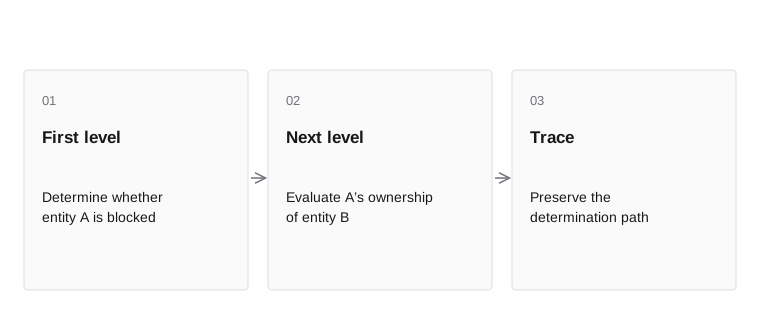
- First levelDetermine whether entity A is blocked
- Next levelEvaluate A’s ownership of entity B
- TracePreserve the determination path
Indirect ownership under OFAC’s guidance is not always a simple multiplication of economic percentages along a path. If a blocked person owns 50 percent of A, and A owns 50 percent of B, OFAC’s example treats B as blocked. A becomes a blocked entity and its ownership of B matters.
An implementation should follow the legal rule with a reviewed graph procedure. Preserve the sequence of determinations and the supporting edges. A naive 0.50 times 0.50 calculation gives 25 percent economic look-through and can produce the wrong sanctions conclusion in this example.
Propagation is different from multiplying every path and comparing only the final product with 50%. In the simplified chain already described, blocked persons own 50% of A and A owns 50% of B. Once A is treated as blocked under the rule, its holding in B matters in that capacity. A naive 25% end-to-end product misses this step. Real structures can also contain cycles, changing ownership, and overlapping paths. Keep a reason trail for each status change and use specialist review when the structure is not covered by the approved method.
Inside the mechanism. Status propagation differs from multiplying economic interests along a path. If an entity meets the relevant blocked-ownership rule, its ownership in another entity must be assessed using that status. A simple product can therefore miss a downstream blocked entity. Evaluate the applicable rule at each supported layer and retain the intermediate determinations. Complex cycles, overlapping interests, and incomplete graphs need a validated method and appropriate review.
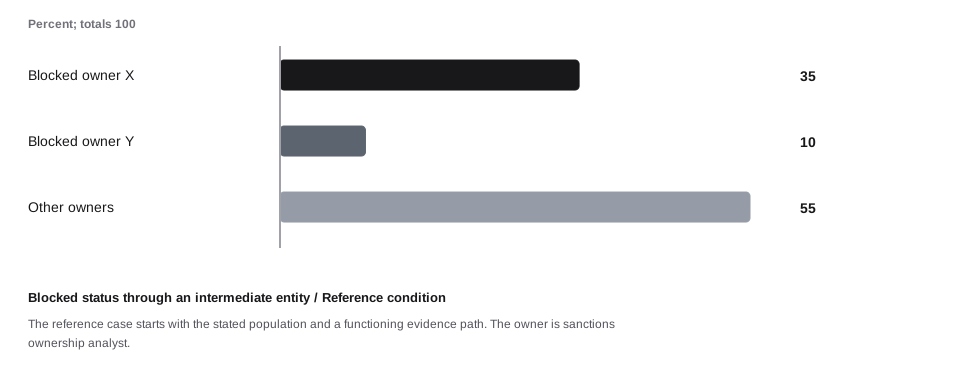
A concrete example. A qualifying blocked intermediate entity holds a majority interest in the customer. Simple multiplication of end-to-end economic percentages can answer the wrong question. Assumed blocked owners hold 35% and 10% of Intermediate A. Their aggregate is 45%. A then owns 55% of Customer B. The worked determination is: Not shown blocked by this ownership calculation alone. The simple economic product of 24.75% is retained only to show why multiplication and rule-specific status propagation are different operations.
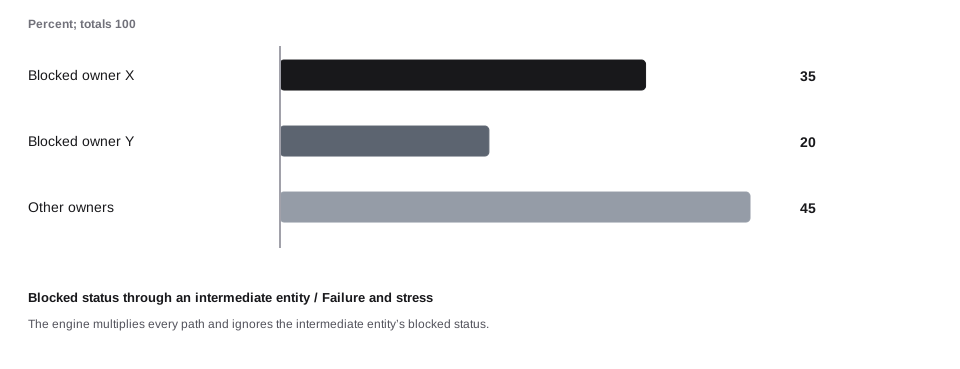
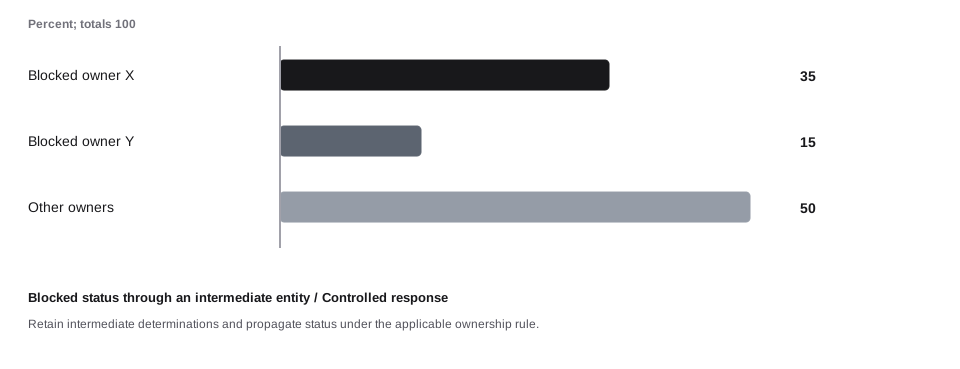
When the assumption fails. The engine multiplies every path and ignores the intermediate entity’s blocked status. Retain intermediate determinations and propagate status under the applicable ownership rule. The following worked sequence shows the reference condition, a stress condition, and a response condition with explicit synthetic data. These are comparative assumptions, not measured causal effects.
A qualifying blocked intermediate entity holds a majority interest in the customer. Simple multiplication of end-to-end economic percentages can answer the wrong question.
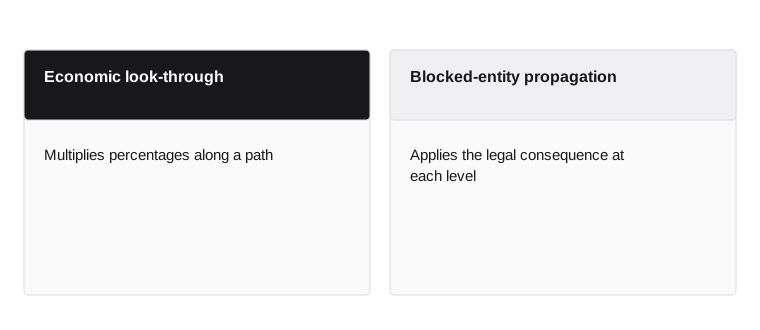
- Economic look-through
- Multiplies percentages along a path
- Blocked-entity propagation
- Applies the legal consequence at each level
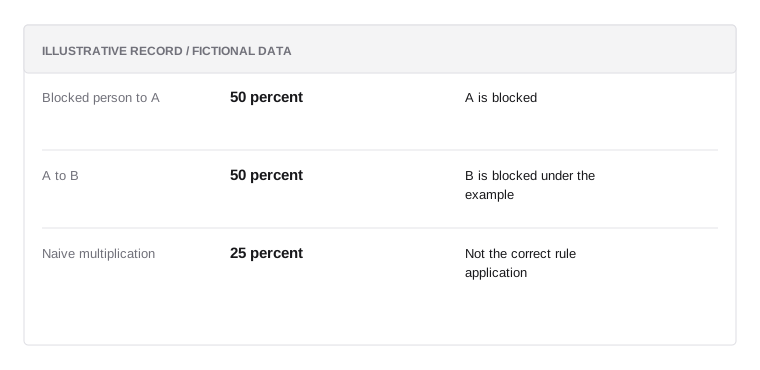
Indirect ownership example
Illustrative data; not a real customer record or a prescribed policy.
- Blocked person to A50 percent
A is blocked
- A to B50 percent
B is blocked under the example
- Naive multiplication25 percent
Not the correct rule application
Simple percentage multiplication can miss blocked entities
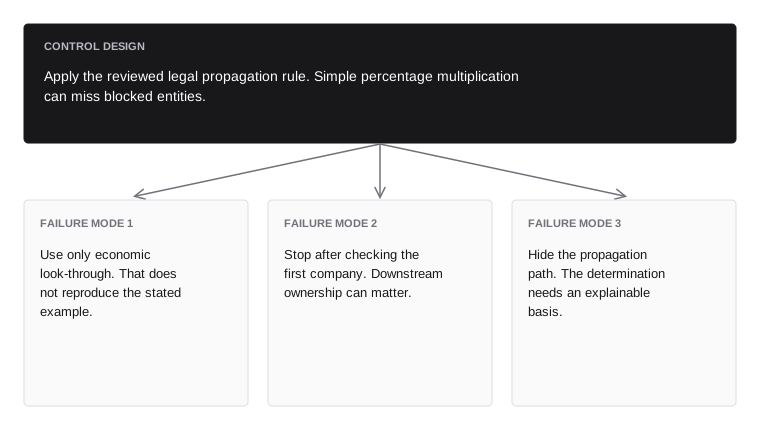
Apply the reviewed legal propagation rule. Simple percentage multiplication can miss blocked entities.
- Failure mode 1avoid
- Use only economic look-through. That does not reproduce the stated example.
- Failure mode 2avoid
- Stop after checking the first company. Downstream ownership can matter.
- Failure mode 3avoid
- Hide the propagation path. The determination needs an explainable basis.
Keep control distinct from the ownership rule
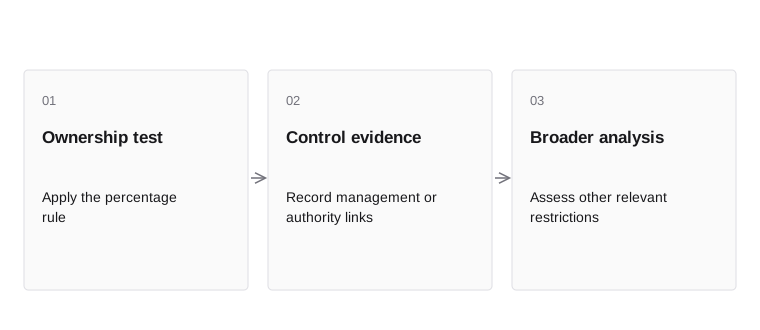
- Ownership testApply the percentage rule
- Control evidenceRecord management or authority links
- Broader analysisAssess other relevant restrictions
OFAC explains that the 50 Percent Rule concerns ownership rather than control alone. Control by a blocked person can still raise concerns, and other sanctions rules or dealings involving that person can matter. Do not turn control evidence into an automatic ownership percentage.
Store control edges separately and route them for the appropriate analysis. This preserves a useful distinction: an entity may not be automatically blocked by this ownership rule while a proposed transaction still presents a prohibited dealing or another issue. A single blocked boolean without a reason cannot express those differences.
Inside the mechanism. Control can exist without meeting a particular ownership percentage. Store management, voting, contractual, and ownership relationships as different edge types. The OFAC ownership illustration is not a general algorithm for every control-based restriction in every jurisdiction. A result below an ownership threshold does not establish that all sanctions questions are resolved. Preserve the exact rule scope and any separate control or activity concerns.
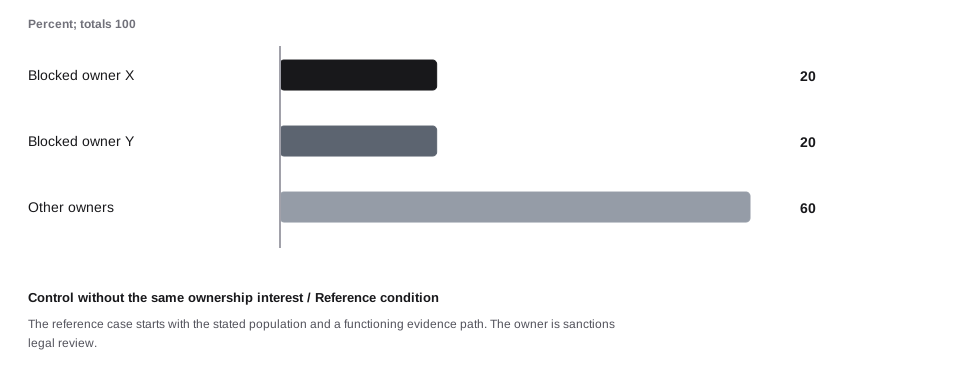
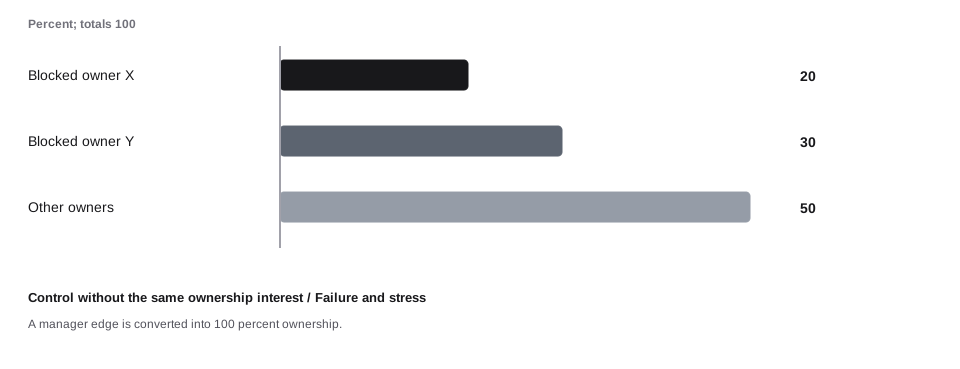
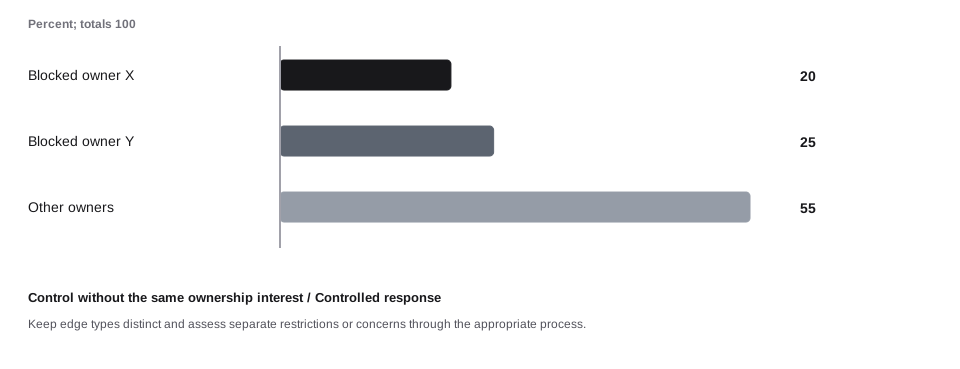
A concrete example. Management authority and ownership are different relationships. A control concern may need legal review without becoming a fabricated percentage in the ownership formula. Assumed blocked owners hold 20% and 20% of Intermediate A. Their aggregate is 40%. A then owns 70% of Customer B. The worked determination is: Not shown blocked by this ownership calculation alone. The simple economic product of 28.00% is retained only to show why multiplication and rule-specific status propagation are different operations.
When the assumption fails. A manager edge is converted into 100 percent ownership. Keep edge types distinct and assess separate restrictions or concerns through the appropriate process. The following worked sequence shows the reference condition, a stress condition, and a response condition with explicit synthetic data. These are comparative assumptions, not measured causal effects.
Management authority and ownership are different relationships. A control concern may need legal review without becoming a fabricated percentage in the ownership formula.
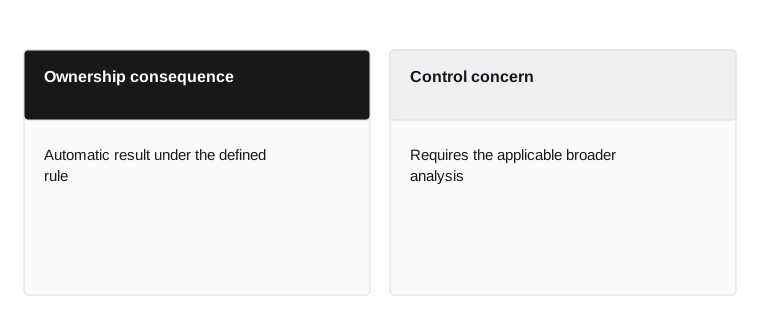
- Ownership consequence
- Automatic result under the defined rule
- Control concern
- Requires the applicable broader analysis
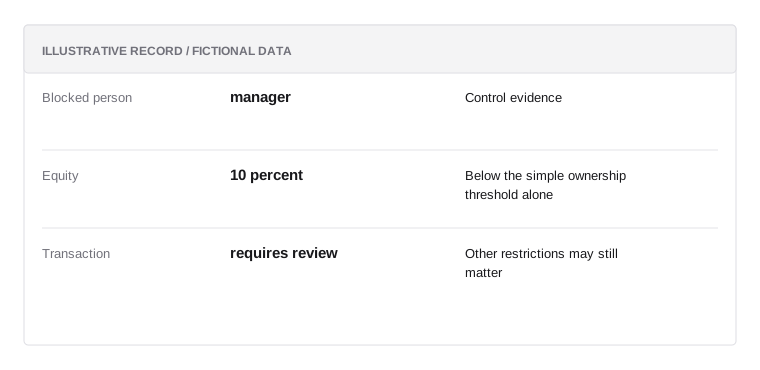
Control relationship
Illustrative data; not a real customer record or a prescribed policy.
- Blocked personmanager
Control evidence
- Equity10 percent
Below the simple ownership threshold alone
- Transactionrequires review
Other restrictions may still matter
Not meeting one test does not establish universal clearance
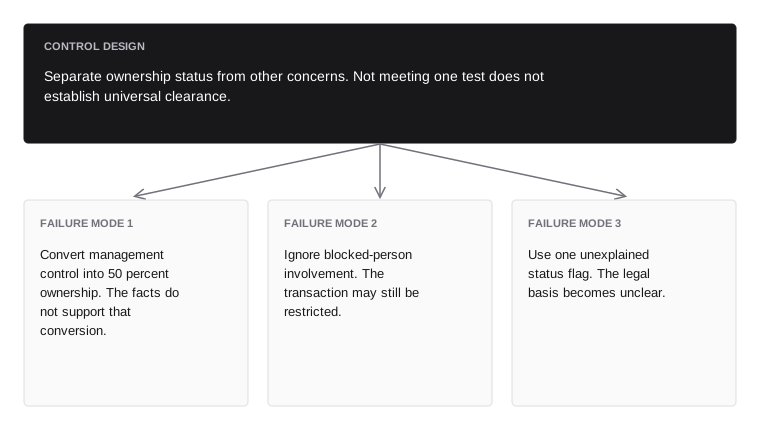
Separate ownership status from other concerns. Not meeting one test does not establish universal clearance.
- Failure mode 1avoid
- Convert management control into 50 percent ownership. The facts do not support that conversion.
- Failure mode 2avoid
- Ignore blocked-person involvement. The transaction may still be restricted.
- Failure mode 3avoid
- Use one unexplained status flag. The legal basis becomes unclear.
Handle incomplete and changing ownership
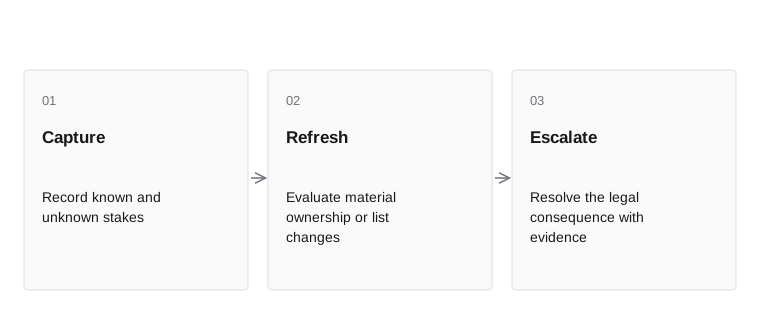
- CaptureRecord known and unknown stakes
- RefreshEvaluate material ownership or list changes
- EscalateResolve the legal consequence with evidence
Ownership information may be incomplete, dated, or contradictory. Record unknown portions of the graph rather than allocating them to a safe category. A missing parent company can conceal the relevant relationship.
Use a documented evidence request and escalation process. Reassess when ownership changes or when list designations affect an owner. Changes to previously blocked property can require a different analysis from future transactions after a valid ownership change. Do not automatically release restricted property because a customer submits a new cap table; the legal and evidentiary conditions need review.
Inside the mechanism. Unknown percentages should remain unknown. Record which document is missing, which sources conflict, and what decision authority applies while the issue is unresolved. A new ownership event can affect multiple downstream entities; identify the affected subgraph rather than refreshing only the original customer. Preserve old versions so past decisions remain explainable under the facts then available.
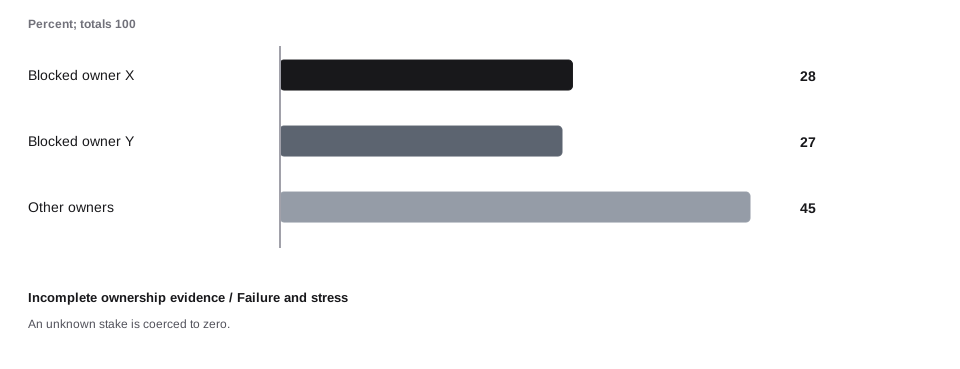
A concrete example. One filing conflicts with another and the effective holding is unresolved. The graph must be able to express uncertainty rather than inventing a precise clear result. Assumed blocked owners hold 28% and 17% of Intermediate A. Their aggregate is 45%. A then owns 65% of Customer B. The worked determination is: Not shown blocked by this ownership calculation alone. The simple economic product of 29.25% is retained only to show why multiplication and rule-specific status propagation are different operations.
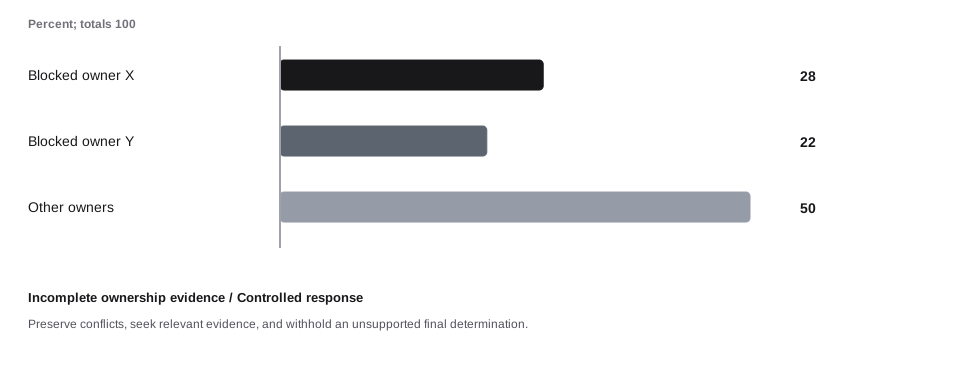
When the assumption fails. An unknown stake is coerced to zero. Preserve conflicts, seek relevant evidence, and withhold an unsupported final determination. The following worked sequence shows the reference condition, a stress condition, and a response condition with explicit synthetic data. These are comparative assumptions, not measured causal effects.
One filing conflicts with another and the effective holding is unresolved. The graph must be able to express uncertainty rather than inventing a precise clear result.
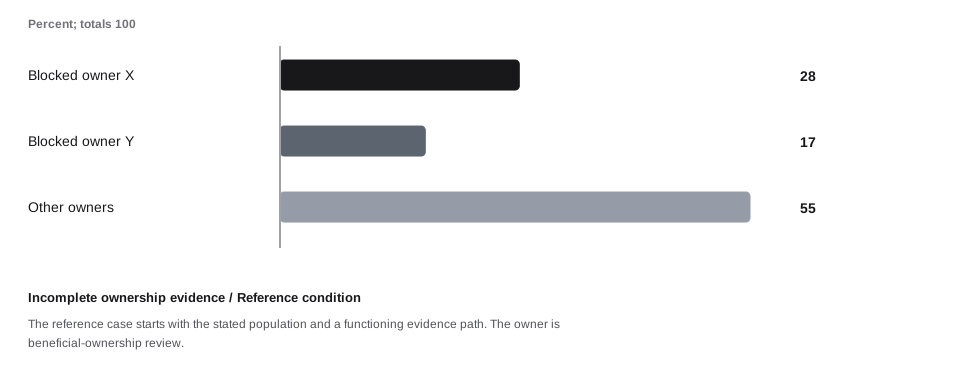
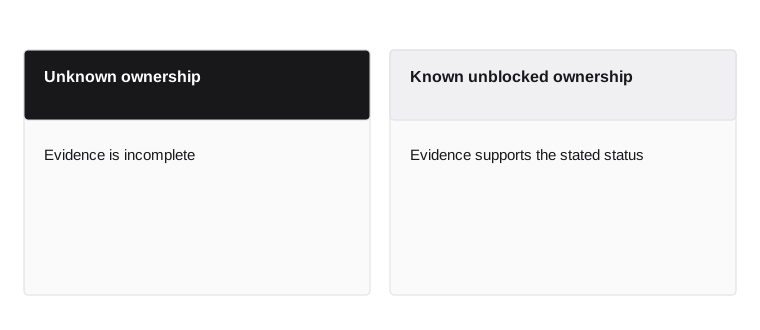
- Unknown ownership
- Evidence is incomplete
- Known unblocked ownership
- Evidence supports the stated status
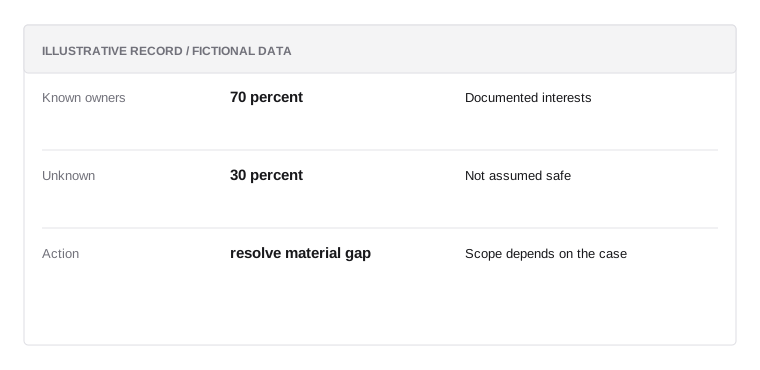
Incomplete cap table
Illustrative data; not a real customer record or a prescribed policy.
- Known owners70 percent
Documented interests
- Unknown30 percent
Not assumed safe
- Actionresolve material gap
Scope depends on the case
Missing information is not a clean result
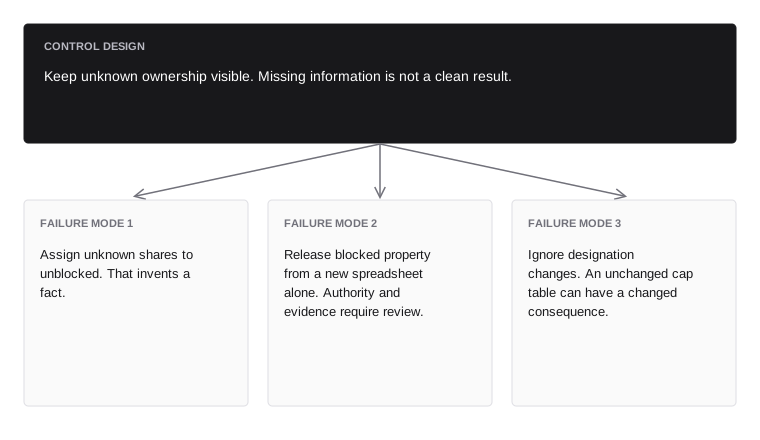
Keep unknown ownership visible. Missing information is not a clean result.
- Failure mode 1avoid
- Assign unknown shares to unblocked. That invents a fact.
- Failure mode 2avoid
- Release blocked property from a new spreadsheet alone. Authority and evidence require review.
- Failure mode 3avoid
- Ignore designation changes. An unchanged cap table can have a changed consequence.
Make the calculation auditable
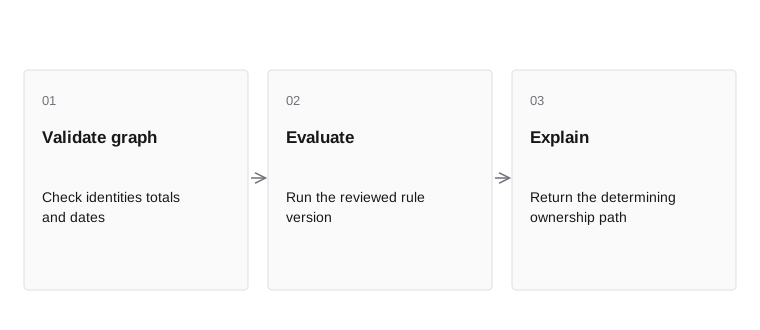
- Validate graphCheck identities totals and dates
- EvaluateRun the reviewed rule version
- ExplainReturn the determining ownership path
An ownership engine needs entity identifiers, dated edges, source documents, determination rules, and reproducible output. Handle cycles, duplicate edges, and conflicting share totals explicitly. A graph that totals 140 percent ownership needs investigation before calculation.
Use reviewed test cases covering direct aggregation, indirect propagation, non-blocked intermediaries, unknown stakes, and changes over time. Keep the engine version with each result. The tool supports a legal determination; it does not replace the need to establish that the graph and rule interpretation apply to the actual transaction.
Inside the mechanism. An auditable calculation includes the source graph, unique legal interests, effective dates, rule version, intermediate aggregates, determination, and reviewer or system authority. Validate impossible totals, duplicate edges, unresolved identities, and unsupported relationship types. A diagram is a useful view, but the underlying structured record is the reproducible evidence. Keep the conclusion and its limits attached when the graph is exported.
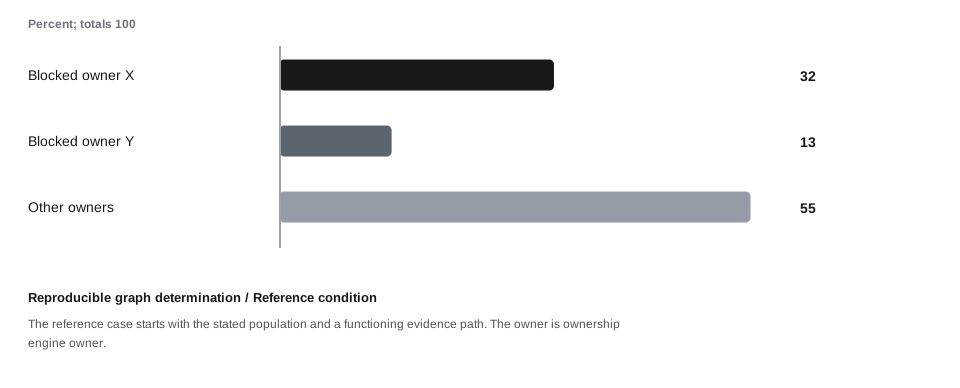
A concrete example. The reviewer needs to reconstruct which edges, dates, identities, and rule version produced a conclusion. Numeric output alone cannot explain an ownership assessment. Assumed blocked owners hold 32% and 13% of Intermediate A. Their aggregate is 45%. A then owns 80% of Customer B. The worked determination is: Not shown blocked by this ownership calculation alone. The simple economic product of 36.00% is retained only to show why multiplication and rule-specific status propagation are different operations.
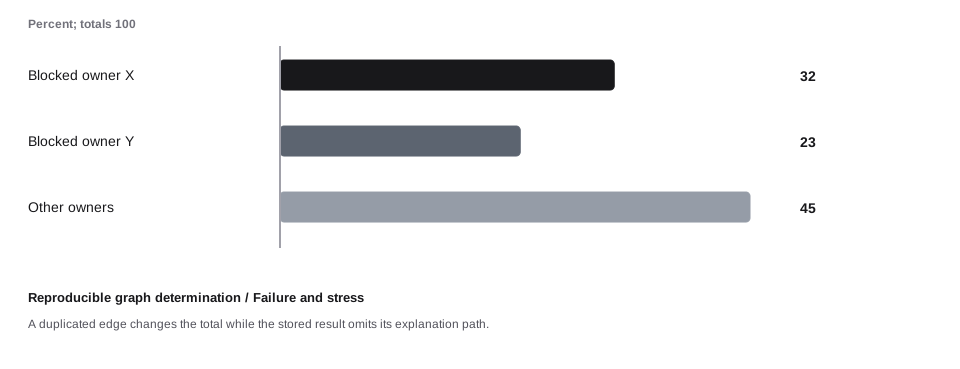
When the assumption fails. A duplicated edge changes the total while the stored result omits its explanation path. Validate the graph and retain the supporting edge set and each intermediate result. The following worked sequence shows the reference condition, a stress condition, and a response condition with explicit synthetic data. These are comparative assumptions, not measured causal effects.
The reviewer needs to reconstruct which edges, dates, identities, and rule version produced a conclusion. Numeric output alone cannot explain an ownership assessment.
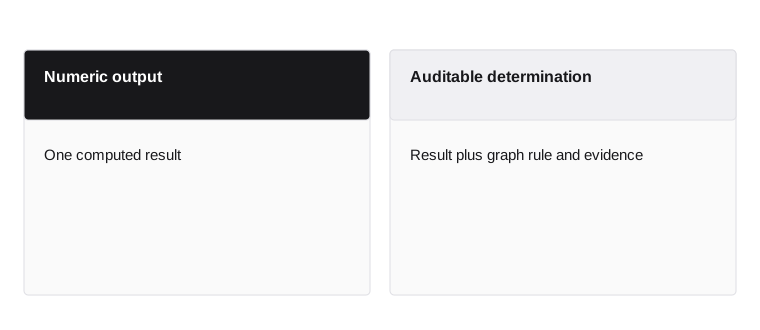
- Numeric output
- One computed result
- Auditable determination
- Result plus graph rule and evidence
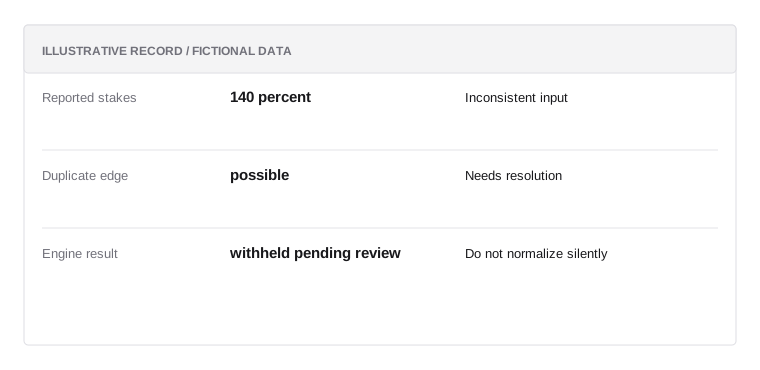
Graph validation
Illustrative data; not a real customer record or a prescribed policy.
- Reported stakes140 percent
Inconsistent input
- Duplicate edgepossible
Needs resolution
- Engine resultwithheld pending review
Do not normalize silently
Bad graphs can produce precise wrong answers
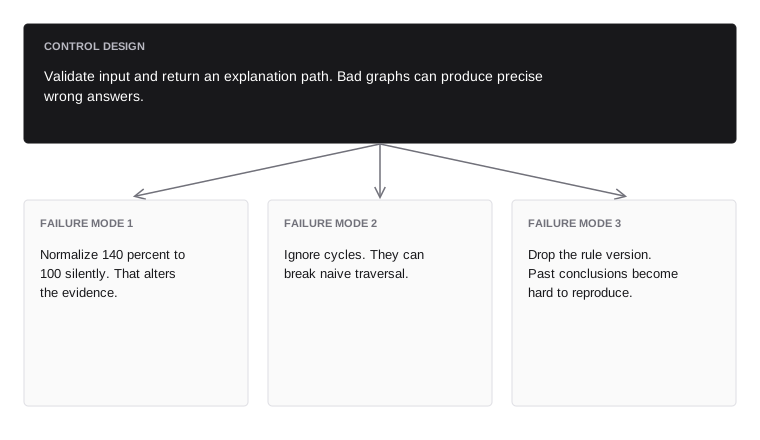
Validate input and return an explanation path. Bad graphs can produce precise wrong answers.
- Failure mode 1avoid
- Normalize 140 percent to 100 silently. That alters the evidence.
- Failure mode 2avoid
- Ignore cycles. They can break naive traversal.
- Failure mode 3avoid
- Drop the rule version. Past conclusions become hard to reproduce.
Chapter connections
This chapter builds on Screening engines and match resolution. Continue with Trade, corridors, and restricted activity to follow the next part of the system. Use the glossary for terminology and risk mathematics for formulas and worked calculations.