
Privacy, payment data, and secure evidence
Protect the information that makes risk decisions possible.
Move useful evidence, not copies of secrets
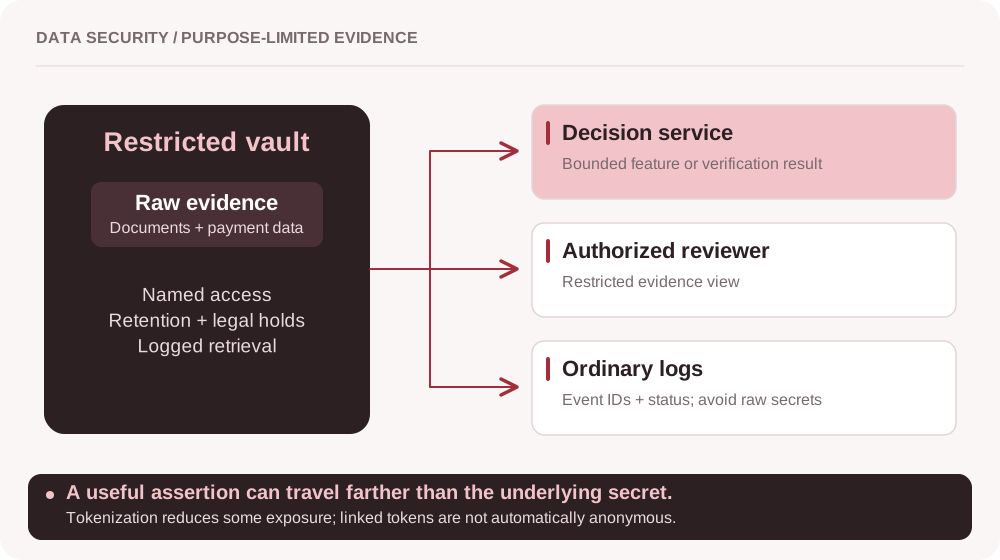
Enlarge to read every label and explore the connections
A risk service often needs a limited fact rather than a raw credential. Keep sensitive material behind controlled access and ordinary logs minimal.
Choose the minimum data needed for each purpose.
Keep raw secrets inside a controlled environment.
Apply access, retention, and legal-hold rules.
The fraud team wants more data. The security team wants fewer copies. Both can be right. The design task is to make useful evidence available to the right control without turning every log into a customer dossier.
Map data to a purpose
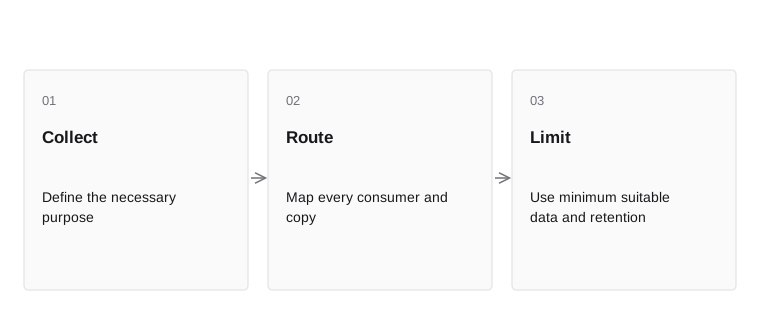
- CollectDefine the necessary purpose
- RouteMap every consumer and copy
- LimitUse minimum suitable data and retention
A data inventory should state what is collected, why it is needed, where it moves, who can access it, and how long it remains. Separate required records from optional analytical data. The relevant privacy and security duties depend on the entity, product, and jurisdiction.
Use purpose-limited datasets and documented access. A fraud feature pipeline may need a count or token rather than a raw document. Challenge new fields at the point of collection, when removal is easiest. Once a sensitive field enters logs, exports, and backups, reducing its spread becomes much harder.
Data minimization is an architecture choice. If a decision needs to know whether a credential passed a check, it may not need to copy the raw credential into every downstream event. A purpose-built reference or limited assertion can reduce exposure while preserving the evidence necessary for review. The design must still account for who can retrieve the underlying material and under what conditions.
Logs deserve particular attention because they often collect information outside the intended product database. Error messages, debugging payloads, screenshots, and support exports can create secondary stores of sensitive data. Apply data classification and access rules to these paths. A secure primary database does not compensate for unrestricted copies in ordinary operational tools.
Inside the mechanism. Map data to a specific task and identify who needs the raw value, a derived attribute, or only a reference. Collection, use, sharing, retention, and deletion are separate decisions. Minimize unnecessary copies and preserve provenance for the evidence that remains. A field that is useful for one investigation should not automatically become available to every operational workflow or model.
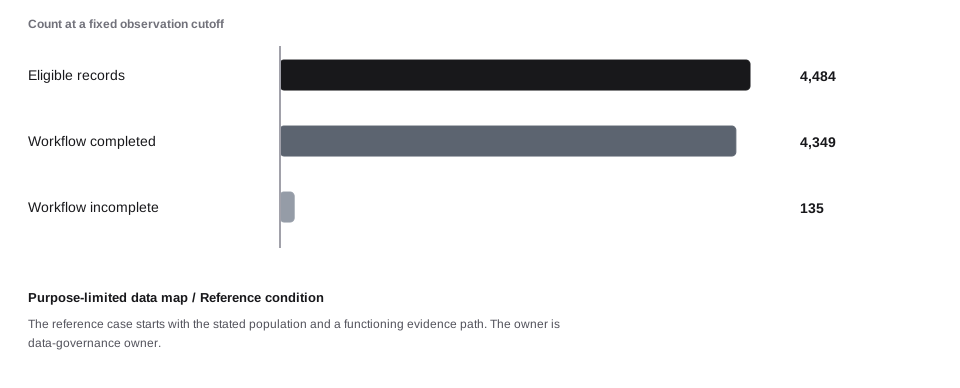
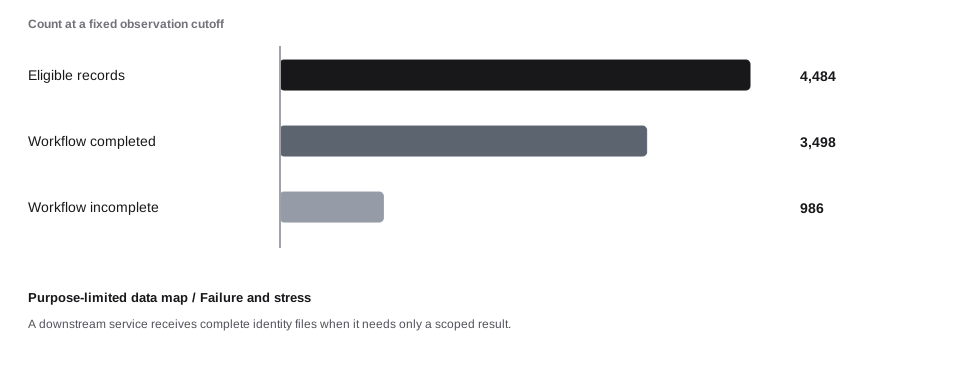
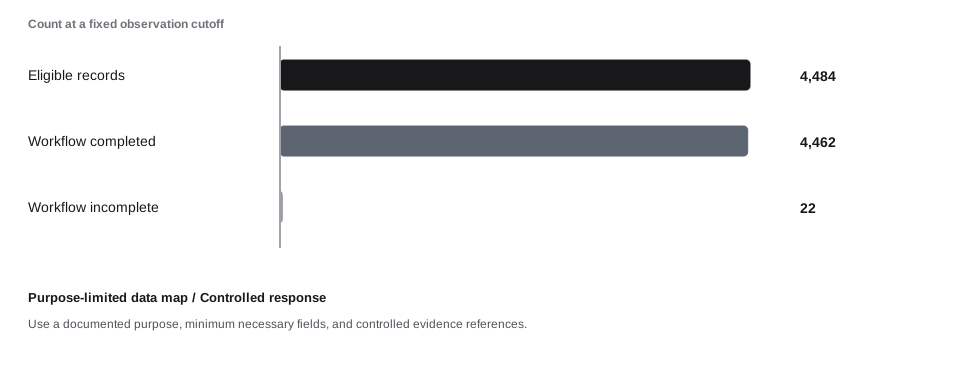
A concrete example. The system needs particular facts for defined decisions. Copying raw evidence to every consumer increases exposure and makes retention harder to control. The case identifies 4,484 eligible records from a source population of 7,600. The required workflow completes for 4,349, but 65 completed records miss the illustrative internal target. Another 135 remain incomplete. Communication evidence covers 4,306 generated notices. Scope, completion, timeliness, and delivery are four separate properties of the customer outcome.
When the assumption fails. A downstream service receives complete identity files when it needs only a scoped result. Use a documented purpose, minimum necessary fields, and controlled evidence references. The following worked sequence shows the reference condition, a stress condition, and a response condition with explicit synthetic data. These are comparative assumptions, not measured causal effects.
The system needs particular facts for defined decisions. Copying raw evidence to every consumer increases exposure and makes retention harder to control.
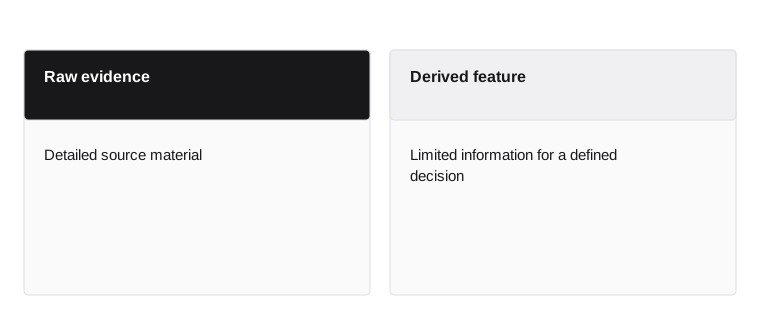
- Raw evidence
- Detailed source material
- Derived feature
- Limited information for a defined decision
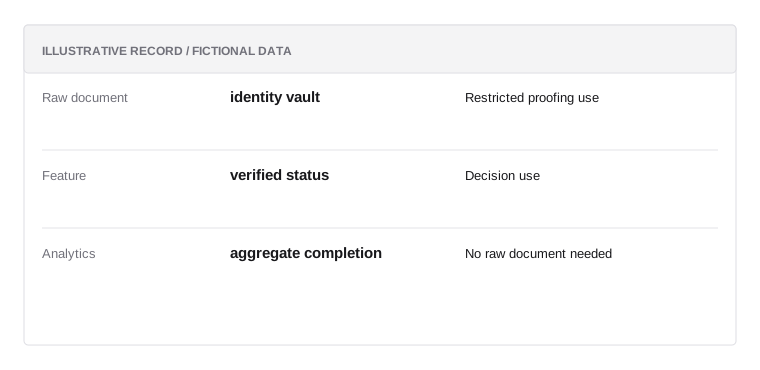
Data-purpose map
Illustrative data; not a real customer record or a prescribed policy.
- Raw documentidentity vault
Restricted proofing use
- Featureverified status
Decision use
- Analyticsaggregate completion
No raw document needed
Many controls need a result rather than raw evidence
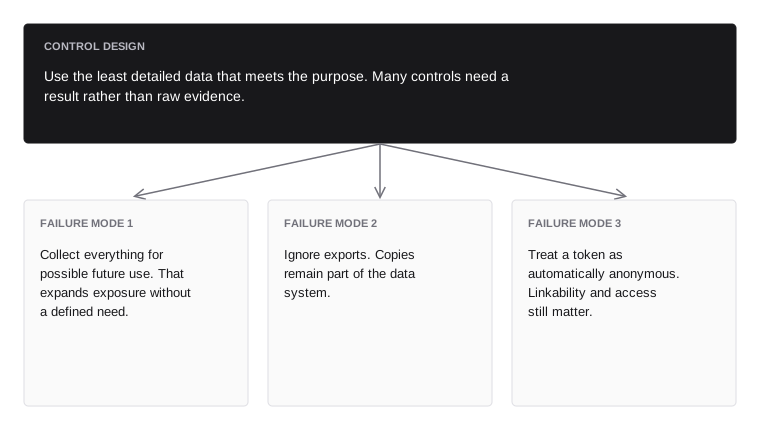
Use the least detailed data that meets the purpose. Many controls need a result rather than raw evidence.
- Failure mode 1avoid
- Collect everything for possible future use. That expands exposure without a defined need.
- Failure mode 2avoid
- Ignore exports. Copies remain part of the data system.
- Failure mode 3avoid
- Treat a token as automatically anonymous. Linkability and access still matter.
Keep payment secrets out of ordinary systems
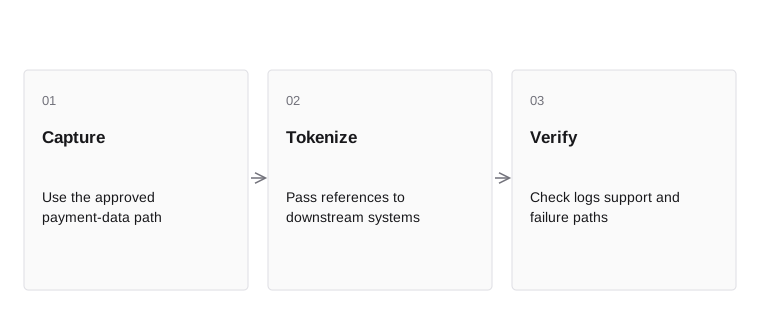
- CaptureUse the approved payment-data path
- TokenizePass references to downstream systems
- VerifyCheck logs support and failure paths
PCI DSS provides security requirements for environments that store, process, or transmit payment account data, with scope determined by the actual environment and applicable requirements. Tokenization and hosted collection can reduce exposure but do not automatically remove every responsibility.
Map where account data can enter: forms, logs, support attachments, webhooks, analytics, and error traces. Redact at the source. Do not store sensitive authentication data such as card verification codes after authorization where prohibited. Verify the actual integration rather than relying on a vendor badge as proof that your application cannot leak data.
Inside the mechanism. Payment secrets should not enter ordinary logs, analytics events, support transcripts, or general document stores. Tokenization can reduce exposure but does not make every surrounding system automatically out of scope for all security duties. Understand the actual data flow and access path. Test error handling and debugging paths because sensitive values often escape through exceptions rather than the normal success response.
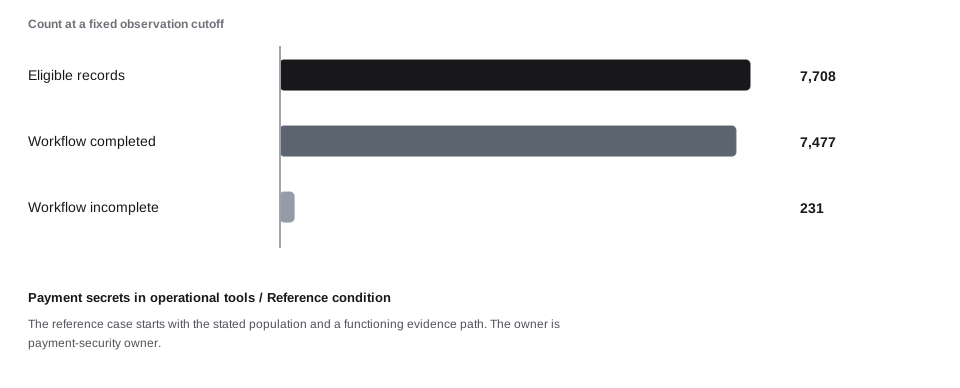
A concrete example. Logs, screenshots, support exports, and debugging payloads can become unintended stores of sensitive payment data. The primary database is only one part of the exposure. The case identifies 7,708 eligible records from a source population of 9,400. The required workflow completes for 7,477, but 112 completed records miss the illustrative internal target. Another 231 remain incomplete. Communication evidence covers 7,402 generated notices. Scope, completion, timeliness, and delivery are four separate properties of the customer outcome.
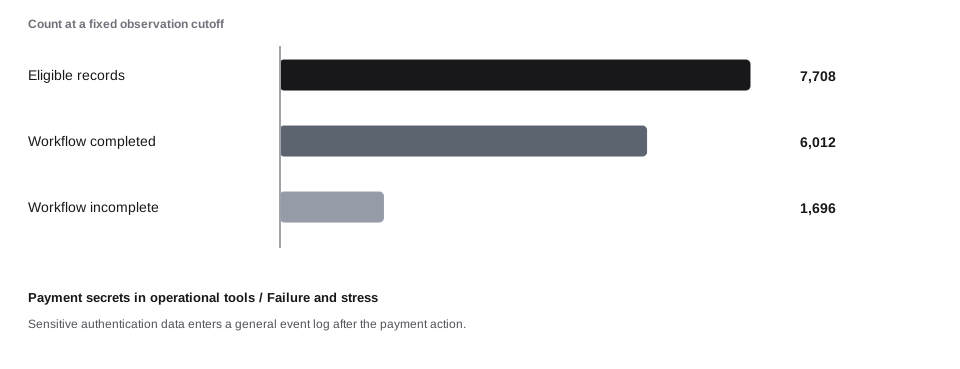
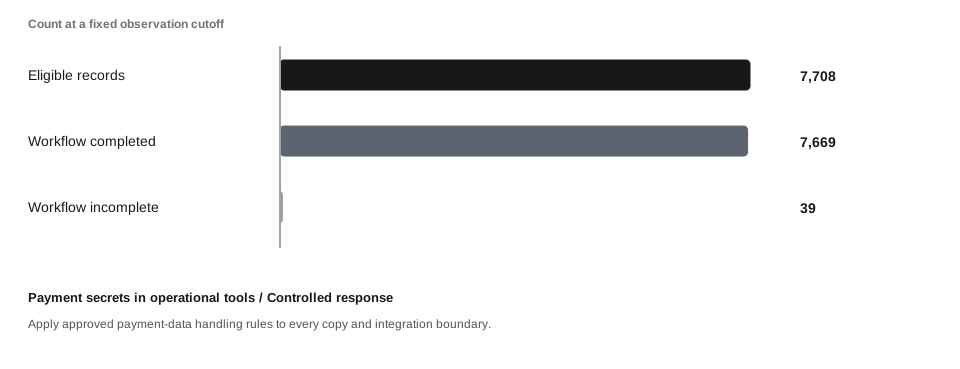
When the assumption fails. Sensitive authentication data enters a general event log after the payment action. Apply approved payment-data handling rules to every copy and integration boundary. The following worked sequence shows the reference condition, a stress condition, and a response condition with explicit synthetic data. These are comparative assumptions, not measured causal effects.
Logs, screenshots, support exports, and debugging payloads can become unintended stores of sensitive payment data. The primary database is only one part of the exposure.
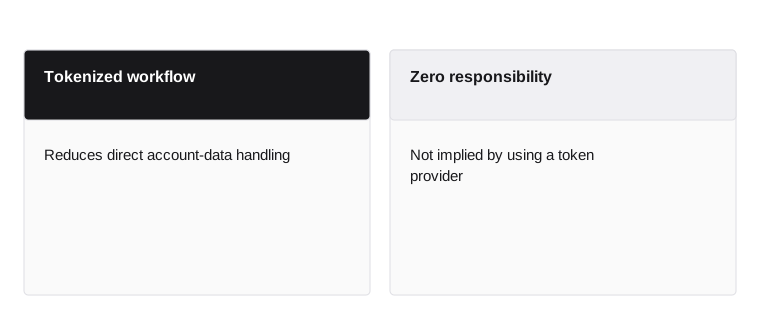
- Tokenized workflow
- Reduces direct account-data handling
- Zero responsibility
- Not implied by using a token provider
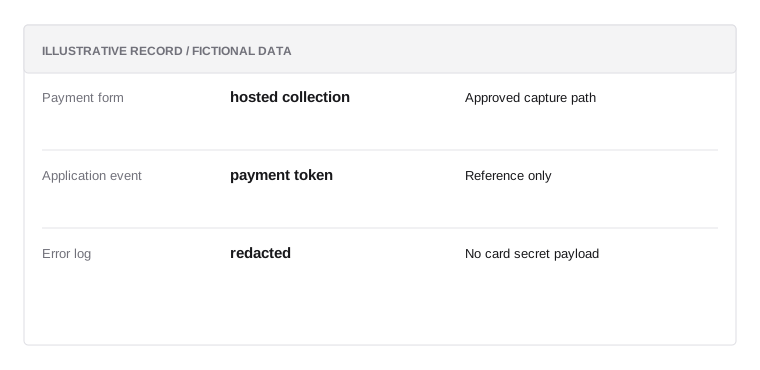
Logging boundary
Illustrative data; not a real customer record or a prescribed policy.
- Payment formhosted collection
Approved capture path
- Application eventpayment token
Reference only
- Error logredacted
No card secret payload
Failure logs and support tools are common overlooked routes
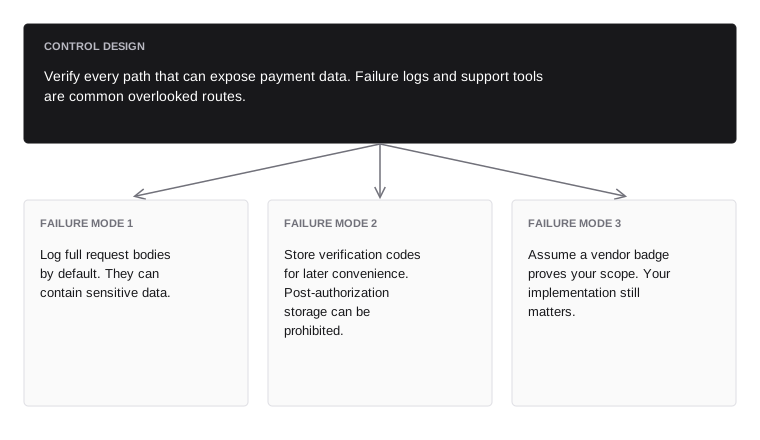
Verify every path that can expose payment data. Failure logs and support tools are common overlooked routes.
- Failure mode 1avoid
- Log full request bodies by default. They can contain sensitive data.
- Failure mode 2avoid
- Store verification codes for later convenience. Post-authorization storage can be prohibited.
- Failure mode 3avoid
- Assume a vendor badge proves your scope. Your implementation still matters.
Use least privilege and separation
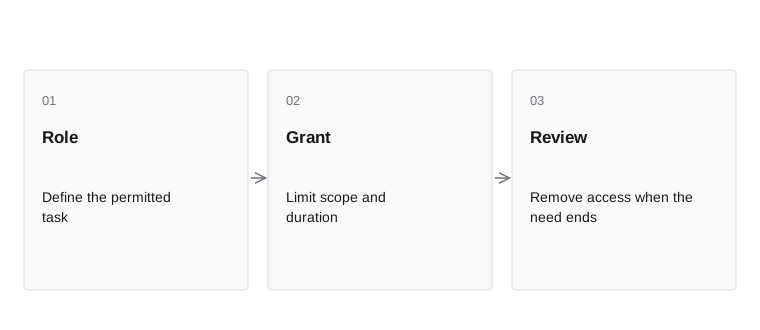
- RoleDefine the permitted task
- GrantLimit scope and duration
- ReviewRemove access when the need ends
Least privilege gives a role the access required for its task. Separation of duties prevents one actor from controlling every part of a sensitive operation. Apply both to customer evidence, rule changes, manual payouts, and restricted-fund releases.
Use server-side authorization and periodic access review. Time-bound elevated access should have a reason, approval, and audit trail. Monitor service accounts as well as people. A broadly privileged automation token can bypass careful human permissions. Test that removed roles lose access in active sessions and downstream tools.
Inside the mechanism. Least privilege applies to data and actions. Reading a case, changing a customer profile, releasing a hold, and moving money require different authority. Separate incompatible duties where the risk warrants it, and make emergency access scoped, time-bounded, and reviewable. A shared administrator account destroys attribution. Verify that revoked access no longer works at the system that executes the consequential action.
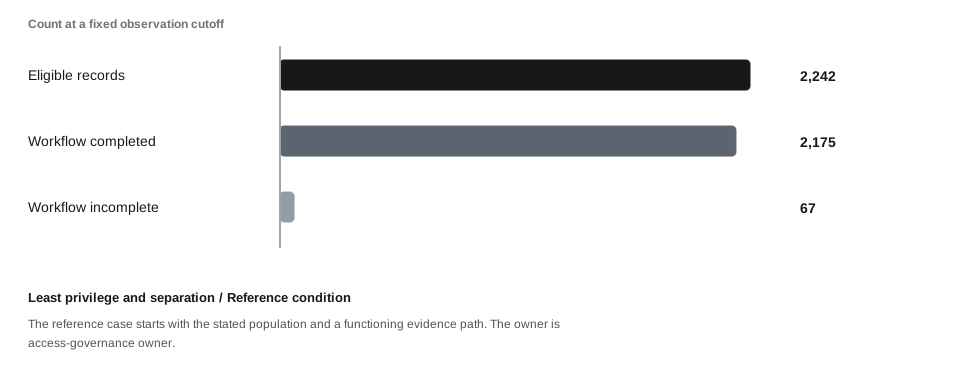
A concrete example. Reading evidence, proposing an action, approving release, and administering infrastructure are different authorities. Combining them without a reason increases both error and misuse risk. The case identifies 2,242 eligible records from a source population of 3,250. The required workflow completes for 2,175, but 33 completed records miss the illustrative internal target. Another 67 remain incomplete. Communication evidence covers 2,153 generated notices. Scope, completion, timeliness, and delivery are four separate properties of the customer outcome.
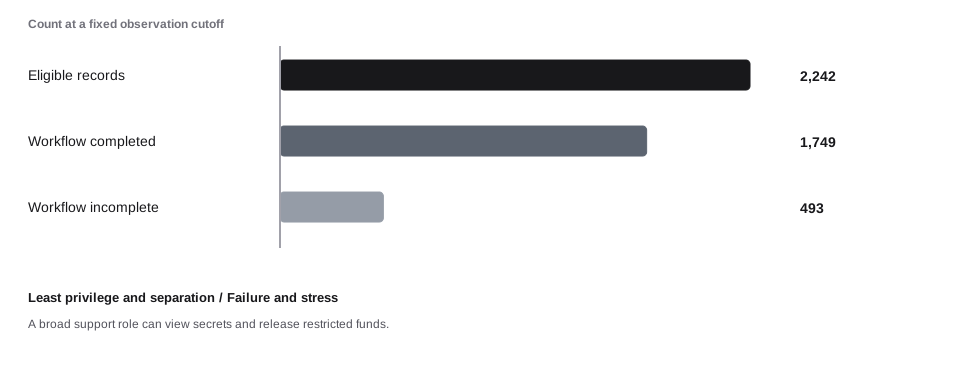
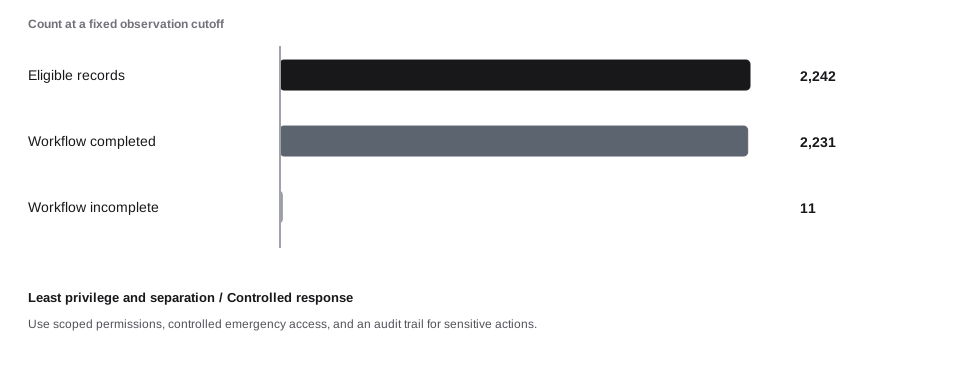
When the assumption fails. A broad support role can view secrets and release restricted funds. Use scoped permissions, controlled emergency access, and an audit trail for sensitive actions. The following worked sequence shows the reference condition, a stress condition, and a response condition with explicit synthetic data. These are comparative assumptions, not measured causal effects.
Reading evidence, proposing an action, approving release, and administering infrastructure are different authorities. Combining them without a reason increases both error and misuse risk.
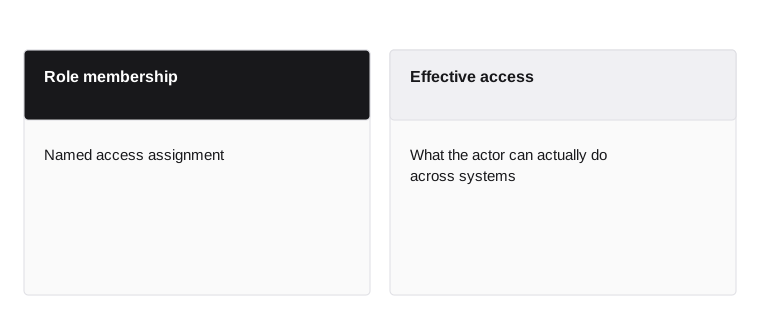
- Role membership
- Named access assignment
- Effective access
- What the actor can actually do across systems
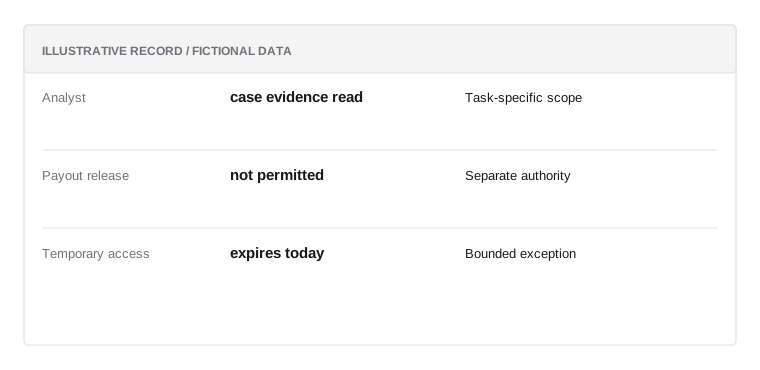
Access review
Illustrative data; not a real customer record or a prescribed policy.
- Analystcase evidence read
Task-specific scope
- Payout releasenot permitted
Separate authority
- Temporary accessexpires today
Bounded exception
Named roles can hide broader actual permissions
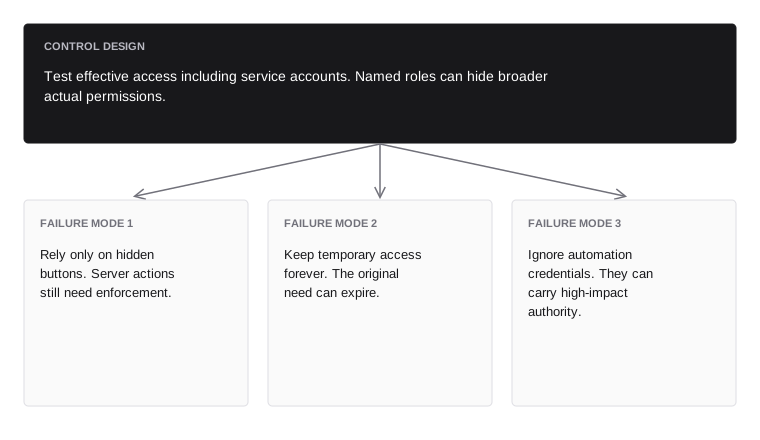
Test effective access including service accounts. Named roles can hide broader actual permissions.
- Failure mode 1avoid
- Rely only on hidden buttons. Server actions still need enforcement.
- Failure mode 2avoid
- Keep temporary access forever. The original need can expire.
- Failure mode 3avoid
- Ignore automation credentials. They can carry high-impact authority.
Define retention deletion and legal holds
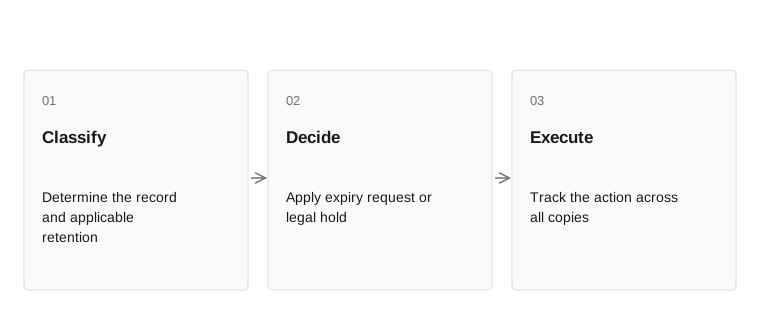
- ClassifyDetermine the record and applicable retention
- DecideApply expiry request or legal hold
- ExecuteTrack the action across all copies
Retention should follow applicable duties and approved purpose. A deletion request, account closure, or policy expiry can trigger different handling depending on legal requirements and holds. Implement the decision as a recorded workflow.
Map deletion across primary stores, search indexes, caches, exports, and backups. Some systems remove data through scheduled expiry rather than immediate physical deletion; document the behavior accurately. A legal hold should be scoped and reviewed, not used as a universal reason to keep everything forever. Preserve evidence that the lifecycle action completed as designed.
Deletion is not a single database command. A record can exist in indexes, derived features, object storage, backups, provider systems, and review exports. Map those copies and define how retention, legal holds, and deletion apply to each. A legal hold may suspend normal deletion for relevant evidence, while unrelated data can remain subject to its ordinary schedule. Keep an auditable record of the decision and execution without retaining the very sensitive content that the deletion was intended to remove.
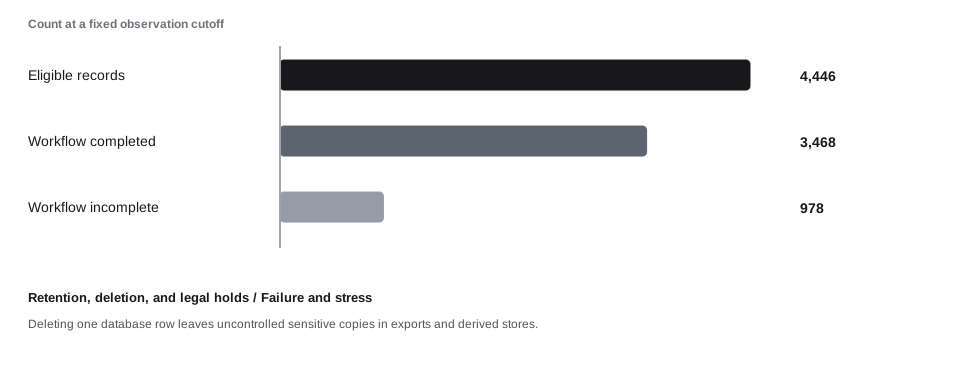
Inside the mechanism. Retention and deletion need a lifecycle view across primary stores, indexes, exports, backups, and vendors. A legal hold or other applicable requirement can change the permitted action for a specific record population. Record the basis, scope, and execution evidence. Deleting a customer row while retaining unrestricted copies in analyst exports does not accomplish the intended data control.
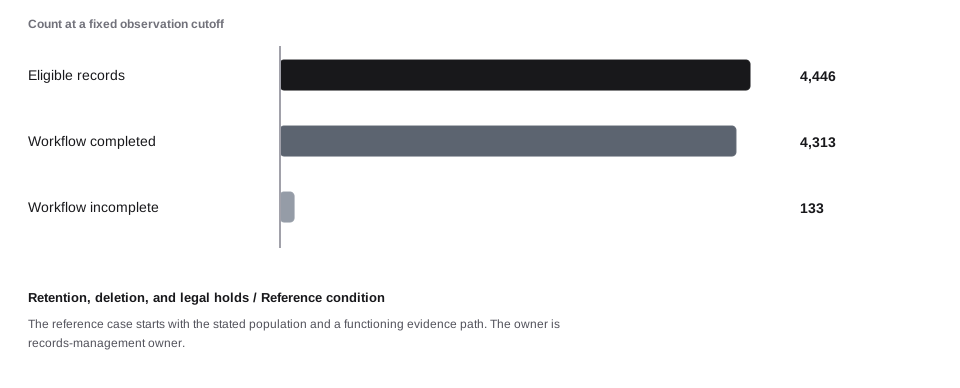
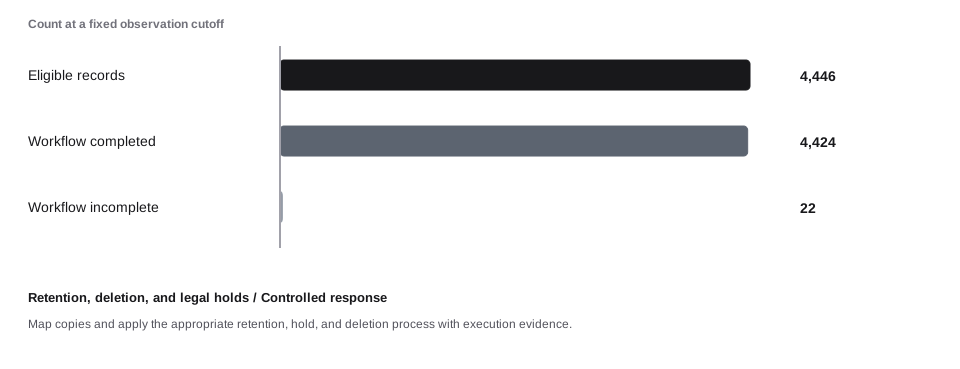
A concrete example. A record can exist in operational stores, indexes, exports, backups, and vendor systems. A hold or deletion decision must account for that lifecycle. The case identifies 4,446 eligible records from a source population of 5,700. The required workflow completes for 4,313, but 65 completed records miss the illustrative internal target. Another 133 remain incomplete. Communication evidence covers 4,270 generated notices. Scope, completion, timeliness, and delivery are four separate properties of the customer outcome.
When the assumption fails. Deleting one database row leaves uncontrolled sensitive copies in exports and derived stores. Map copies and apply the appropriate retention, hold, and deletion process with execution evidence. The following worked sequence shows the reference condition, a stress condition, and a response condition with explicit synthetic data. These are comparative assumptions, not measured causal effects.
A record can exist in operational stores, indexes, exports, backups, and vendor systems. A hold or deletion decision must account for that lifecycle.
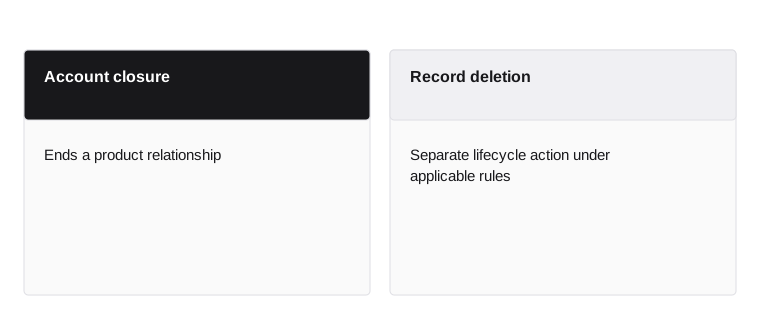
- Account closure
- Ends a product relationship
- Record deletion
- Separate lifecycle action under applicable rules
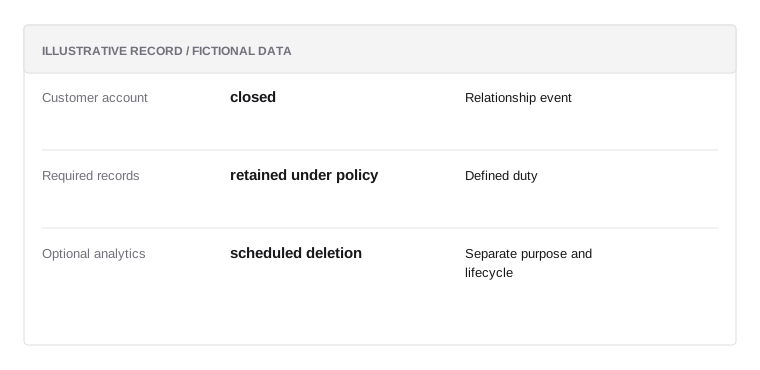
Retention workflow
Illustrative data; not a real customer record or a prescribed policy.
- Customer accountclosed
Relationship event
- Required recordsretained under policy
Defined duty
- Optional analyticsscheduled deletion
Separate purpose and lifecycle
Closure does not imply one rule for every record
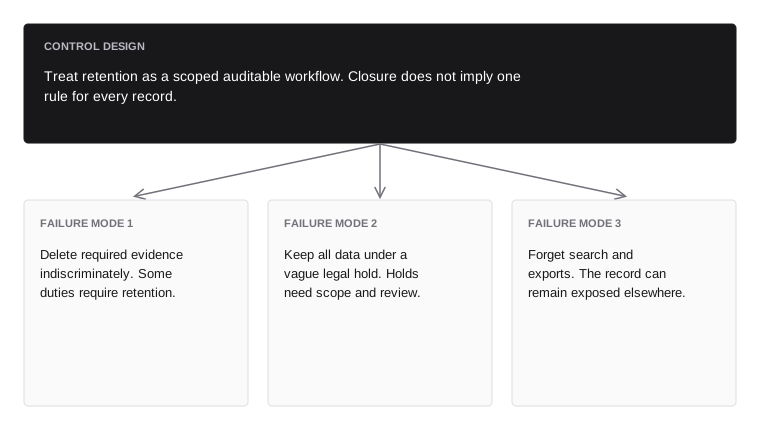
Treat retention as a scoped auditable workflow. Closure does not imply one rule for every record.
- Failure mode 1avoid
- Delete required evidence indiscriminately. Some duties require retention.
- Failure mode 2avoid
- Keep all data under a vague legal hold. Holds need scope and review.
- Failure mode 3avoid
- Forget search and exports. The record can remain exposed elsewhere.
Design secure incident evidence
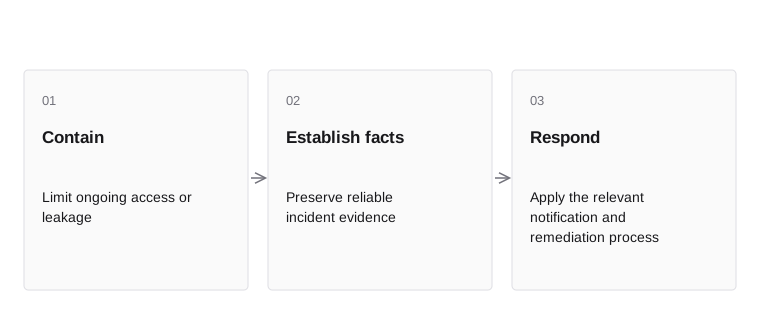
- ContainLimit ongoing access or leakage
- Establish factsPreserve reliable incident evidence
- RespondApply the relevant notification and remediation process
Security incidents need reliable logs, timestamps, affected-system records, and containment evidence. Logs should help establish what happened without unnecessarily exposing customer secrets. Protect integrity and access to the incident record.
Plan for breach assessment and notification duties under the applicable framework. Do not assume every incident has the same clock or audience. Coordinate security, legal, compliance, operations, and customer support. Preserve the distinction between confirmed access, possible exposure, and actual misuse so communications remain accurate as the investigation develops.
Inside the mechanism. Incident evidence needs integrity, restricted access, and enough context to support later review. Prefer scoped references to raw data pasted into broad communication channels. Preserve collection time, source, and handling history for material artifacts. The response team should be able to distinguish a live observation from a copied or transformed record. Access to sensitive evidence should follow the investigation role and be removed when no longer needed.
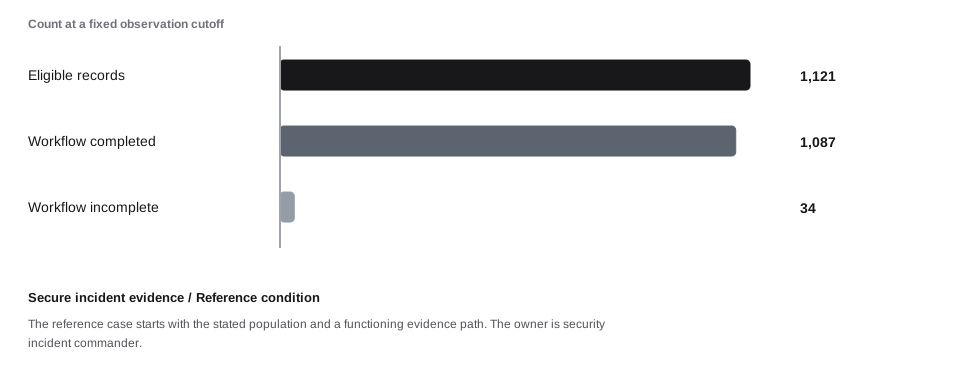
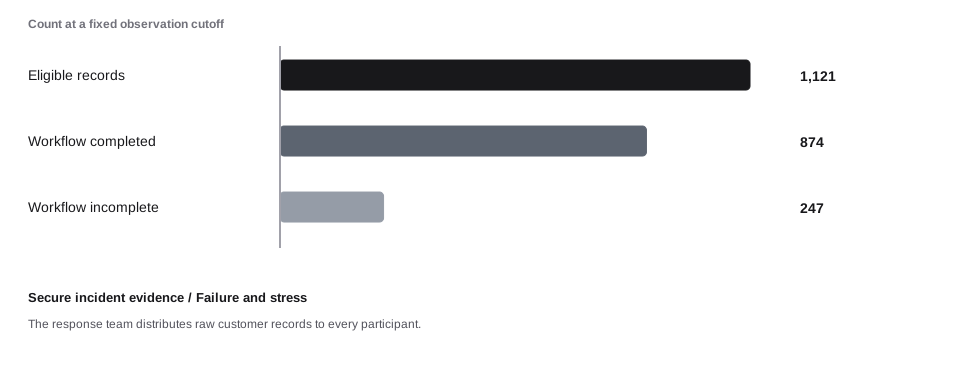
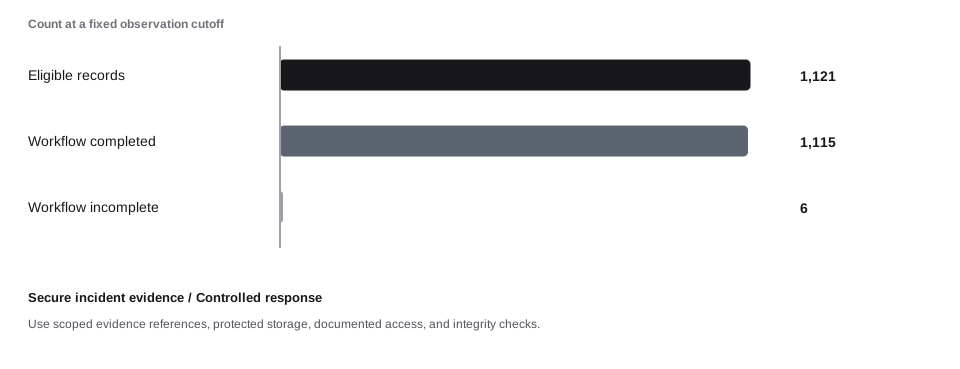
A concrete example. Incident work needs reliable facts without spreading sensitive data through ordinary chat or unrestricted documents. Evidence access should follow the investigation purpose. The case identifies 1,121 eligible records from a source population of 1,180. The required workflow completes for 1,087, but 16 completed records miss the illustrative internal target. Another 34 remain incomplete. Communication evidence covers 1,076 generated notices. Scope, completion, timeliness, and delivery are four separate properties of the customer outcome.
When the assumption fails. The response team distributes raw customer records to every participant. Use scoped evidence references, protected storage, documented access, and integrity checks. The following worked sequence shows the reference condition, a stress condition, and a response condition with explicit synthetic data. These are comparative assumptions, not measured causal effects.
Incident work needs reliable facts without spreading sensitive data through ordinary chat or unrestricted documents. Evidence access should follow the investigation purpose.
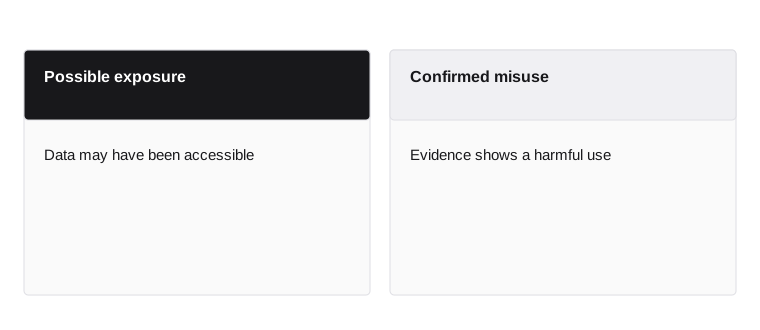
- Possible exposure
- Data may have been accessible
- Confirmed misuse
- Evidence shows a harmful use
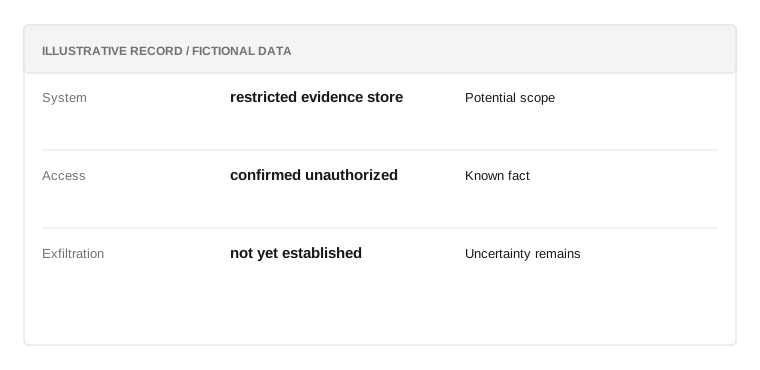
Incident fact register
Illustrative data; not a real customer record or a prescribed policy.
- Systemrestricted evidence store
Potential scope
- Accessconfirmed unauthorized
Known fact
- Exfiltrationnot yet established
Uncertainty remains
Incident claims must track the evidence
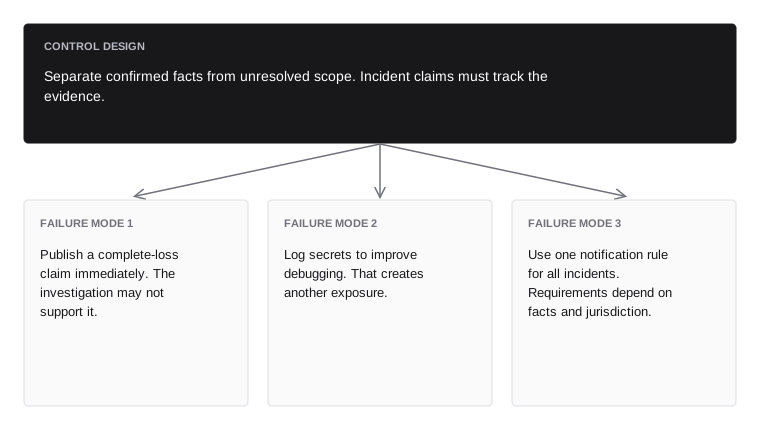
Separate confirmed facts from unresolved scope. Incident claims must track the evidence.
- Failure mode 1avoid
- Publish a complete-loss claim immediately. The investigation may not support it.
- Failure mode 2avoid
- Log secrets to improve debugging. That creates another exposure.
- Failure mode 3avoid
- Use one notification rule for all incidents. Requirements depend on facts and jurisdiction.
Chapter connections
This chapter builds on Fair lending, explainability, and adverse action. Continue with Sponsor banks, vendors, and third-party risk to follow the next part of the system. Use the glossary for terminology and risk mathematics for formulas and worked calculations.