
A complete risk system: the Lantern case
Bring payments, underwriting, fraud, AML, sanctions, and operations together.
Faster payouts move risk into the gap
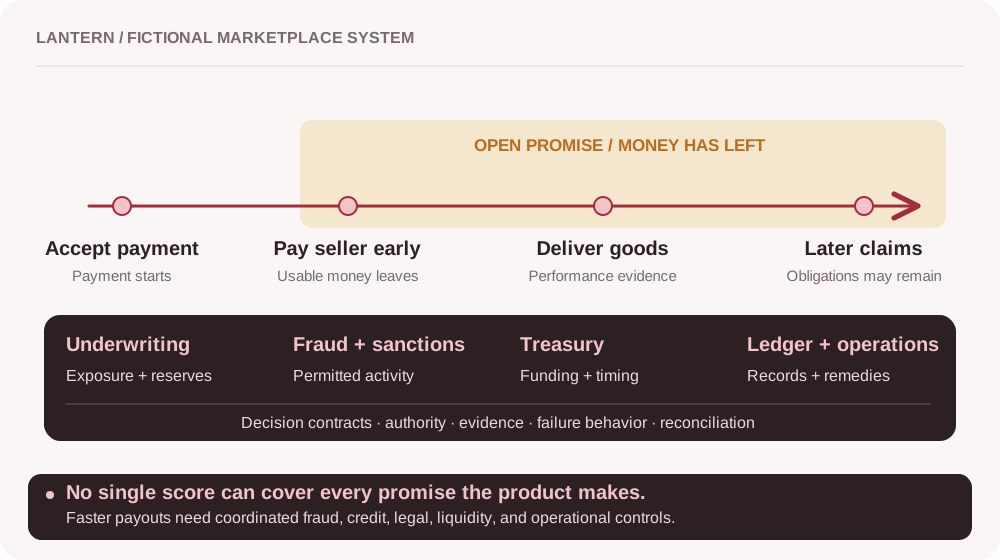
Enlarge to read every label and explore the connections
Lantern can release funds before delivery and the end of refund obligations. Different controls protect different parts of that open promise.
Start with the promise and its exposure window.
Assign distinct controls to distinct loss paths.
Require evidence for normal and failure behavior.
Lantern wants to pay sellers faster. It sells home goods today and plans to add advance-sale event tickets. The board asks for a safe launch. This final case follows one design from customer promise to data, controls, failure handling, and launch evidence.
Define the product and open promises
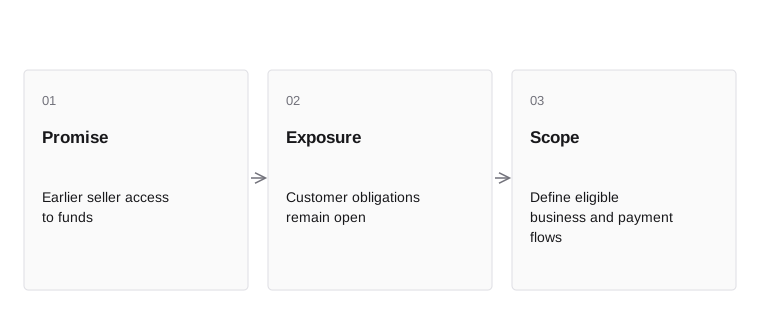
- PromiseEarlier seller access to funds
- ExposureCustomer obligations remain open
- ScopeDefine eligible business and payment flows
The proposed product accepts card and bank payments and offers earlier seller payouts. The new ticket category creates long delivery exposure. Document the legal entities, merchant-of-record arrangement, customer terms, funds flow, and accountable partners before designing a score.
The central exposure is clear: Lantern may release usable money while refund or return obligations remain. Fraud, credit, liquidity, and compliance controls all contribute, but none replaces the others. The launch scope should specify eligible merchants, supported rails, delivery assumptions, and the conditions that require a new review.
Lantern’s launch team can describe the product in one sentence: customers pay merchants now, merchants fulfill later, and eligible proceeds become available for payout under defined conditions. The short sentence contains several separate promises. The customer expects the right amount to reach the right merchant, the merchant expects accurate availability, and the platform must preserve records and respond when fulfillment fails.
The system case ties those promises to earlier chapters. Payment state tracks the movement request. The ledger records obligations. Underwriting sets permitted exposure. Fraud controls govern suspicious actions. AML and sanctions processes handle their distinct responsibilities. Treasury confirms usable funding, and operations owns unresolved events. No single score or vendor response replaces this division of work.
Inside the mechanism. Treat the product promise as a set of dated obligations. Rapid access to merchant proceeds can create exposure while funding, fulfillment, or dispute outcomes remain uncertain. Record the party responsible for each promise and the resources needed to keep it under stress. Product, risk, finance, and operations need the same definitions so a faster customer experience does not conceal a larger open obligation.
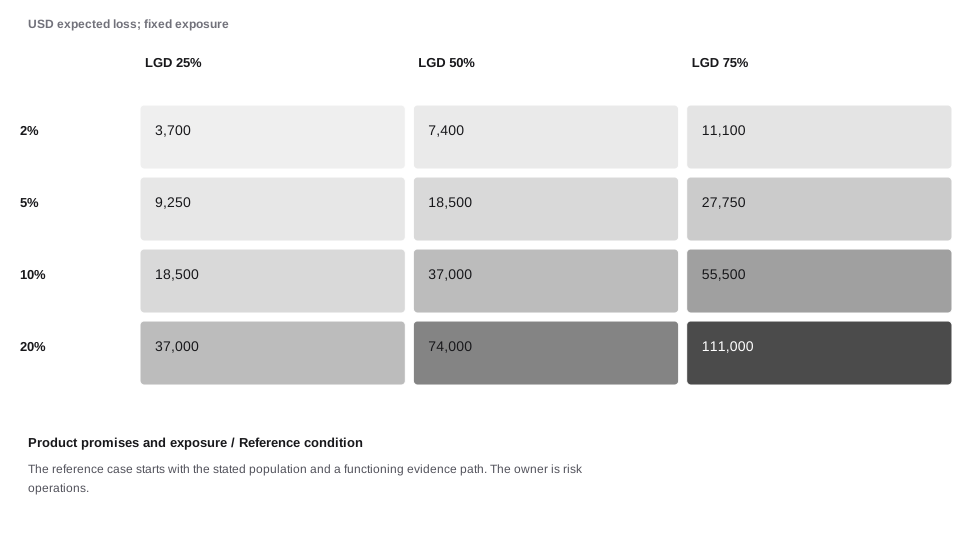
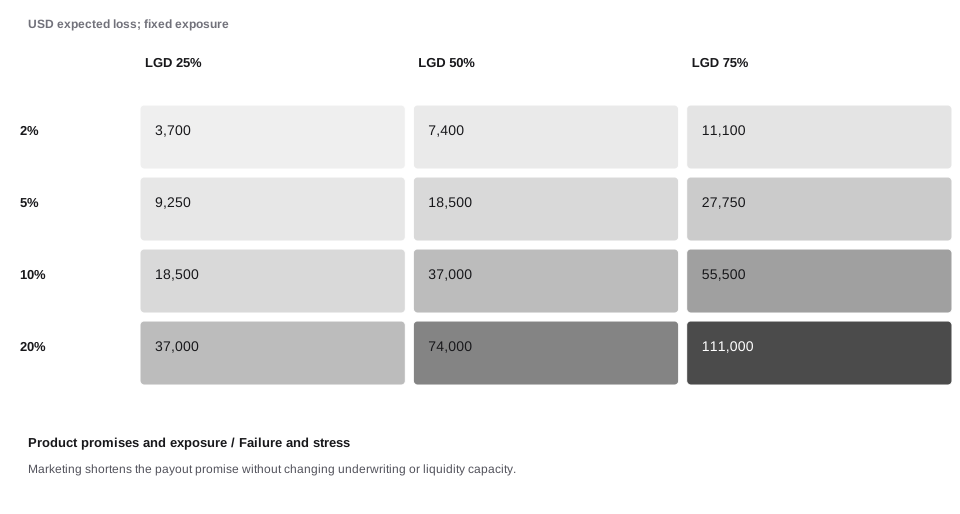
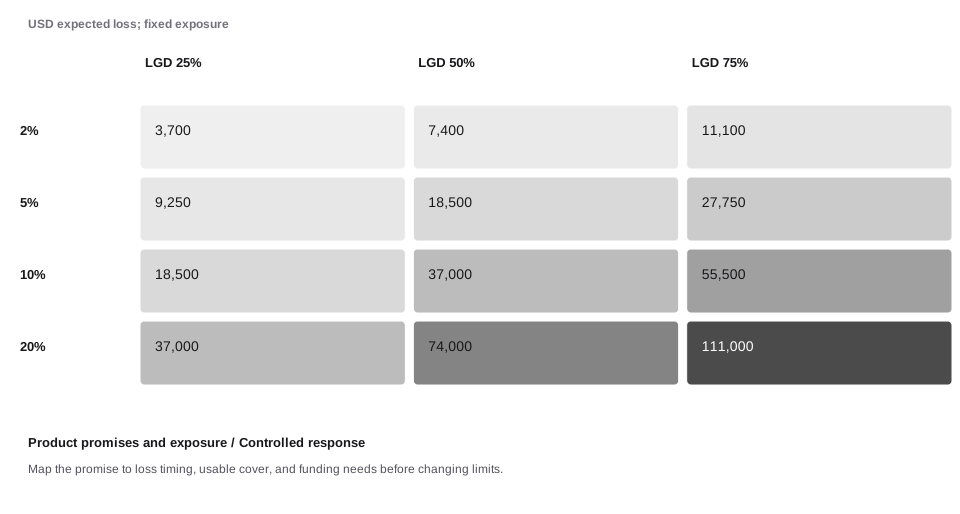
A concrete example. A platform can promise rapid merchant access to funds before the underlying transactions are final. The interval creates a funding and recovery exposure. The case has $740,000 of exposure. Its stated one-year PD and LGD imply $29,185.60 of expected loss, while the cover analysis leaves $343,000.00 of stress exposure. Monthly cash coverage is 1.32×. These are separate measures: one describes an average under probability assumptions, one describes available cover, and one describes a period’s funding capacity.
When the assumption fails. Marketing shortens the payout promise without changing underwriting or liquidity capacity. Map the promise to loss timing, usable cover, and funding needs before changing limits. The following worked sequence shows the reference condition, a stress condition, and a response condition with explicit synthetic data. These are comparative assumptions, not measured causal effects.
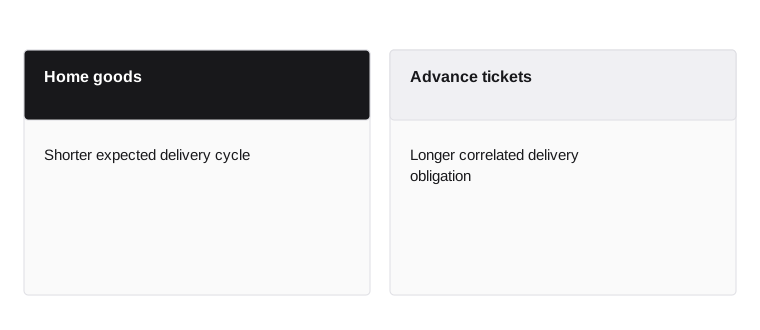
A platform can promise rapid merchant access to funds before the underlying transactions are final. The interval creates a funding and recovery exposure.
- Home goods
- Shorter expected delivery cycle
- Advance tickets
- Longer correlated delivery obligation
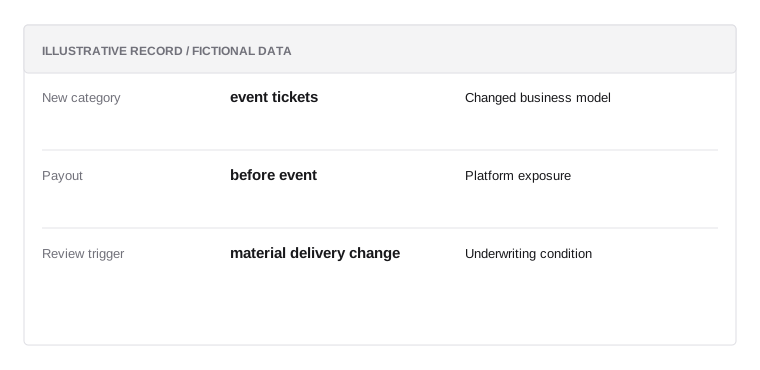
Launch brief
Illustrative data; not a real customer record or a prescribed policy.
- New categoryevent tickets
Changed business model
- Payoutbefore event
Platform exposure
- Review triggermaterial delivery change
Underwriting condition
The control system must address the actual product
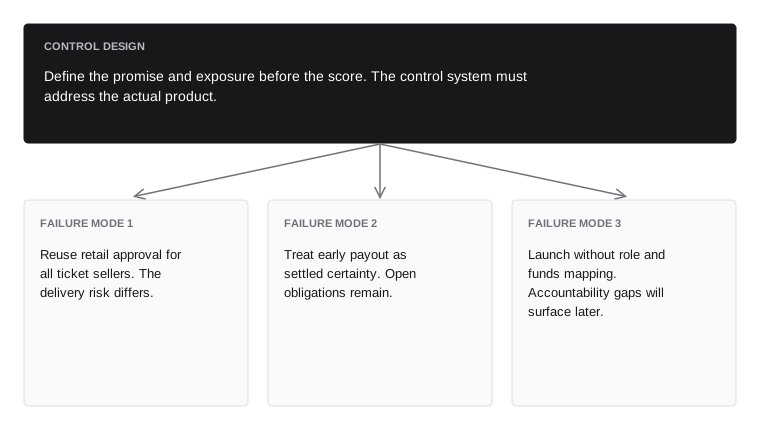
Define the promise and exposure before the score. The control system must address the actual product.
- Failure mode 1avoid
- Reuse retail approval for all ticket sellers. The delivery risk differs.
- Failure mode 2avoid
- Treat early payout as settled certainty. Open obligations remain.
- Failure mode 3avoid
- Launch without role and funds mapping. Accountability gaps will surface later.
Create the minimum decision and data contracts
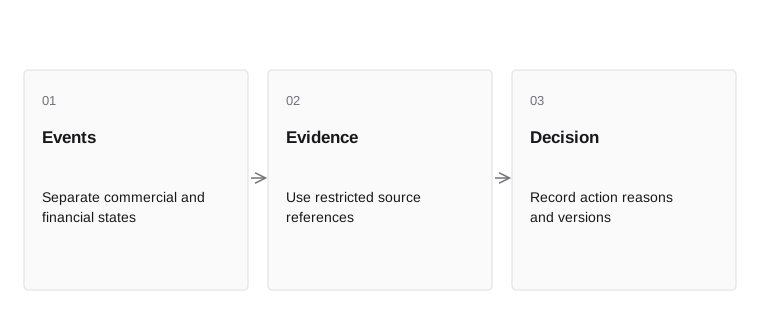
- EventsSeparate commercial and financial states
- EvidenceUse restricted source references
- DecisionRecord action reasons and versions
Lantern records payment, order, merchant, and payout as separate entities. Each event has a stable ID, event time, knowledge time, currency, and version. The decision record links the evidence to the action and policy.
A compact teaching record below shows the intended relationship. It contains fictional references, not customer data. The application keeps raw identity evidence in restricted storage and uses references in the decision stream.
{
  "decision_id": "decision-204",
  "payment_id": "payment-811",
  "merchant_id": "merchant-52",
  "amount_minor": 4000,
  "currency": "USD",
  "action": "review",
  "policy_version": "payout-v3",
  "reason_codes": ["DELIVERY_EXPOSURE_REVIEW"]
}
Inside the mechanism. The minimum system needs stable contracts for identity, intent, decision, financial effect, evidence, and casework. Each contract has an authoritative writer, identifier, state model, and reconciliation path. Link them through a business action key without collapsing their meanings. A payment can be financially complete while a related investigation remains open; the data model must support both facts.
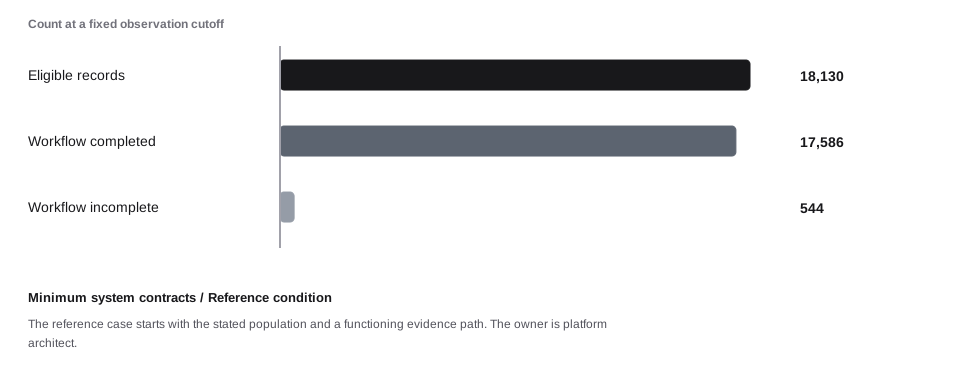
A concrete example. A product needs stable records for identity, payment intent, decision, ledger effect, case, and evidence. Each record has a responsible writer and reconciliation path. The case identifies 18,130 eligible records from a source population of 18,500. The required workflow completes for 17,586, but 264 completed records miss the illustrative internal target. Another 544 remain incomplete. Communication evidence covers 17,410 generated notices. Scope, completion, timeliness, and delivery are four separate properties of the customer outcome.
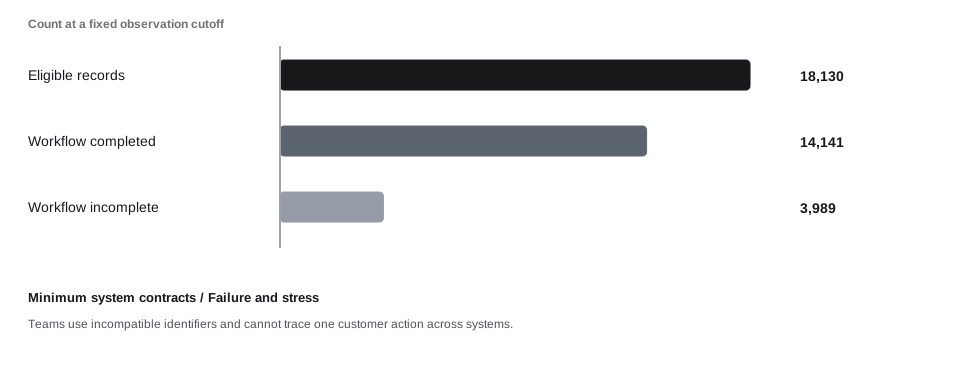
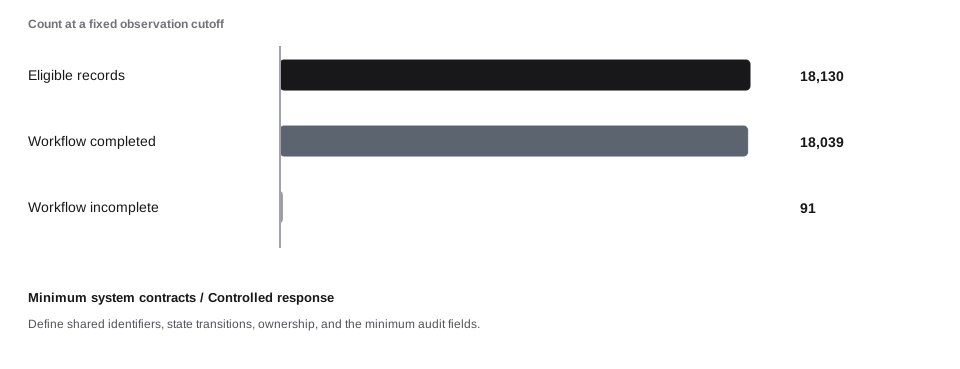
When the assumption fails. Teams use incompatible identifiers and cannot trace one customer action across systems. Define shared identifiers, state transitions, ownership, and the minimum audit fields. The following worked sequence shows the reference condition, a stress condition, and a response condition with explicit synthetic data. These are comparative assumptions, not measured causal effects.
A product needs stable records for identity, payment intent, decision, ledger effect, case, and evidence. Each record has a responsible writer and reconciliation path.
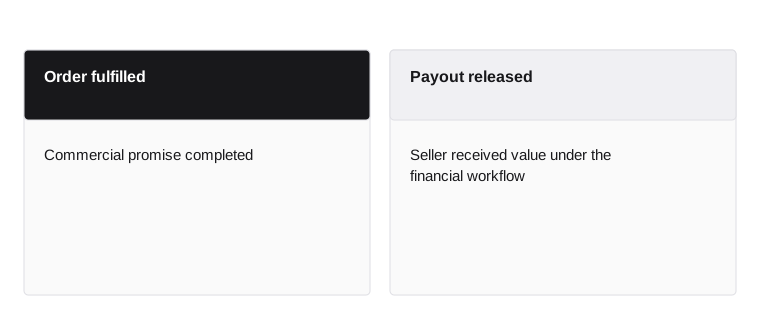
- Order fulfilled
- Commercial promise completed
- Payout released
- Seller received value under the financial workflow
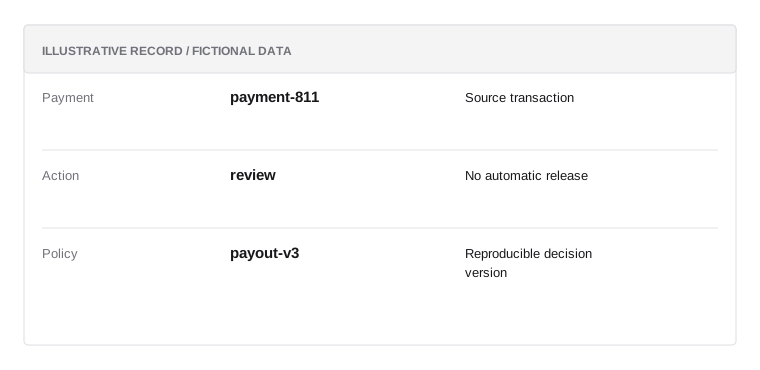
Decision contract
Illustrative data; not a real customer record or a prescribed policy.
- Paymentpayment-811
Source transaction
- Actionreview
No automatic release
- Policypayout-v3
Reproducible decision version
One success flag cannot explain the whole lifecycle
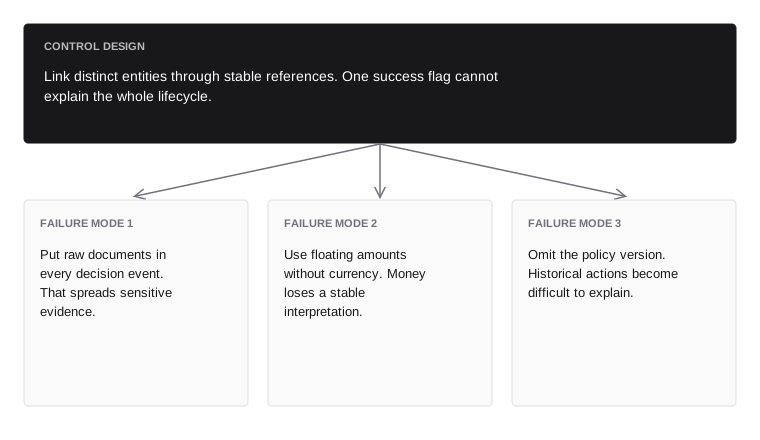
Link distinct entities through stable references. One success flag cannot explain the whole lifecycle.
- Failure mode 1avoid
- Put raw documents in every decision event. That spreads sensitive evidence.
- Failure mode 2avoid
- Use floating amounts without currency. Money loses a stable interpretation.
- Failure mode 3avoid
- Omit the policy version. Historical actions become difficult to explain.
Layer controls around the loss paths
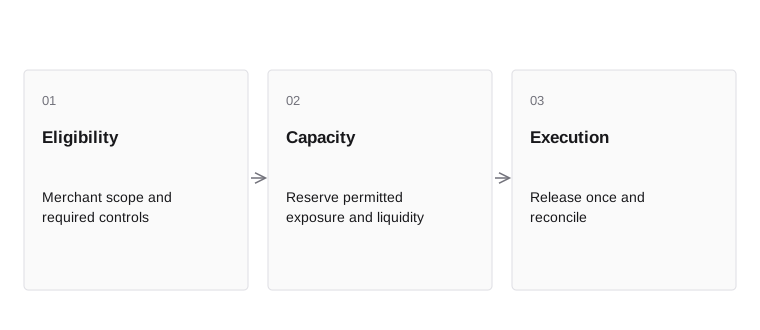
- EligibilityMerchant scope and required controls
- CapacityReserve permitted exposure and liquidity
- ExecutionRelease once and reconcile
Underwriting checks the seller’s model and capacity. Fraud controls assess account access, transaction evidence, and payout changes. AML monitoring compares activity with the relationship. Sanctions controls apply the relevant restrictions before prohibited activity proceeds. Treasury checks eligible liquidity.
For this case, an early payout requires the mandatory checks, a valid merchant scope, and available exposure capacity. The system reserves capacity atomically and uses an idempotent payout operation. Post-event reconciliation and monitoring remain necessary. Layering means each control addresses a distinct failure path; it does not mean every control repeats the same score.
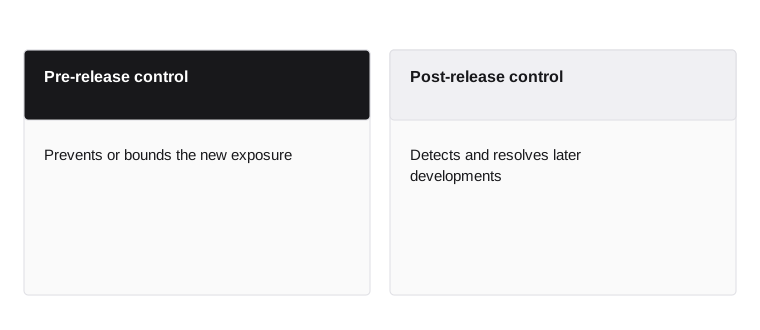
Inside the mechanism. Map controls to loss paths and intervention points. Identity evidence, transaction decisions, exposure limits, reserves, and case review can overlap. Do not add their claimed benefits as though each prevented a separate loss. State which control changes the action, which limits severity, and which only improves detection or recovery. Evaluate the combined customer and financial outcome under a coherent population definition.
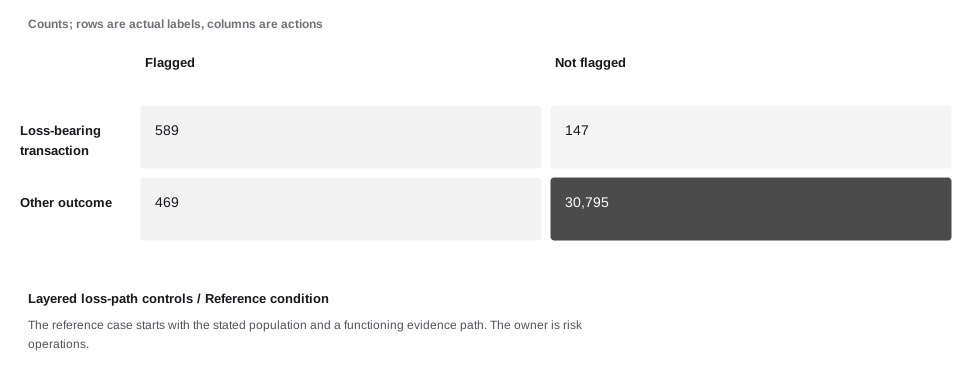
A concrete example. Identity checks, transaction controls, limits, reserves, and case review act at different points in the loss path. Their effects are not automatically independent or additive. The rule flags 1,058 of 32,000 mature platform transactions. Of those flags, 589 meet the synthetic target, giving 55.67% precision. It misses 147 target events. Under the stated cost assumptions, residual loss and operating friction total $39,652. The important result is the connection between the population, action, capacity, and outcome—not one isolated score.
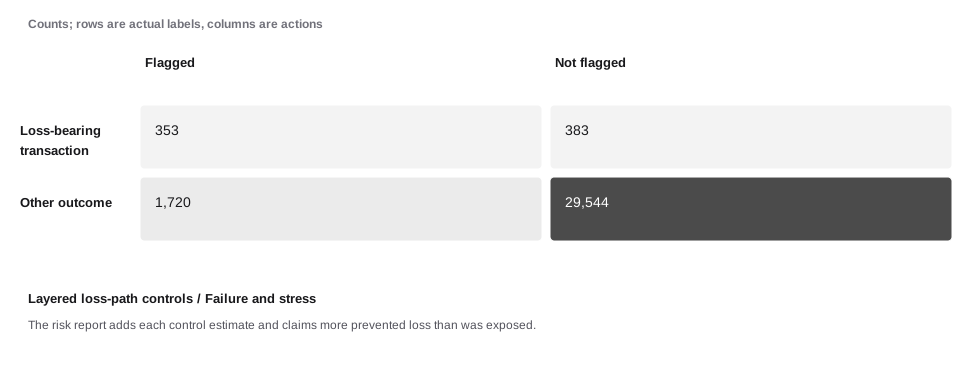
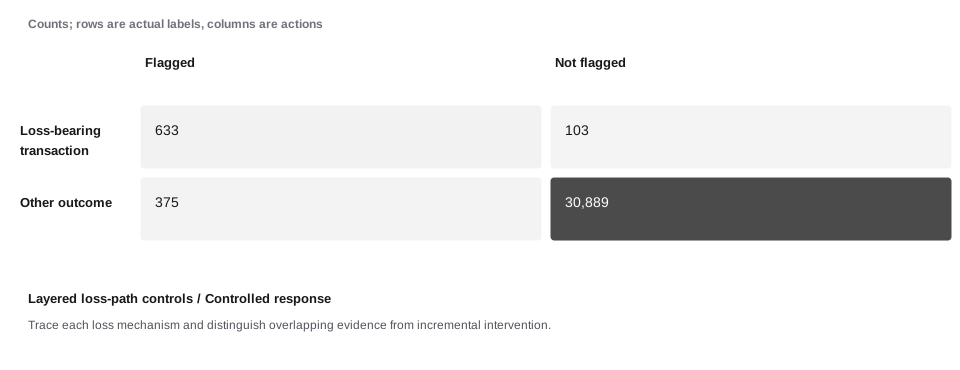
When the assumption fails. The risk report adds each control estimate and claims more prevented loss than was exposed. Trace each loss mechanism and distinguish overlapping evidence from incremental intervention. The following worked sequence shows the reference condition, a stress condition, and a response condition with explicit synthetic data. These are comparative assumptions, not measured causal effects.
Identity checks, transaction controls, limits, reserves, and case review act at different points in the loss path. Their effects are not automatically independent or additive.
- Pre-release control
- Prevents or bounds the new exposure
- Post-release control
- Detects and resolves later developments
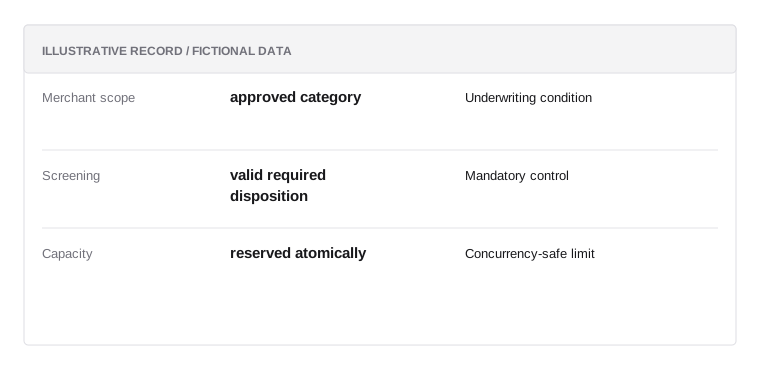
Payout gate
Illustrative data; not a real customer record or a prescribed policy.
- Merchant scopeapproved category
Underwriting condition
- Screeningvalid required disposition
Mandatory control
- Capacityreserved atomically
Concurrency-safe limit
Layering should add coverage rather than duplicate labels
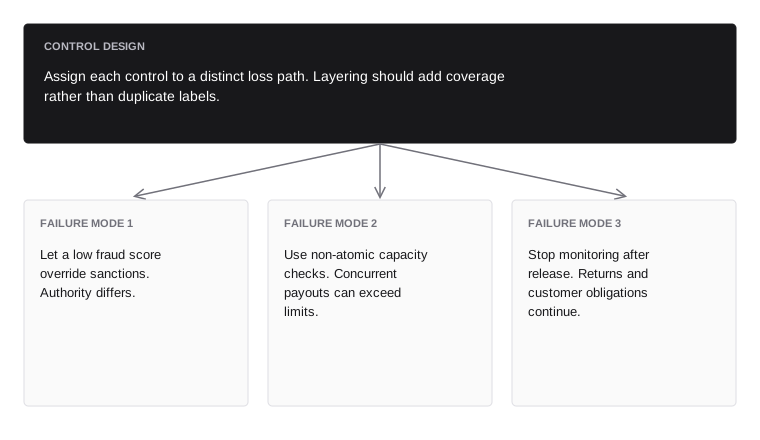
Assign each control to a distinct loss path. Layering should add coverage rather than duplicate labels.
- Failure mode 1avoid
- Let a low fraud score override sanctions. Authority differs.
- Failure mode 2avoid
- Use non-atomic capacity checks. Concurrent payouts can exceed limits.
- Failure mode 3avoid
- Stop monitoring after release. Returns and customer obligations continue.
Walk through a combined failure
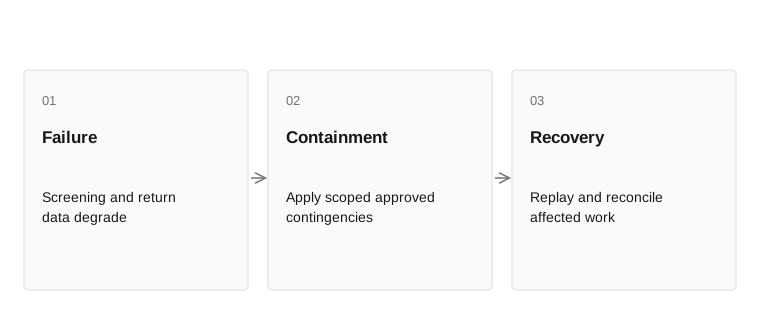
- FailureScreening and return data degrade
- ContainmentApply scoped approved contingencies
- RecoveryReplay and reconcile affected work
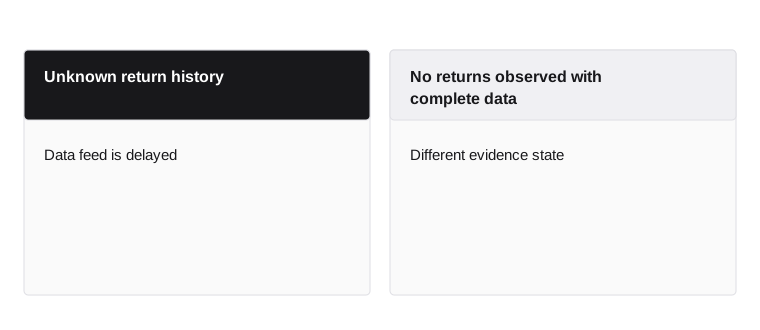
During a busy evening, the screening service times out and the bank-payment return feed is delayed. Lantern applies the approved screening contingency to affected releases and marks return-history features unavailable. It does not convert missing returns into a clean history.
Operations receives a defined incident with the held population, partner contacts, and customer communication plan. After services recover, workers replay events idempotently, reconcile held payouts, and review any changed exposure. The recovery record includes unresolved cases. This walkthrough tests the interaction of controls rather than assuming each vendor failure occurs alone.
Consider a busy sales day when the screening provider slows down and merchant payouts are due. The team first applies the approved dependency-failure policy to affected new actions. It then separates payments with a known final decision from requests with an unknown outcome, preserves the original identifiers, and checks funding availability before releasing obligations. Customer messages describe the actual state. When the provider recovers, the team resolves the pending population and reconciles results. This combined event tests technical recovery, financial correctness, control coverage, and operational ownership at the same time.
Inside the mechanism. In the combined incident, stale features weaken decisions while a partner outage creates unknown payouts and review demand rises. The response first contains the risky effect, then classifies affected actions and restores required evidence. Reconciliation determines what can be replayed. Returning all services to green does not by itself resolve duplicate effects, missing holds, or customer messages issued during the incident.
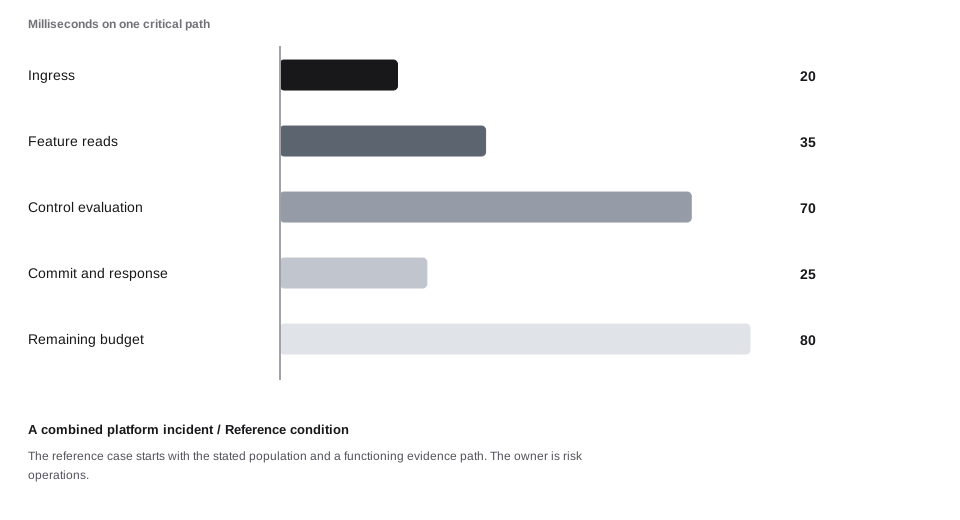
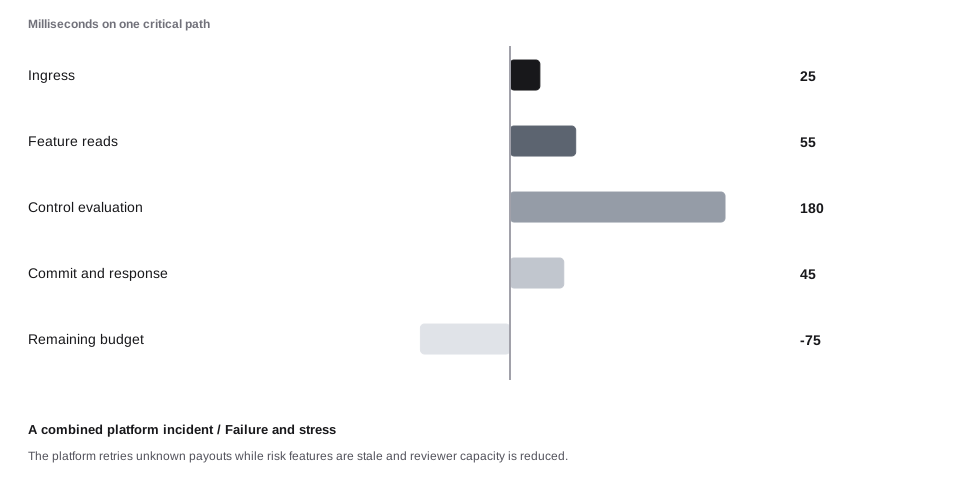
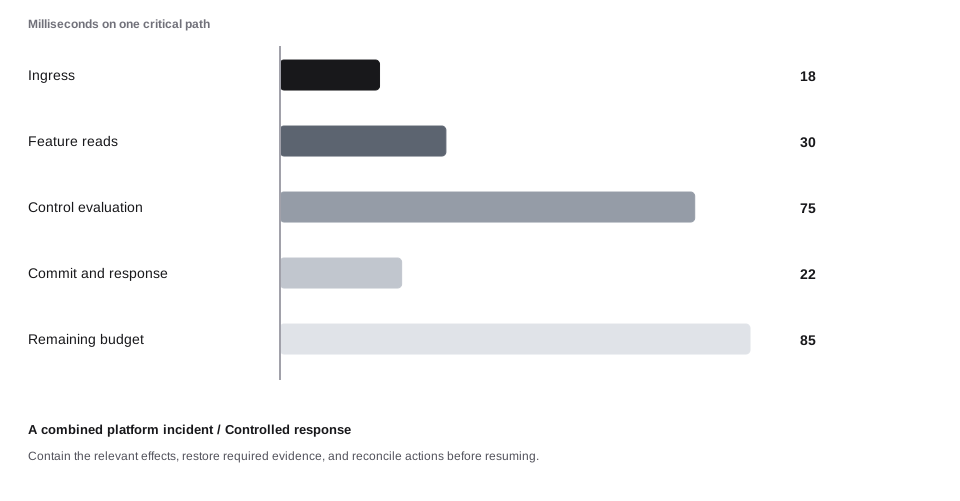
A concrete example. A data delay, partner outage, and rising review queue can turn a small detection gap into a larger financial exposure. The response needs one coherent population of affected actions. 810 intended requests generate 850 processing attempts under this retry assumption. Capacity is 970 attempts per interval, and the critical path consumes 150 ms of a 230 ms budget. The request-based SLO view observes 100 bad requests against an illustrative allowance of 100. These measurements must be connected to the financial effect and control evidence before declaring recovery.
When the assumption fails. The platform retries unknown payouts while risk features are stale and reviewer capacity is reduced. Contain the relevant effects, restore required evidence, and reconcile actions before resuming. The following worked sequence shows the reference condition, a stress condition, and a response condition with explicit synthetic data. These are comparative assumptions, not measured causal effects.
A data delay, partner outage, and rising review queue can turn a small detection gap into a larger financial exposure. The response needs one coherent population of affected actions.
- Unknown return history
- Data feed is delayed
- No returns observed with complete data
- Different evidence state
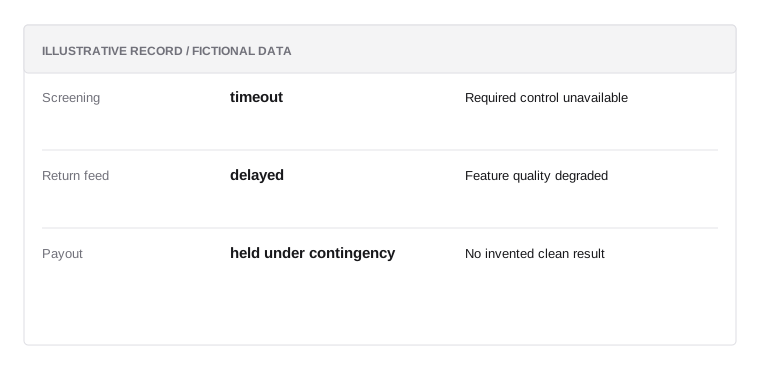
Combined failure record
Illustrative data; not a real customer record or a prescribed policy.
- Screeningtimeout
Required control unavailable
- Return feeddelayed
Feature quality degraded
- Payoutheld under contingency
No invented clean result
Multiple failures must not create false clearance
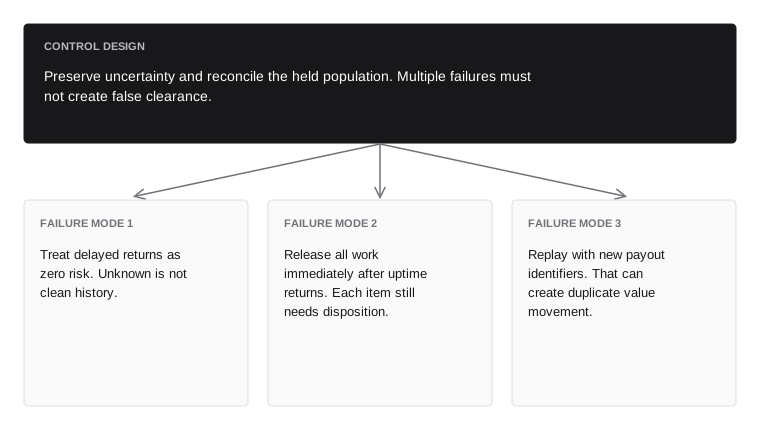
Preserve uncertainty and reconcile the held population. Multiple failures must not create false clearance.
- Failure mode 1avoid
- Treat delayed returns as zero risk. Unknown is not clean history.
- Failure mode 2avoid
- Release all work immediately after uptime returns. Each item still needs disposition.
- Failure mode 3avoid
- Replay with new payout identifiers. That can create duplicate value movement.
Define launch evidence and ongoing ownership
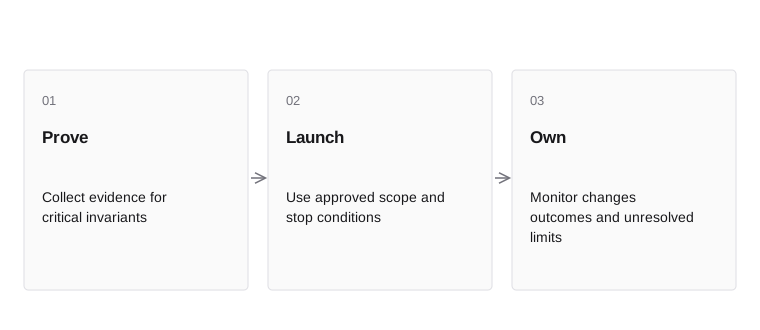
- ProveCollect evidence for critical invariants
- LaunchUse approved scope and stop conditions
- OwnMonitor changes outcomes and unresolved limits
Lantern’s launch evidence includes a reviewed applicability map, merchant conditions, tested data coverage, decision replay, concurrency tests, settlement reconciliation, accessible customer messages, and an exercised incident process. Each item has an owner and a concrete acceptance result.
The final decision records remaining limitations, permitted rollout scope, stop conditions, and monitoring. A staged release can limit exposure while the team validates actual behavior. The textbook’s central lesson is visible here: a risk control is complete when the intended behavior has evidence across the full lifecycle. The next product change starts the same disciplined process again.
Inside the mechanism. Launch evidence should demonstrate ordinary operation, credible failure behavior, financial reconciliation, case capacity, and recovery. Each material promise needs an owner and an observable success condition. Keep unresolved limits visible and tie approval to the actual product scope. After launch, changes in volume, partners, terms, and customer activity can invalidate earlier evidence and require renewed review.
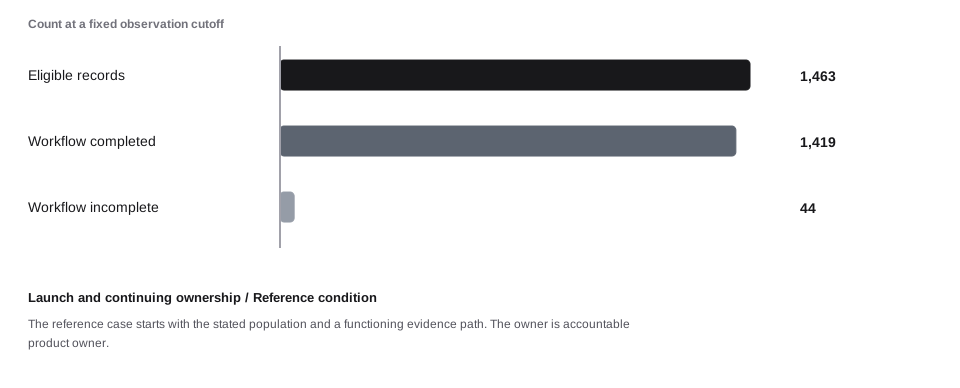
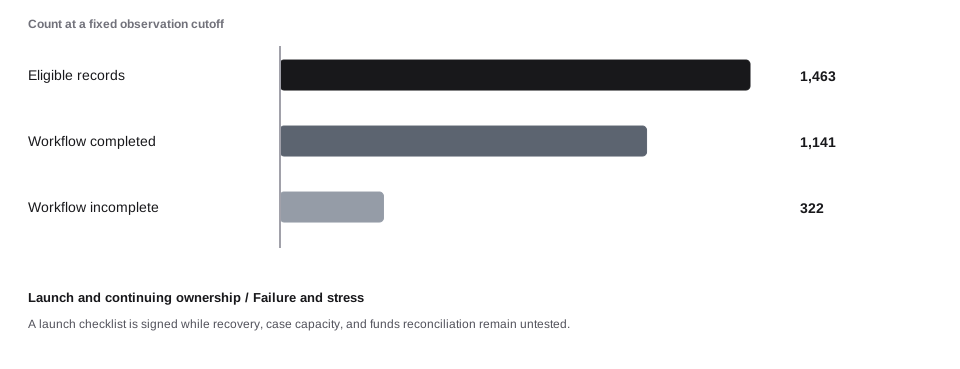
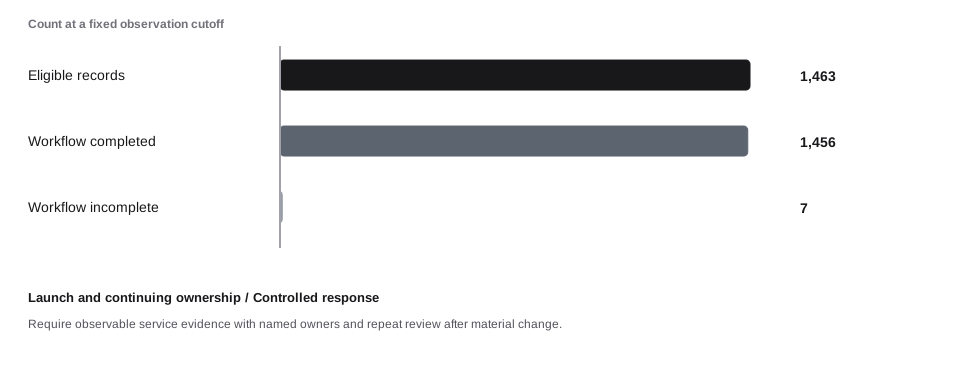
A concrete example. Launch evidence should show that the promised service works under normal and credible failure conditions. Ownership continues as volume, partners, and product scope change. The case identifies 1,463 eligible records from a source population of 1,540. The required workflow completes for 1,419, but 21 completed records miss the illustrative internal target. Another 44 remain incomplete. Communication evidence covers 1,405 generated notices. Scope, completion, timeliness, and delivery are four separate properties of the customer outcome.
When the assumption fails. A launch checklist is signed while recovery, case capacity, and funds reconciliation remain untested. Require observable service evidence with named owners and repeat review after material change. The following worked sequence shows the reference condition, a stress condition, and a response condition with explicit synthetic data. These are comparative assumptions, not measured causal effects.
Launch evidence should show that the promised service works under normal and credible failure conditions. Ownership continues as volume, partners, and product scope change.
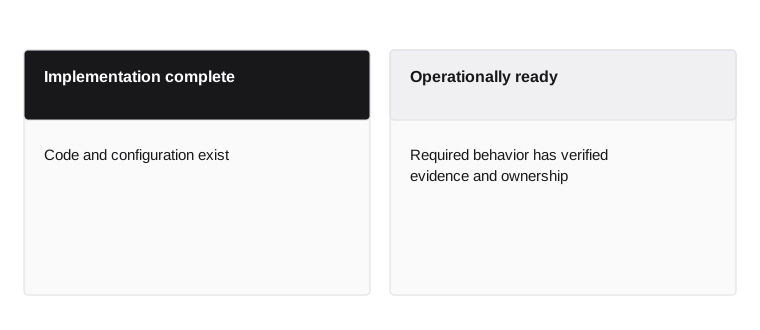
- Implementation complete
- Code and configuration exist
- Operationally ready
- Required behavior has verified evidence and ownership
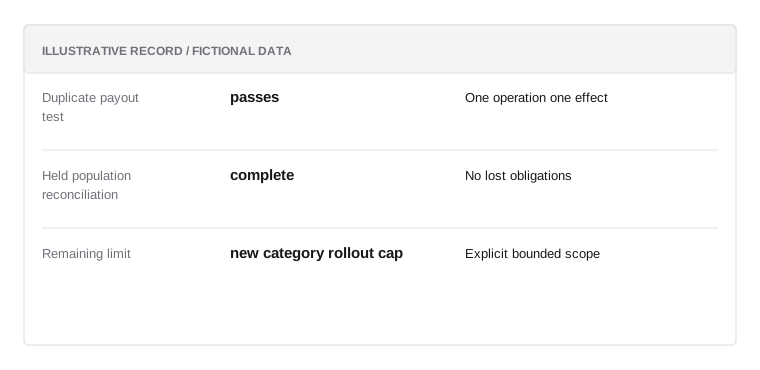
Launch acceptance
Illustrative data; not a real customer record or a prescribed policy.
- Duplicate payout testpasses
One operation one effect
- Held population reconciliationcomplete
No lost obligations
- Remaining limitnew category rollout cap
Explicit bounded scope
Completion is more than code deployed
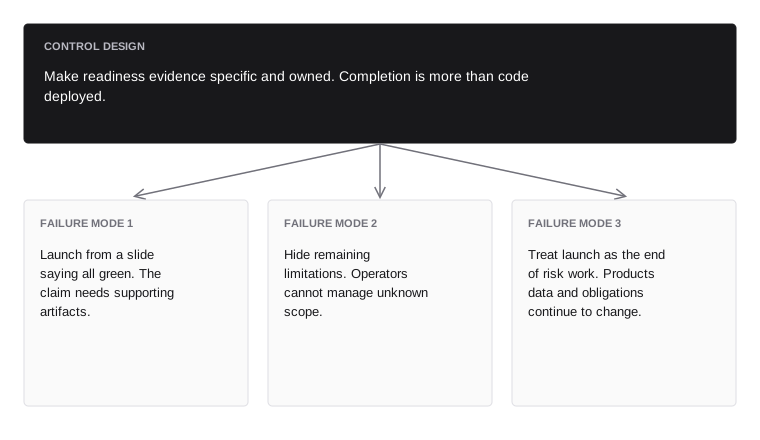
Make readiness evidence specific and owned. Completion is more than code deployed.
- Failure mode 1avoid
- Launch from a slide saying all green. The claim needs supporting artifacts.
- Failure mode 2avoid
- Hide remaining limitations. Operators cannot manage unknown scope.
- Failure mode 3avoid
- Treat launch as the end of risk work. Products data and obligations continue to change.
Chapter connections
This chapter builds on Risk incidents, containment, and learning. Use the glossary for terminology and risk mathematics for formulas and worked calculations.