
ACH, bank debits, and returns
Separate account access, authorization, settlement, and return exposure.
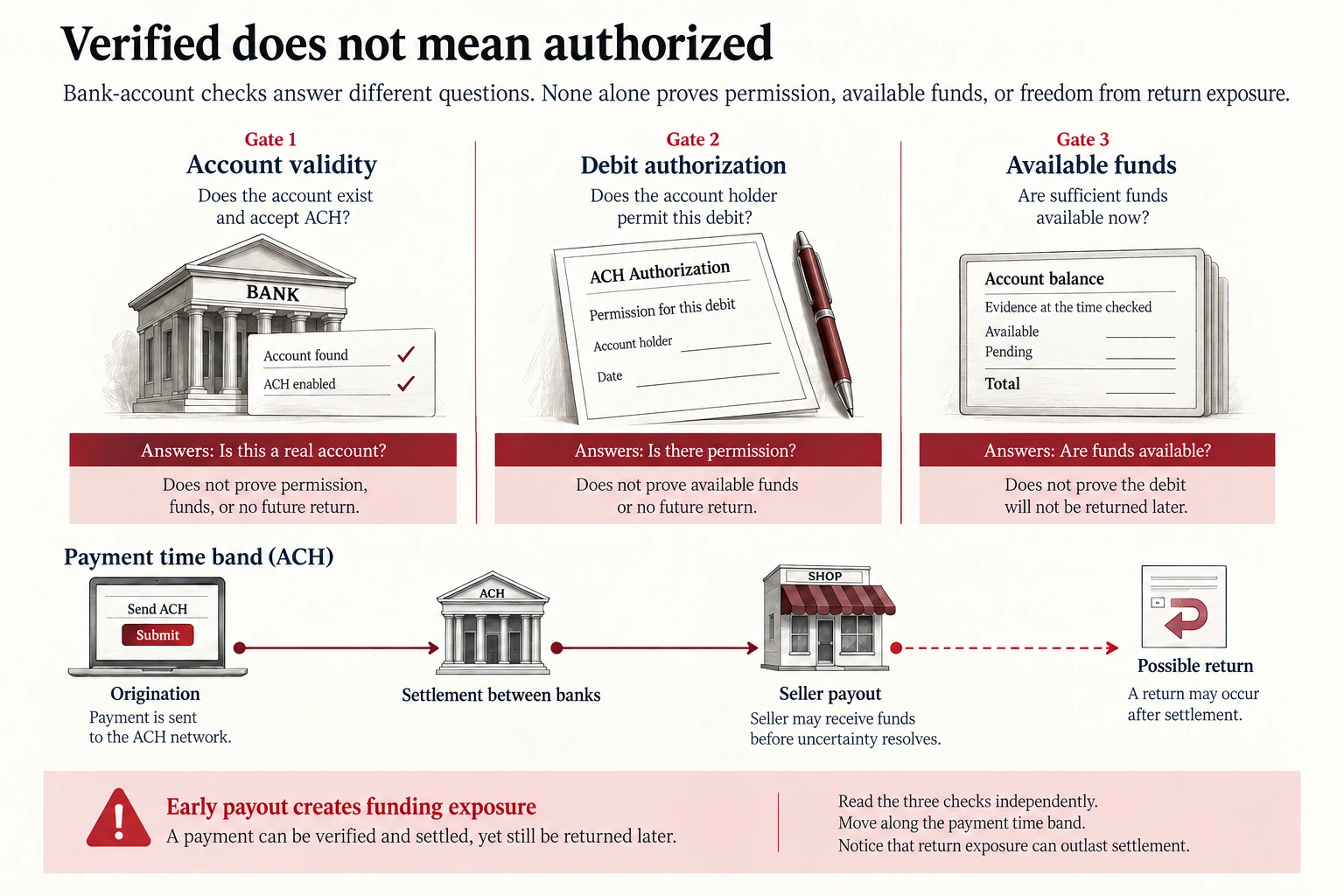
Verified does not mean authorized
Enlarge to read every label and explore the connections
Bank-account checks answer different questions. None alone proves permission, available funds, or freedom from return exposure.
Read the three checks independently.
Move along the payment time band.
Notice that return exposure can outlast settlement.
Lantern offers bank payments to save processing cost. Someone suggests shipping as soon as account verification passes. The accountant pauses: a real account can still be empty, a verified login can still be compromised, and a payment can still be returned.
Know the roles and directions
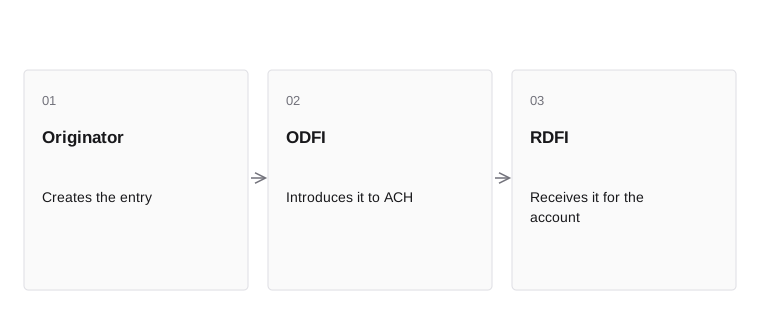
- OriginatorCreates the entry
- ODFIIntroduces it to ACH
- RDFIReceives it for the account
ACH credits push funds; ACH debits pull funds under an authorization arrangement. The originator initiates the entry, the ODFI sends it into the network, and the RDFI receives it for the receiver. The same customer can occupy different roles in different flows.
Draw the direction of the instruction separately from the direction of value. This prevents an easy mistake: assuming a debit is safe because the receiver bank accepted a file. A file acknowledgment and an authorized, funded transfer are different facts. Track origination, processing, settlement, and any return as linked records.
Inside the mechanism. Direction and role determine what an event means. An ACH debit requests funds from an account; an ACH credit sends funds toward one. The originator, originating institution, operator, receiving institution, and receiver do different work. Preserve direction, entry context, effective date, settlement observation, and the relevant partner references. A risk control designed for an outgoing consumer transfer may not cover an incoming debit that funds a later payout. Map the whole economic sequence.
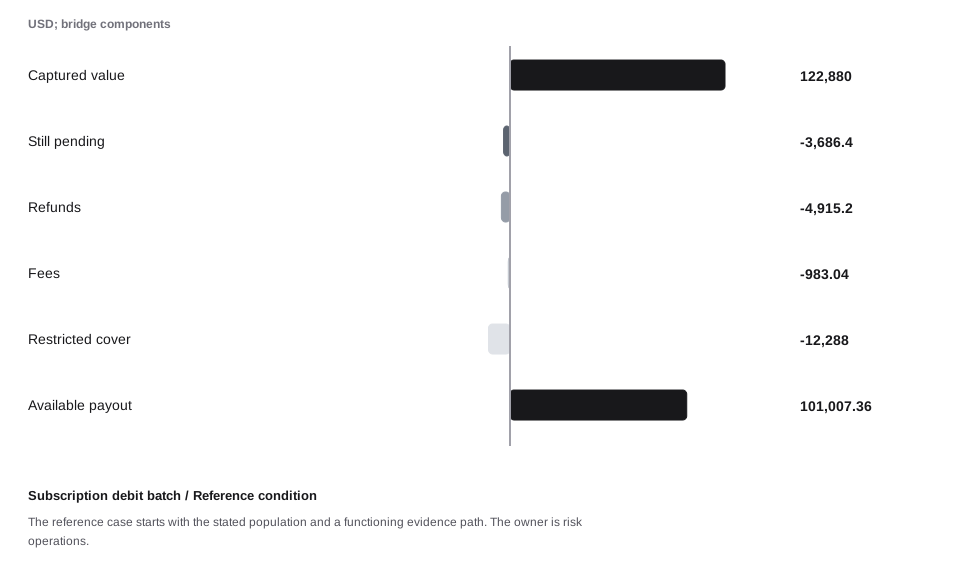
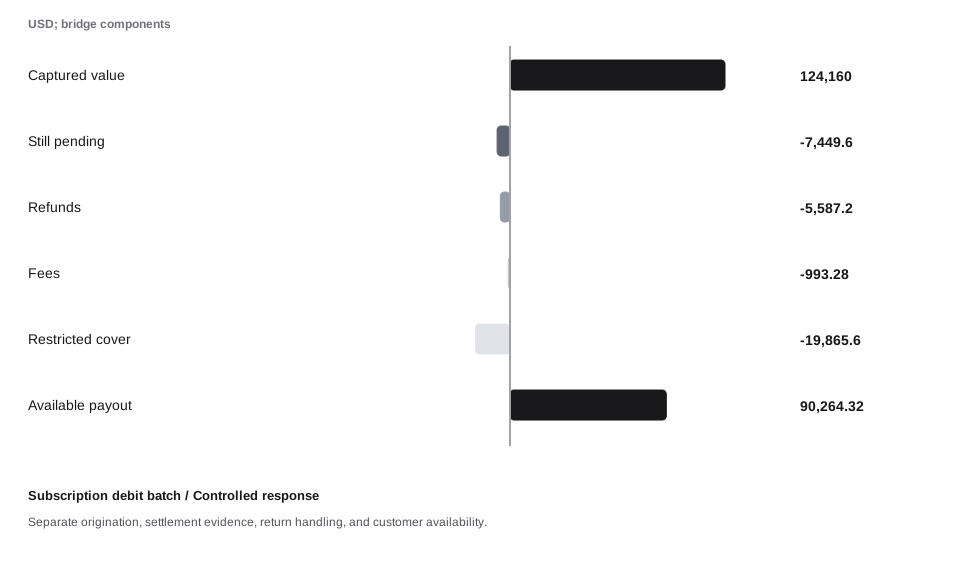
A concrete example. A subscription platform initiates bank debits through its payment partners. An origination record and a later settlement or return describe different stages. The batch begins with $128,000 of instructions and $122,880.00 of captured value. At the observation cutoff, $3,686.40 remains pending. After the stated refunds, fees, and restrictions, $101,007.36 is available for payout. The unresolved instruction count is 2; an unknown external result is handled separately from a known decline.
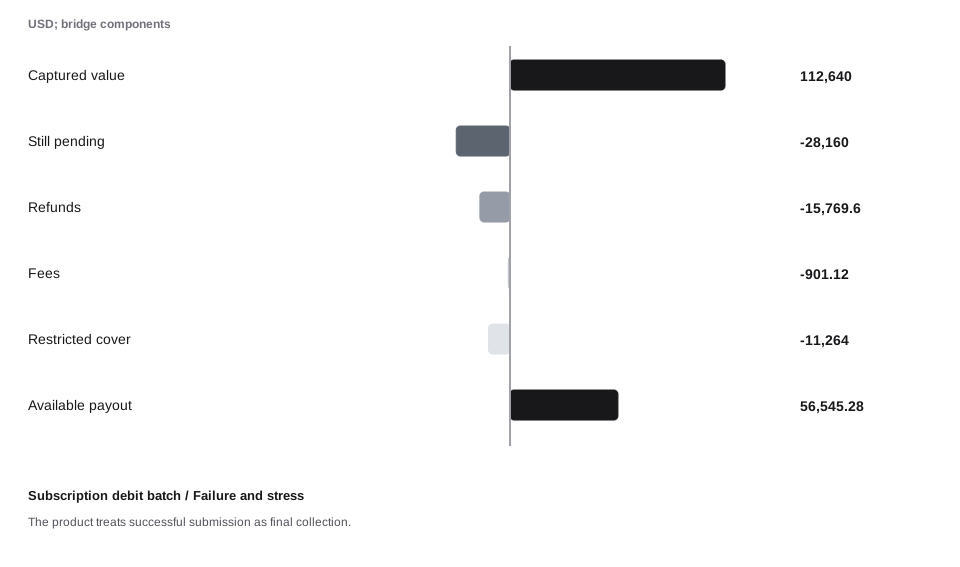
When the assumption fails. The product treats successful submission as final collection. Separate origination, settlement evidence, return handling, and customer availability. The following worked sequence shows the reference condition, a stress condition, and a response condition with explicit synthetic data. These are comparative assumptions, not measured causal effects.
A subscription platform initiates bank debits through its payment partners. An origination record and a later settlement or return describe different stages.
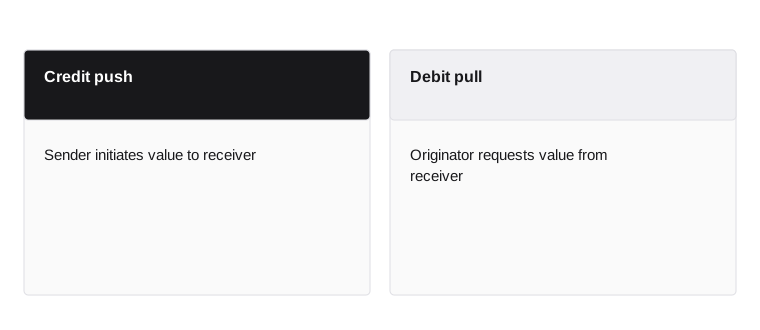
- Credit push
- Sender initiates value to receiver
- Debit pull
- Originator requests value from receiver
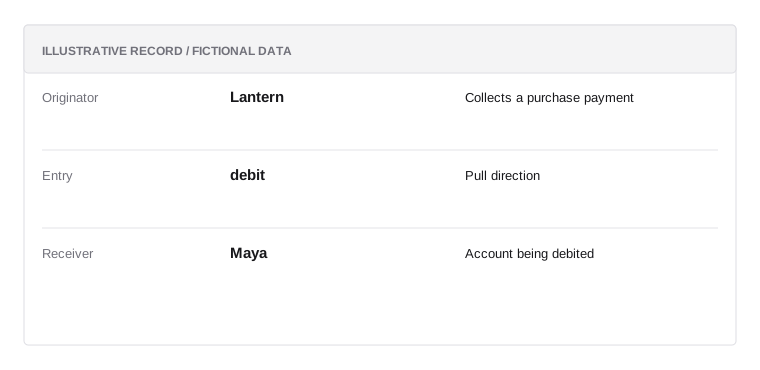
Bank debit specimen
Illustrative data; not a real customer record or a prescribed policy.
- OriginatorLantern
Collects a purchase payment
- Entrydebit
Pull direction
- ReceiverMaya
Account being debited
The originator creates the collection instruction
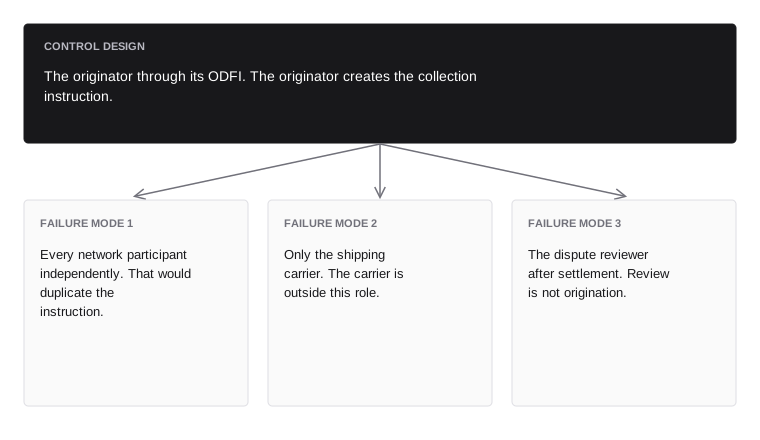
The originator through its ODFI. The originator creates the collection instruction.
- Failure mode 1avoid
- Every network participant independently. That would duplicate the instruction.
- Failure mode 2avoid
- Only the shipping carrier. The carrier is outside this role.
- Failure mode 3avoid
- The dispute reviewer after settlement. Review is not origination.
Verification is not authorization
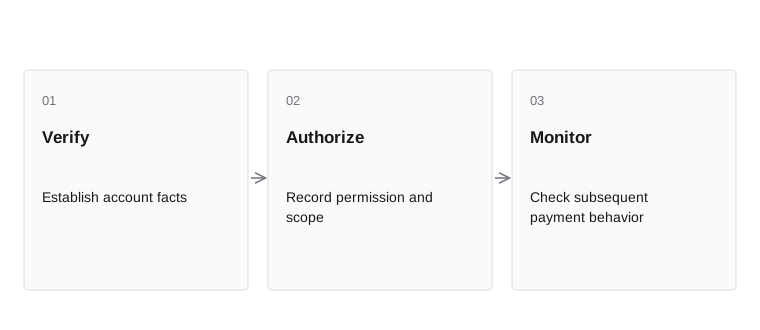
- VerifyEstablish account facts
- AuthorizeRecord permission and scope
- MonitorCheck subsequent payment behavior
Account verification can establish facts about an account. Authorization establishes permission for the specified debit under applicable requirements. Available balance gives a time-sensitive view of funds. None substitutes for the others. A customer who owns an account has not necessarily agreed to every amount or recurring schedule.
Store the authorization text and the facts needed to identify its scope. Keep account tokens rather than exposing raw account numbers across systems. If a provider supplies verification results, record what the provider actually tested. A match result without a documented meaning is hard to use consistently.
A customer can prove control of a bank account and still lack authority to use it for a particular business obligation. A successful account check answers a narrow evidence question. Authorization records must explain who permitted the debit, what activity was permitted, and how the product handles changes or withdrawal of that permission under the applicable arrangement. Treat these as connected records, not as one permanent verified flag.
The same distinction matters after onboarding. A valid account can later close, change ownership, or become the subject of a complaint. A control that runs only on the day an account is linked may miss the relevant change. Event-based checks can reduce this gap, but each new check needs a defined purpose and a response when its result is uncertain.
Inside the mechanism. Account existence, account control, and permission for a specific debit are separate claims. A successful account check does not itself establish the scope of authorization. Store which party gave permission, for what action, under which terms, and how the record was obtained. Revocation and changes in the relationship need their own transitions. A verification result should remain a dated observation; treating it as permanent authority hides the very change the control is meant to detect.
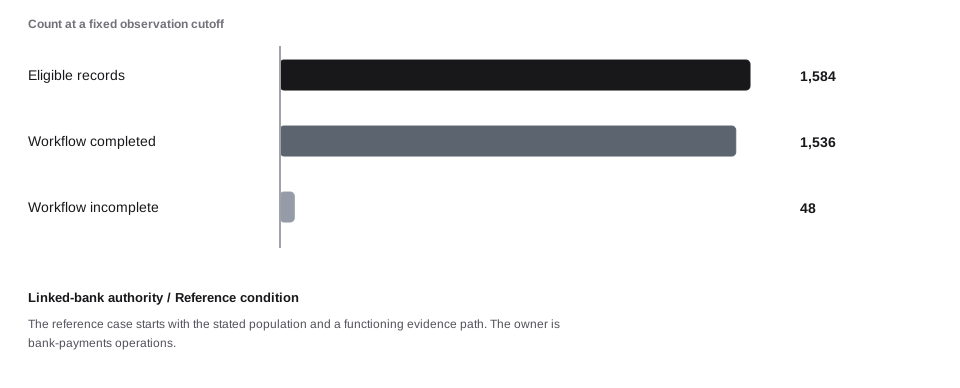
A concrete example. A customer proves access to a bank account while the product also needs authority for the intended debit. Those are related but distinct records. The case identifies 1,584 eligible records from a source population of 2,200. The required workflow completes for 1,536, but 23 completed records miss the illustrative internal target. Another 48 remain incomplete. Communication evidence covers 1,521 generated notices. Scope, completion, timeliness, and delivery are four separate properties of the customer outcome.
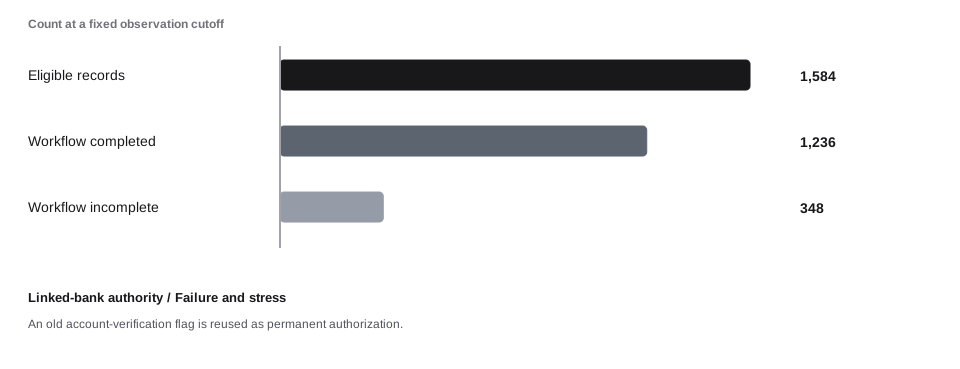
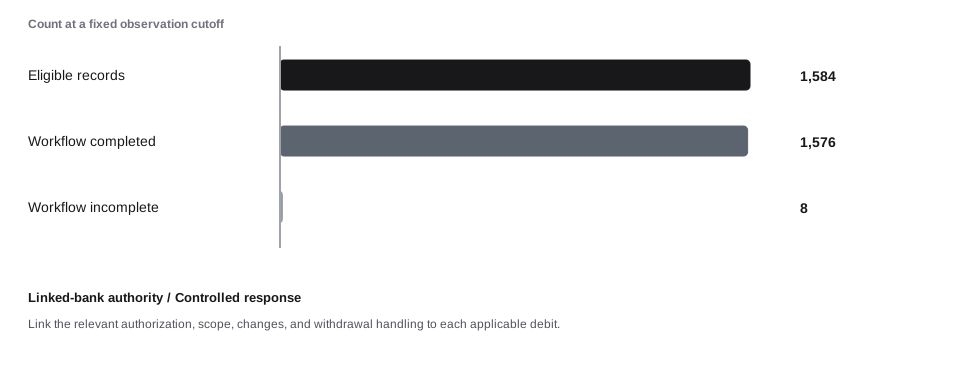
When the assumption fails. An old account-verification flag is reused as permanent authorization. Link the relevant authorization, scope, changes, and withdrawal handling to each applicable debit. The following worked sequence shows the reference condition, a stress condition, and a response condition with explicit synthetic data. These are comparative assumptions, not measured causal effects.
A customer proves access to a bank account while the product also needs authority for the intended debit. Those are related but distinct records.
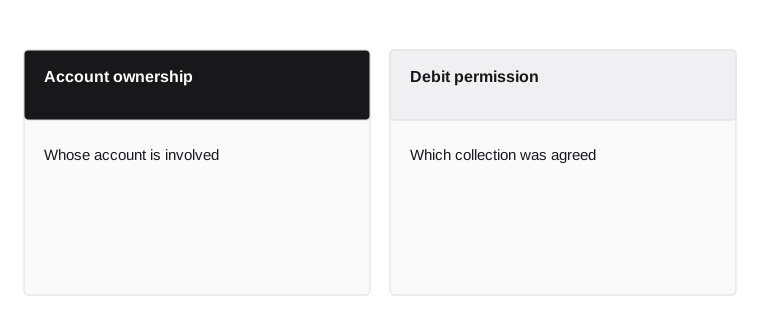
- Account ownership
- Whose account is involved
- Debit permission
- Which collection was agreed
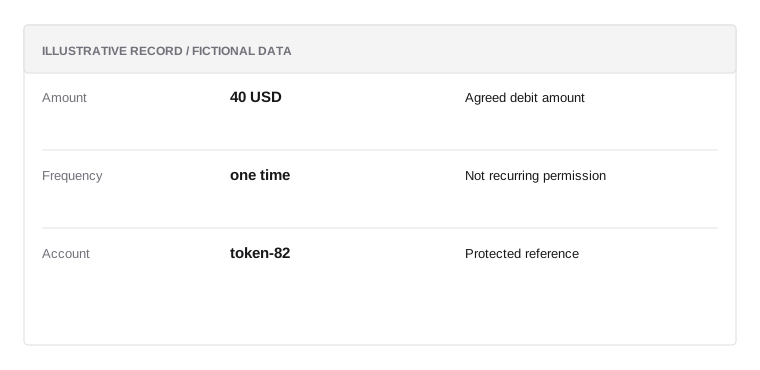
Authorization record
Illustrative data; not a real customer record or a prescribed policy.
- Amount40 USD
Agreed debit amount
- Frequencyone time
Not recurring permission
- Accounttoken-82
Protected reference
Ownership does not establish permission for this debit
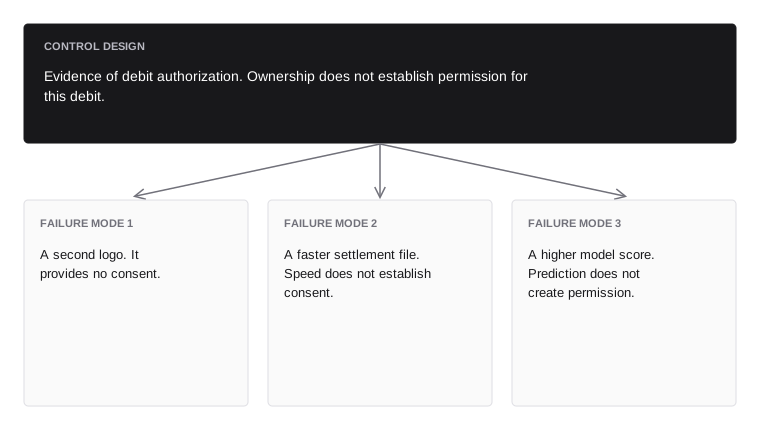
Evidence of debit authorization. Ownership does not establish permission for this debit.
- Failure mode 1avoid
- A second logo. It provides no consent.
- Failure mode 2avoid
- A faster settlement file. Speed does not establish consent.
- Failure mode 3avoid
- A higher model score. Prediction does not create permission.
Returns need reason-aware handling
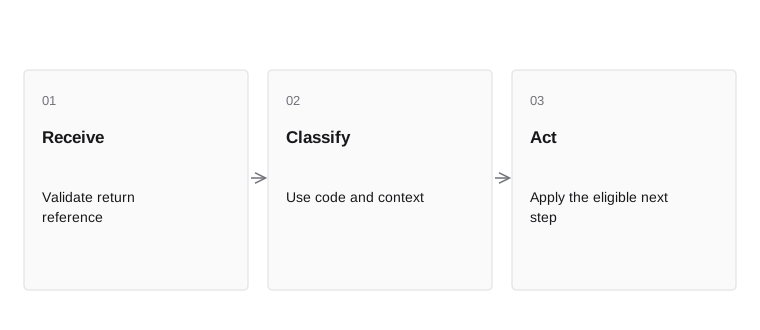
- ReceiveValidate return reference
- ClassifyUse code and context
- ActApply the eligible next step
A return can indicate insufficient funds, account problems, or an authorization issue. These causes require different responses. Treating all returns as fraud distorts labels; retrying all returns automatically can create customer harm and rule violations.
Create a return policy keyed by the applicable code, account type, product, prior attempts, and current network requirements. Preserve the original authorization and entry reference. An engineering example can use a configurable retry eligibility flag, but the flag must come from an approved rules table. Do not hard-code a universal return window or a universal retry count into a textbook example.
Inside the mechanism. A return reason is operational evidence with a defined scope. It can change routing, recovery, customer communication, and the outcome label. Preserve the original reason and later corrections rather than flattening everything into failed. Separate known returns from missing settlement evidence. A retry policy must account for the reason and applicable rules, not simply retry every non-success response. The state model should also prevent a returned funding event from leaving an unrelated payout marked as safely funded.
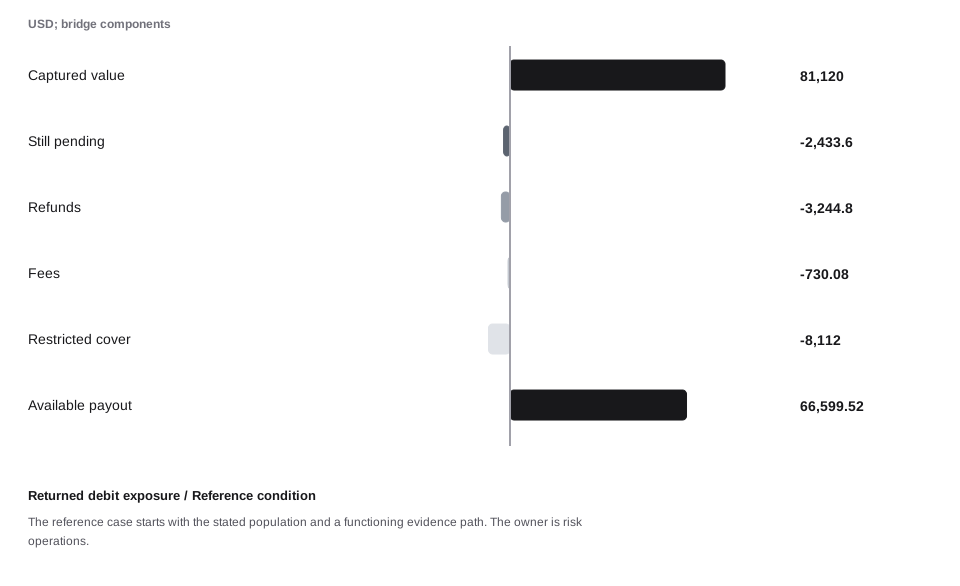
A concrete example. A seller receives an early payout against a debit that later returns. The platform now has a collection and exposure problem, not merely a processing error. The batch begins with $84,500 of instructions and $81,120.00 of captured value. At the observation cutoff, $2,433.60 remains pending. After the stated refunds, fees, and restrictions, $66,599.52 is available for payout. The unresolved instruction count is 2; an unknown external result is handled separately from a known decline.
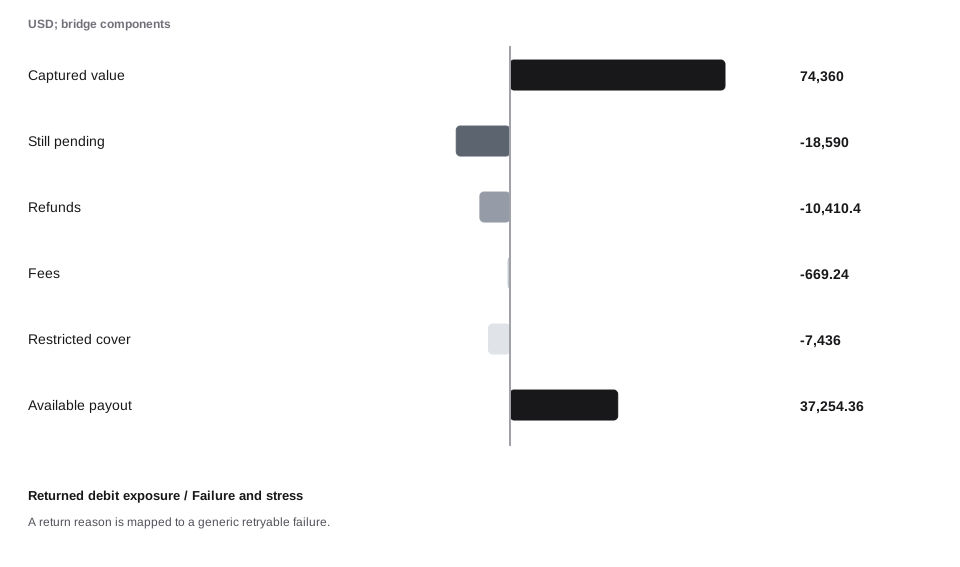
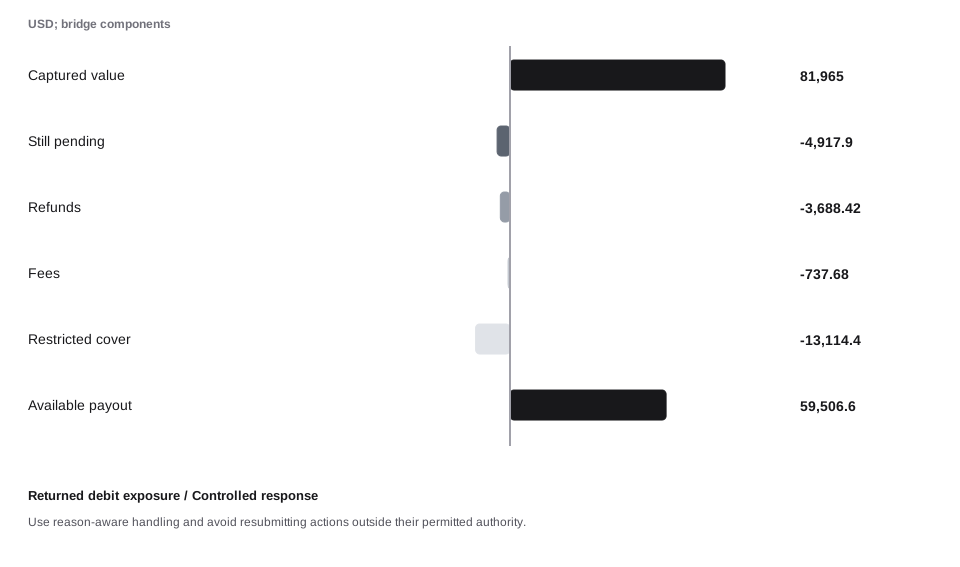
When the assumption fails. A return reason is mapped to a generic retryable failure. Use reason-aware handling and avoid resubmitting actions outside their permitted authority. The following worked sequence shows the reference condition, a stress condition, and a response condition with explicit synthetic data. These are comparative assumptions, not measured causal effects.
A seller receives an early payout against a debit that later returns. The platform now has a collection and exposure problem, not merely a processing error.
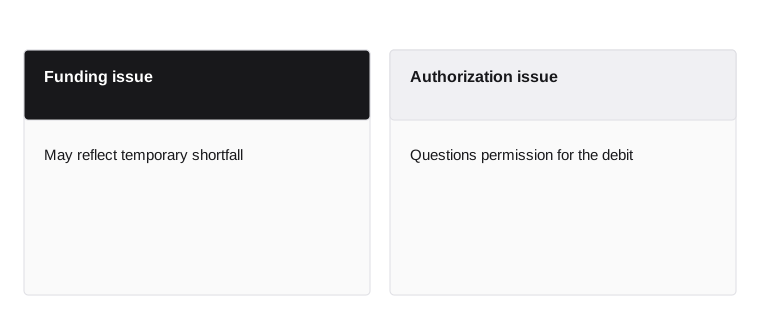
- Funding issue
- May reflect temporary shortfall
- Authorization issue
- Questions permission for the debit
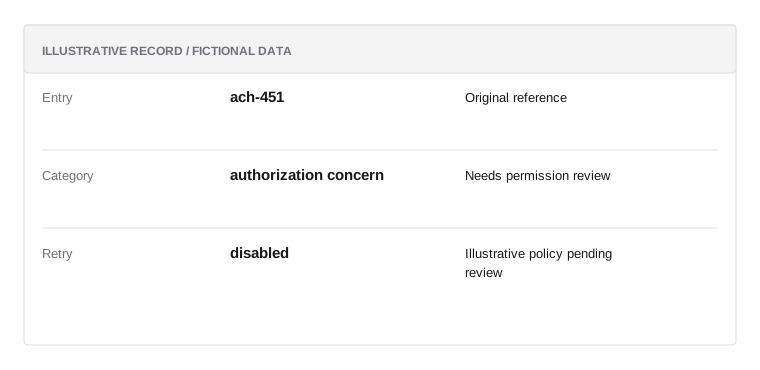
Return handling record
Illustrative data; not a real customer record or a prescribed policy.
- Entryach-451
Original reference
- Categoryauthorization concern
Needs permission review
- Retrydisabled
Illustrative policy pending review
A return code alone may not capture all conditions
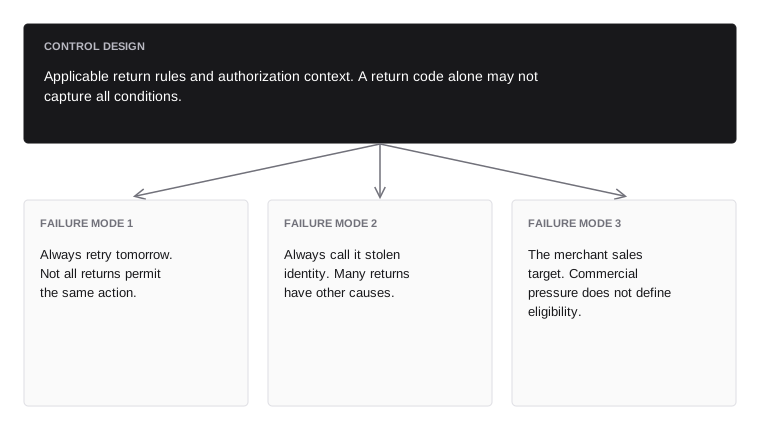
Applicable return rules and authorization context. A return code alone may not capture all conditions.
- Failure mode 1avoid
- Always retry tomorrow. Not all returns permit the same action.
- Failure mode 2avoid
- Always call it stolen identity. Many returns have other causes.
- Failure mode 3avoid
- The merchant sales target. Commercial pressure does not define eligibility.
Exposure continues after a status change
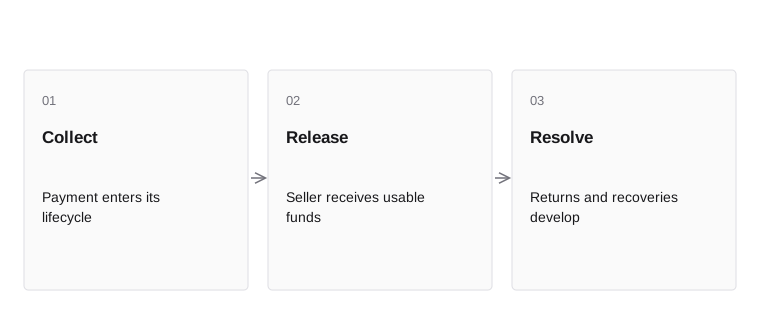
- CollectPayment enters its lifecycle
- ReleaseSeller receives usable funds
- ResolveReturns and recoveries develop
If Lantern pays a seller before bank-payment risk resolves, it finances the gap. A hold can reduce that gap but affects seller cash flow. The correct hold is a product and risk decision informed by return behavior, contracts, customer rights, and concentration. It is not a magic guarantee after a fixed number of days.
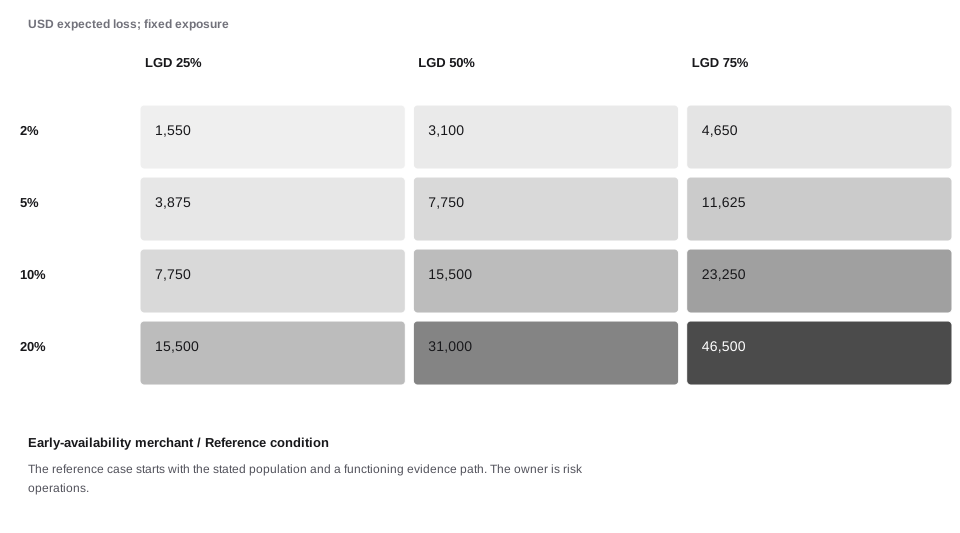
Estimate exposure as funds released while related obligations remain uncertain. Add pending refunds and returns, then subtract eligible funds that are actually available to cover them. Do not subtract a reserve that is legally unavailable for the obligation or has already covered another exposure.
Imagine that Lantern lets a seller withdraw funds as soon as an incoming ACH debit is submitted. If that debit later returns, the platform has already advanced value. The exposure is created by the availability policy as well as by the payment rail. Holding a payout can reduce one loss path while creating delay and support costs for legitimate sellers. A useful policy analysis compares the timing of returns, the seller’s ability to repay, and the value still available for recovery. An early processing status cannot resolve those economic facts.
Inside the mechanism. Exposure follows open promises and recoverability, not the color of a status badge. If the platform releases value before the funding leg is sufficiently resolved, it can retain a receivable or recovery risk after the customer experience looks complete. Track the linked funding and payout amounts, the remaining uncertainty, and usable cover. Reducing the payout delay changes the interval of exposure even when the transaction count and average ticket remain unchanged.
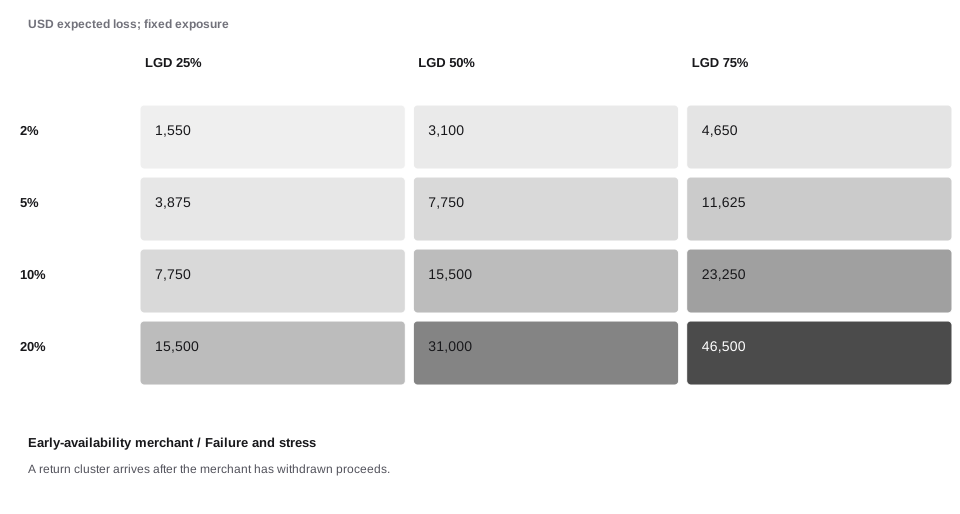
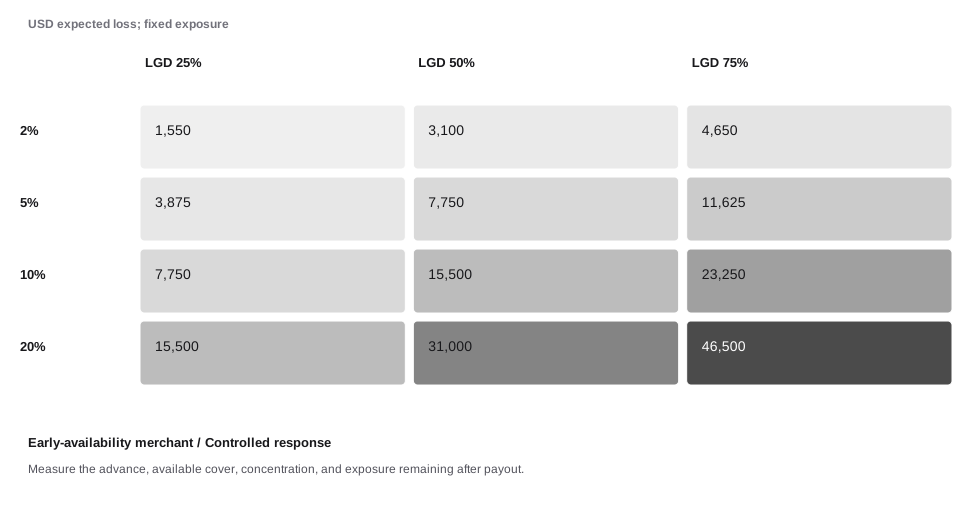
A concrete example. The platform advances usable value before the incoming collection is fully resolved. The merchant’s future ability to repay matters if the funding fails. The case has $310,000 of exposure. Its stated one-year PD and LGD imply $9,377.50 of expected loss, while the cover analysis leaves $241,000.00 of stress exposure. Monthly cash coverage is 1.12×. These are separate measures: one describes an average under probability assumptions, one describes available cover, and one describes a period’s funding capacity.
When the assumption fails. A return cluster arrives after the merchant has withdrawn proceeds. Measure the advance, available cover, concentration, and exposure remaining after payout. The following worked sequence shows the reference condition, a stress condition, and a response condition with explicit synthetic data. These are comparative assumptions, not measured causal effects.
The platform advances usable value before the incoming collection is fully resolved. The merchant’s future ability to repay matters if the funding fails.
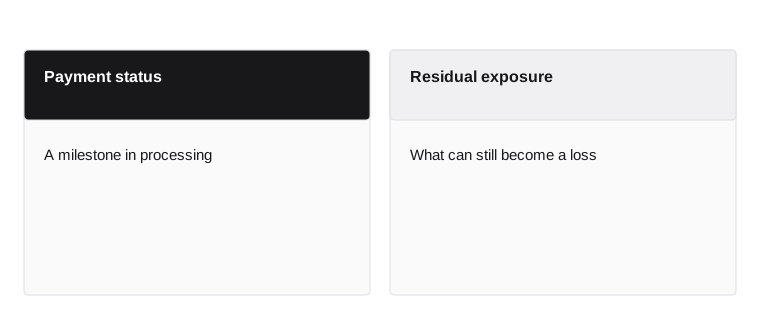
- Payment status
- A milestone in processing
- Residual exposure
- What can still become a loss
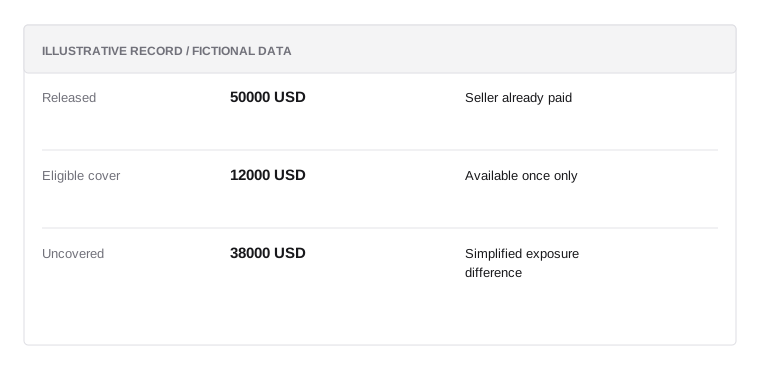
Illustrative payout gap
Illustrative data; not a real customer record or a prescribed policy.
- Released50000 USD
Seller already paid
- Eligible cover12000 USD
Available once only
- Uncovered38000 USD
Simplified exposure difference
Subtract available cover once from the released exposure
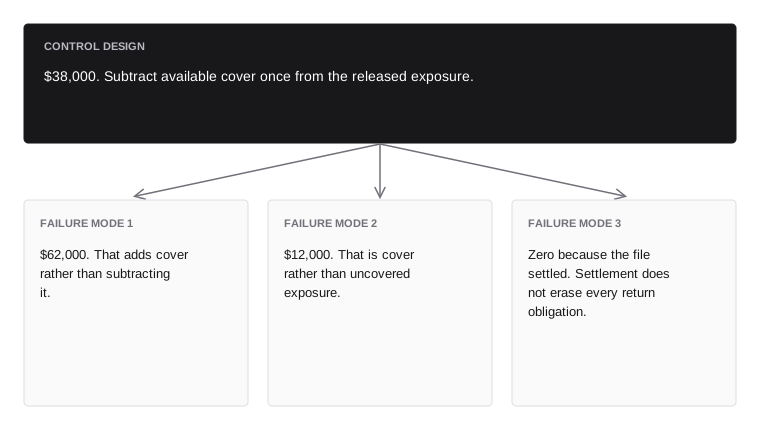
$38,000. Subtract available cover once from the released exposure.
- Failure mode 1avoid
- $62,000. That adds cover rather than subtracting it.
- Failure mode 2avoid
- $12,000. That is cover rather than uncovered exposure.
- Failure mode 3avoid
- Zero because the file settled. Settlement does not erase every return obligation.
Monitor both incoming and outgoing flows
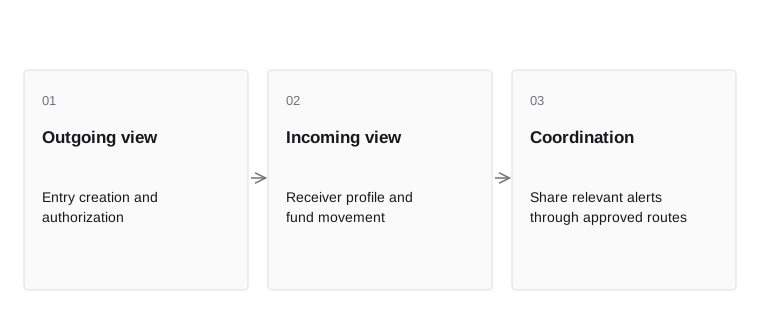
- Outgoing viewEntry creation and authorization
- Incoming viewReceiver profile and fund movement
- CoordinationShare relevant alerts through approved routes
Receiving institutions see patterns that a sender may miss, including unusual incoming credits followed by rapid outflow. Originating parties see payment creation and authorization behavior. A complete control map uses both views and a route for urgent contact.
Nacha identifies Phase 2 fraud-monitoring changes with a June 19, 2026 effective date and June 22 practical date because of the federal holiday. Its public explanation distinguishes role-based monitoring from a universal pre-processing requirement. Use the current rule text and partner obligations for implementation. Engineering teams should version the requirements map and test that monitored populations match it.
Inside the mechanism. Monitor the entry population and the economic destination. Incoming funds may support rapid outgoing movement, while an outgoing transfer can carry risk concentrated at the receiver. Join only on supported identifiers and retain the direction of each edge. Controls also need proof that the relevant population reached monitoring. A quiet alert queue can mean low risk, a narrow rule, or a broken feed; those explanations require different responses.
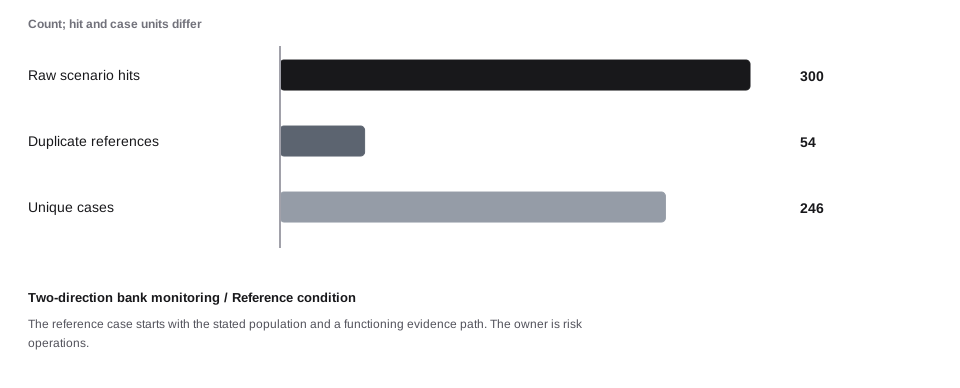
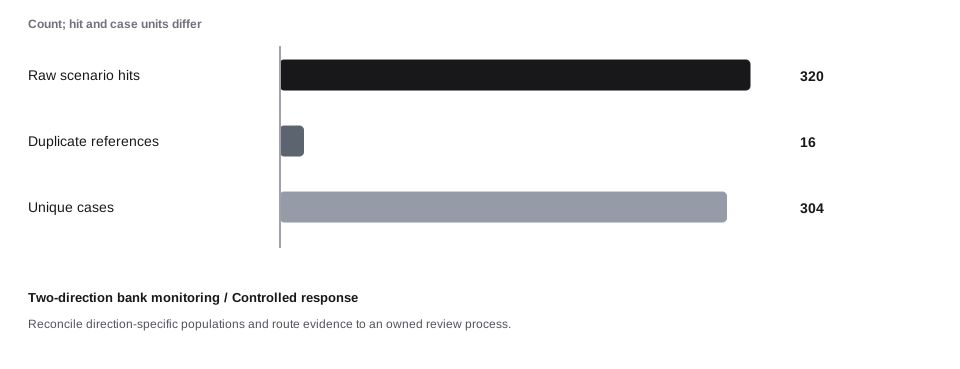
A concrete example. Incoming and outgoing bank activity can each reveal a distinct risk path. Coverage depends on receiving the right events for the organization’s actual role. The daily source population is 6,800 items, but 136 are outside the completed monitoring run. The included population creates 300 hits and 246 unique cases. With 35 cases already open and capacity for 260, the queue closes at 21. Coverage, duplicate work, and staffing are separate causes; reducing one number does not prove that the overall control improved.
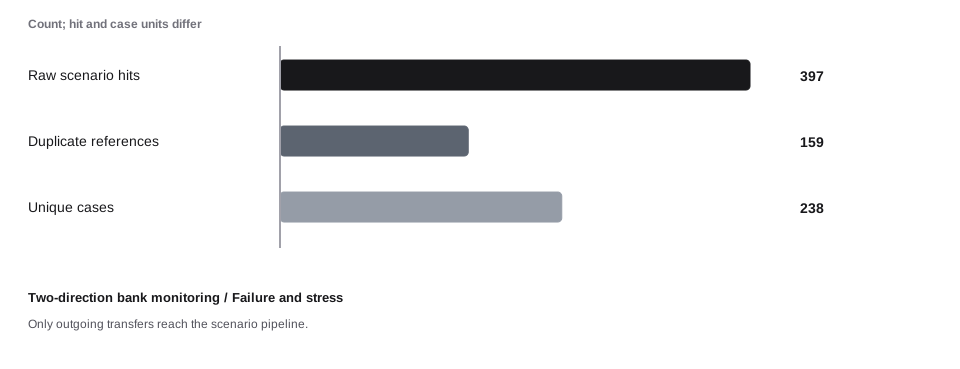
When the assumption fails. Only outgoing transfers reach the scenario pipeline. Reconcile direction-specific populations and route evidence to an owned review process. The following worked sequence shows the reference condition, a stress condition, and a response condition with explicit synthetic data. These are comparative assumptions, not measured causal effects.
Incoming and outgoing bank activity can each reveal a distinct risk path. Coverage depends on receiving the right events for the organization’s actual role.
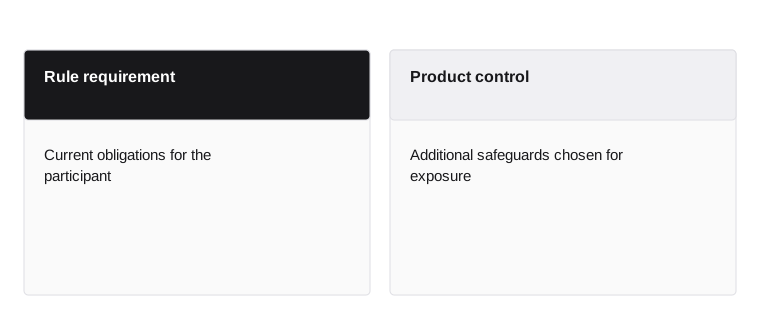
- Rule requirement
- Current obligations for the participant
- Product control
- Additional safeguards chosen for exposure
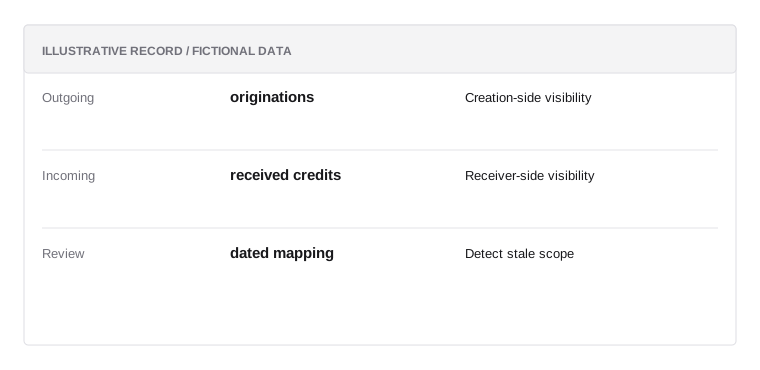
Monitoring coverage matrix
Illustrative data; not a real customer record or a prescribed policy.
- Outgoingoriginations
Creation-side visibility
- Incomingreceived credits
Receiver-side visibility
- Reviewdated mapping
Detect stale scope
Both sides observe different parts of the flow
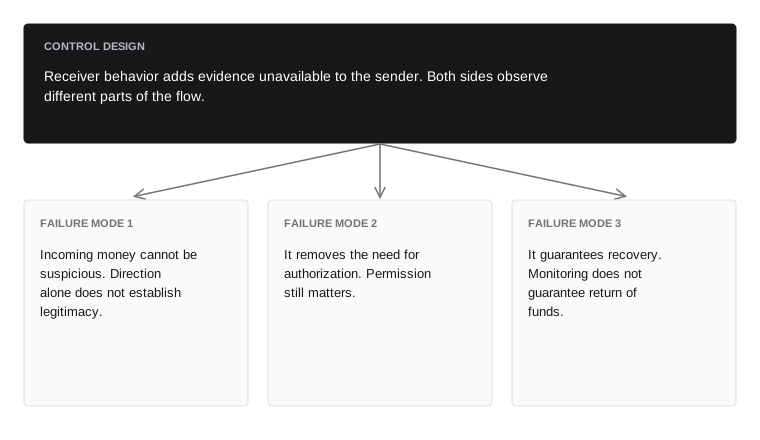
Receiver behavior adds evidence unavailable to the sender. Both sides observe different parts of the flow.
- Failure mode 1avoid
- Incoming money cannot be suspicious. Direction alone does not establish legitimacy.
- Failure mode 2avoid
- It removes the need for authorization. Permission still matters.
- Failure mode 3avoid
- It guarantees recovery. Monitoring does not guarantee return of funds.
Chapter connections
This chapter builds on Cards, authorization, and disputes. Continue with Instant payments and cross-border transfers to follow the next part of the system. Use the glossary for terminology and risk mathematics for formulas and worked calculations.