
Treasury, liquidity, and settlement operations
Keep usable funds aligned with the obligations that come due.
Solvent on paper, short of cash on Sunday
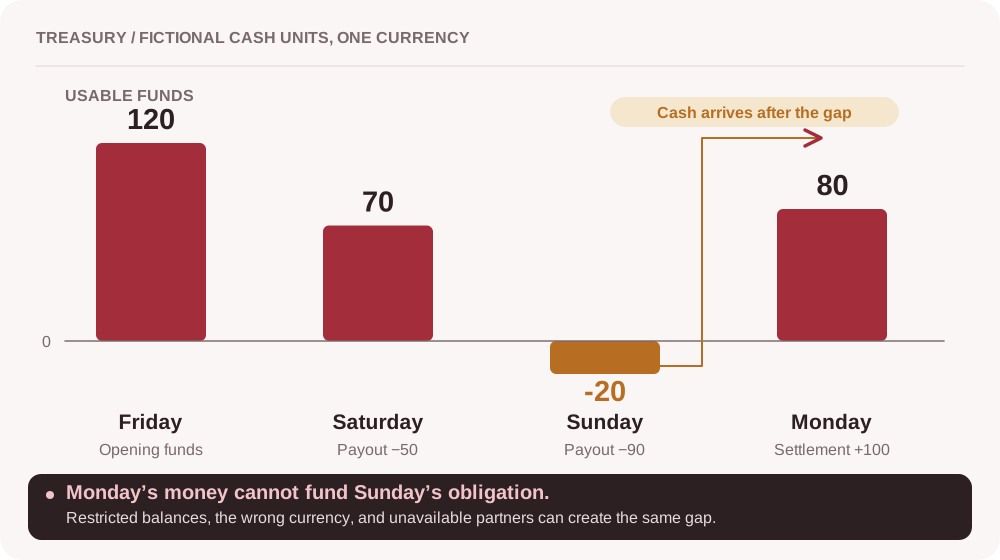
Enlarge to read every label and explore the connections
Liquidity depends on when, where, and in which currency funds are usable. Later settlement cannot meet an earlier obligation.
Build ladders by time, currency, and location.
Separate committed outflows from expected inflows.
Cover the earliest gap before relying on later funds.
Friday’s balance looks healthy. Saturday’s instant payouts continue. Monday’s incoming settlement has not arrived. A business can run out of usable money between two perfectly reasonable daily reports.
Build a time and currency cash ladder
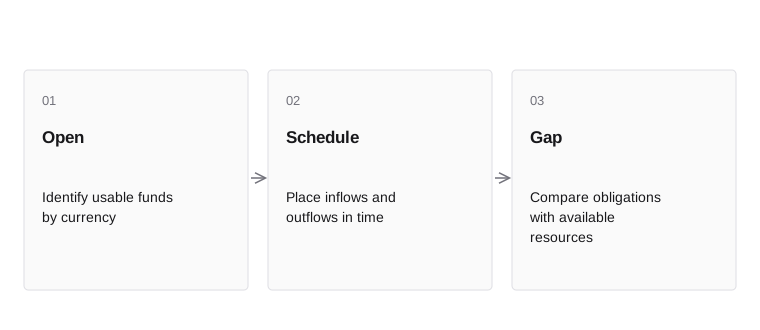
- OpenIdentify usable funds by currency
- SchedulePlace inflows and outflows in time
- GapCompare obligations with available resources
A cash ladder shows opening usable funds, expected inflows, committed outflows, and buffers by time and currency. Distinguish funds available now from funds expected later. A balance restricted for one purpose may not fund another obligation.
Use intraday detail where the product requires it. Instant services and cross-border partners can create obligations outside ordinary office hours. Record assumptions about holidays, settlement timing, and partner availability. The ladder should show which shortfalls are certain under current commitments and which arise only in a stress scenario.
A cash ladder places expected inflows and outflows into time buckets by currency and usable location. A total across all bank balances can hide the fact that funds are in the wrong currency, held at an unavailable institution, or arriving after a payment cutoff. Treasury needs the amount it can actually use for the obligation at the required time.
Separate forecasts from confirmed balances and identify the confidence of expected receipts. A merchant payout funded by an incoming settlement depends on both events occurring in the expected sequence. If the receipt is delayed, the platform may need another approved funding source or a controlled change to the payout. The customer-facing status should reflect that operational reality.
Inside the mechanism. Build a ladder of opening usable cash, expected receipts, required uses, and closing cash by time bucket, currency, and legal entity. Record uncertainty and restrictions separately. A consolidated total can hide an intraday or currency-specific shortfall. The relevant question is whether the correct funds are available at the required cutoff, not merely whether the organization owns enough assets in aggregate.
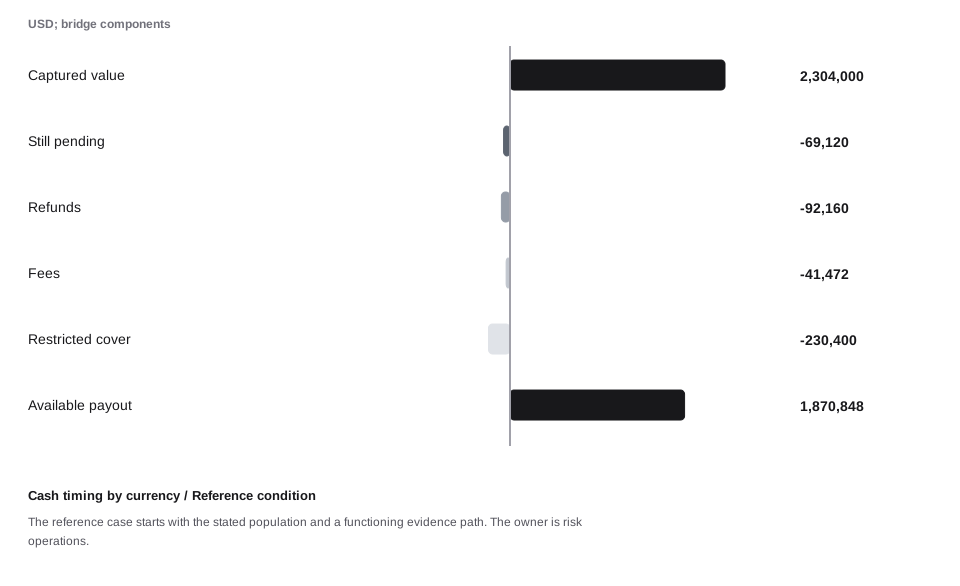
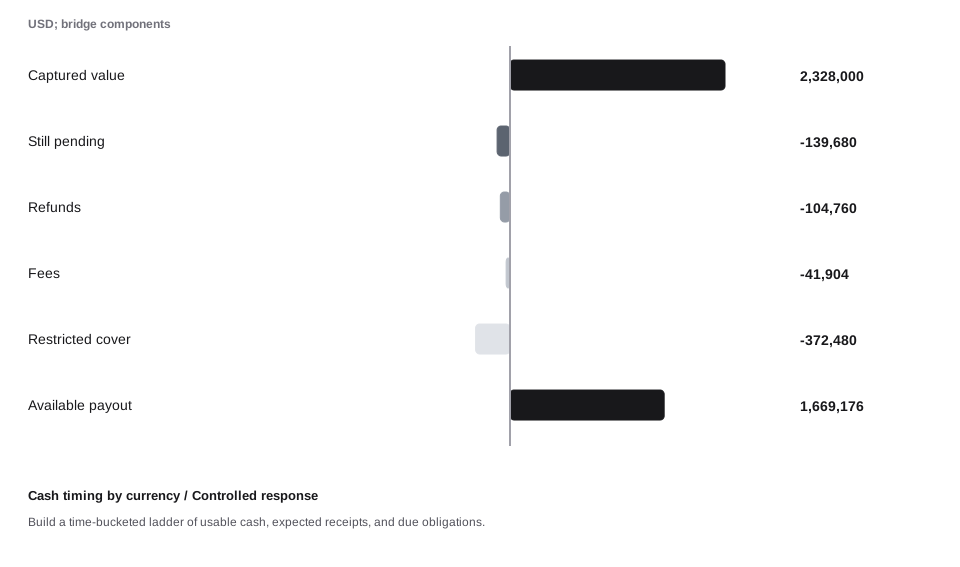
A concrete example. A profitable portfolio can still lack the cash needed at a particular settlement cutoff. Each currency and legal entity needs its own timed sources and uses. The batch begins with $2,400,000 of instructions and $2,304,000.00 of captured value. At the observation cutoff, $69,120.00 remains pending. After the stated refunds, fees, and restrictions, $1,870,848.00 is available for payout. The unresolved instruction count is 2; an unknown external result is handled separately from a known decline.
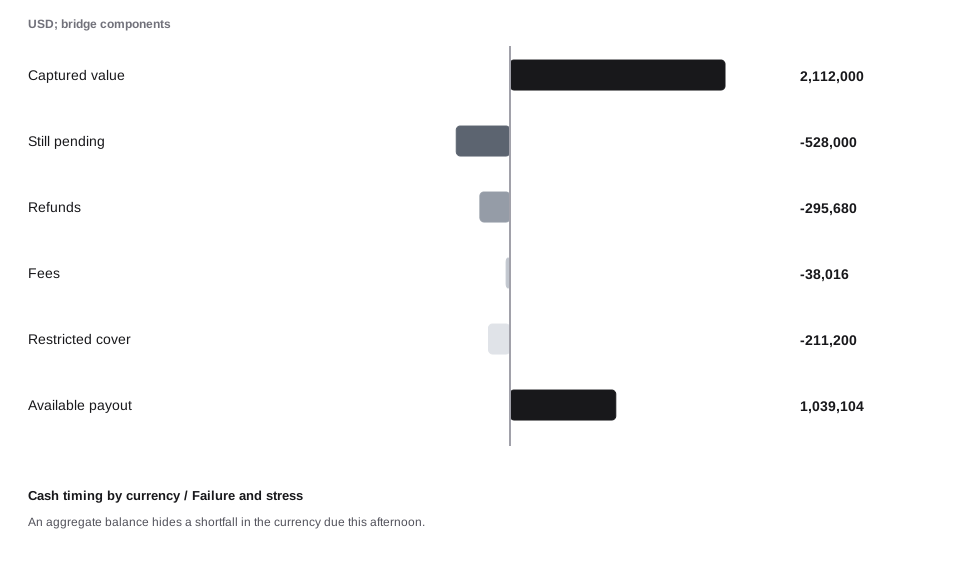
When the assumption fails. An aggregate balance hides a shortfall in the currency due this afternoon. Build a time-bucketed ladder of usable cash, expected receipts, and due obligations. The following worked sequence shows the reference condition, a stress condition, and a response condition with explicit synthetic data. These are comparative assumptions, not measured causal effects.
A profitable portfolio can still lack the cash needed at a particular settlement cutoff. Each currency and legal entity needs its own timed sources and uses.
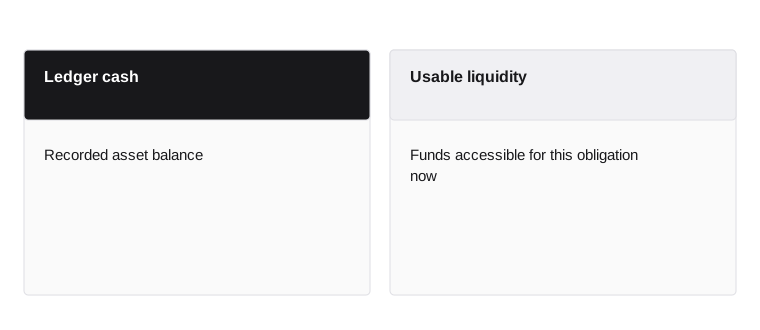
- Ledger cash
- Recorded asset balance
- Usable liquidity
- Funds accessible for this obligation now
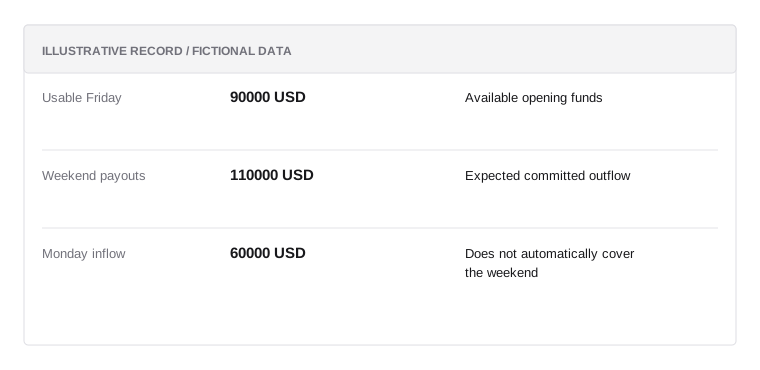
Weekend ladder
Illustrative data; not a real customer record or a prescribed policy.
- Usable Friday90000 USD
Available opening funds
- Weekend payouts110000 USD
Expected committed outflow
- Monday inflow60000 USD
Does not automatically cover the weekend
An aggregate balance can hide an immediate gap
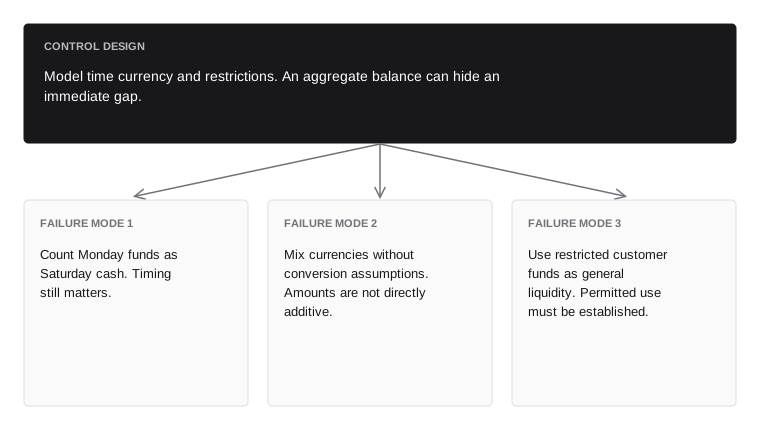
Model time currency and restrictions. An aggregate balance can hide an immediate gap.
- Failure mode 1avoid
- Count Monday funds as Saturday cash. Timing still matters.
- Failure mode 2avoid
- Mix currencies without conversion assumptions. Amounts are not directly additive.
- Failure mode 3avoid
- Use restricted customer funds as general liquidity. Permitted use must be established.
Reconcile settlement at the item level
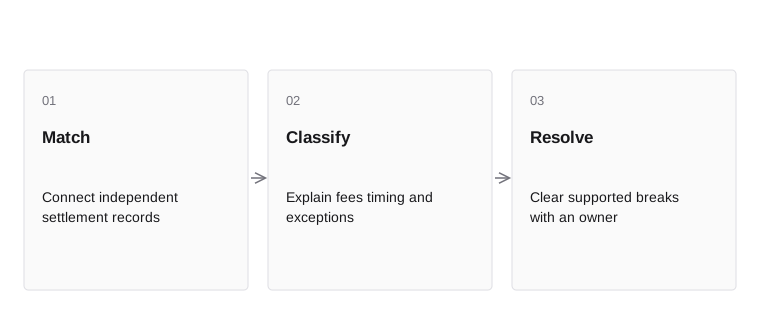
- MatchConnect independent settlement records
- ClassifyExplain fees timing and exceptions
- ResolveClear supported breaks with an owner
Settlement operations compare processor reports, bank statements, internal journals, and customer obligations. Use stable references and explicit handling for fees, returns, timing, and currency differences.
A matched batch total is useful but insufficient for consequential discrepancies. Investigate unmatched items and age them with an owner. Avoid suspense accounts that become permanent storage for unexplained money. A suspense balance should have supporting items and a resolution path. Regular item-level reconciliation makes a sudden partner problem easier to distinguish from an old internal defect.
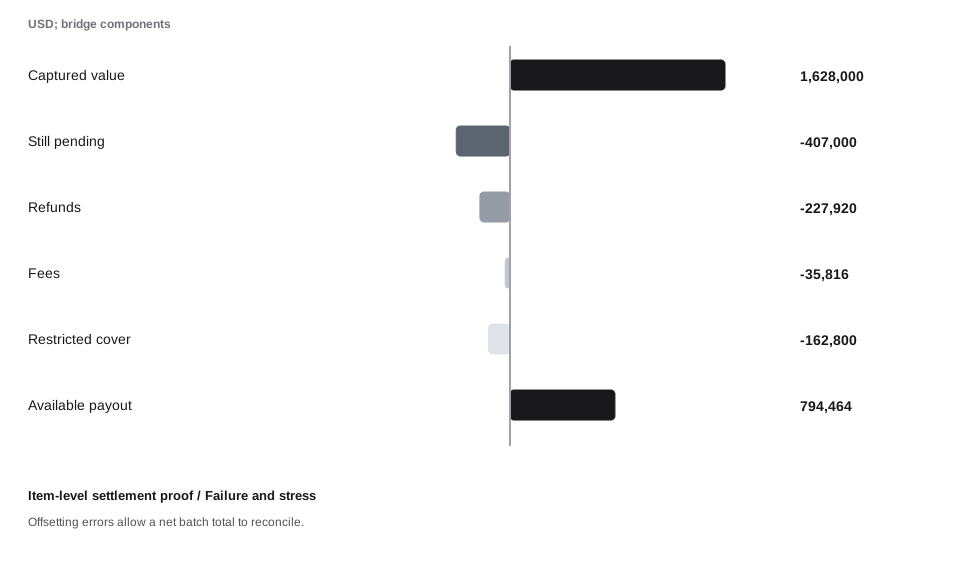
Inside the mechanism. Reconcile settlement using stable item references, amount, currency, fees, adjustments, and observed state. Match gross components before accepting a net total. Offsetting duplicate and missing items can produce the correct batch sum while allocating money incorrectly. Aging and ownership turn unmatched records into an operating process. A temporary timing difference should have expected next evidence and an escalation point.
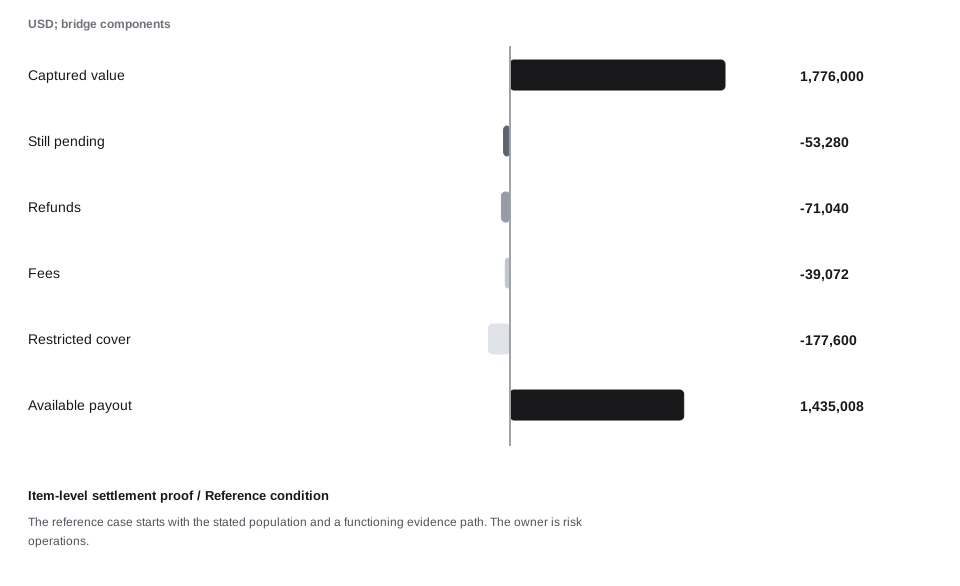
A concrete example. A batch total can match while individual items are duplicated, missing, or assigned to the wrong merchant. The join key and adjustment treatment are part of the control. The batch begins with $1,850,000 of instructions and $1,776,000.00 of captured value. At the observation cutoff, $53,280.00 remains pending. After the stated refunds, fees, and restrictions, $1,435,008.00 is available for payout. The unresolved instruction count is 2; an unknown external result is handled separately from a known decline.
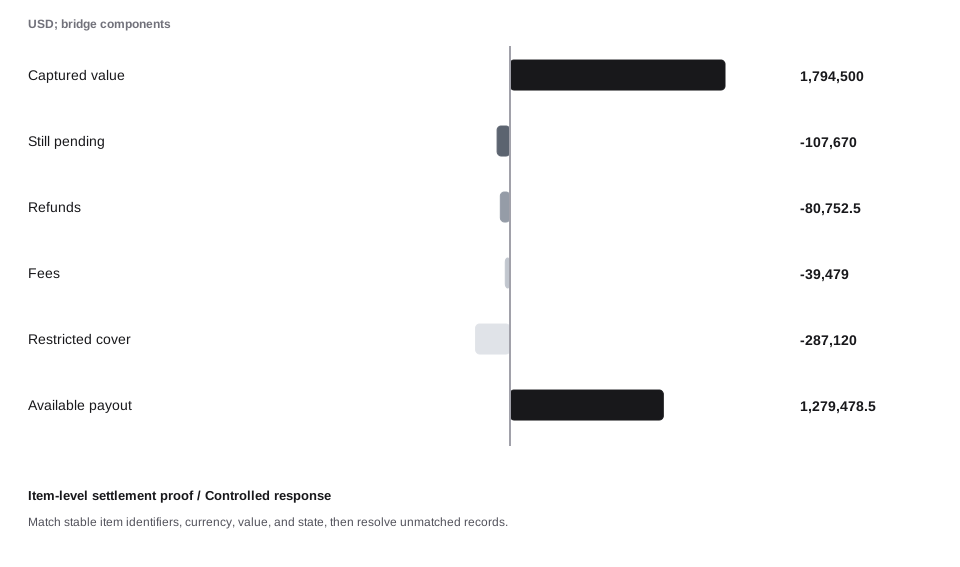
When the assumption fails. Offsetting errors allow a net batch total to reconcile. Match stable item identifiers, currency, value, and state, then resolve unmatched records. The following worked sequence shows the reference condition, a stress condition, and a response condition with explicit synthetic data. These are comparative assumptions, not measured causal effects.
A batch total can match while individual items are duplicated, missing, or assigned to the wrong merchant. The join key and adjustment treatment are part of the control.
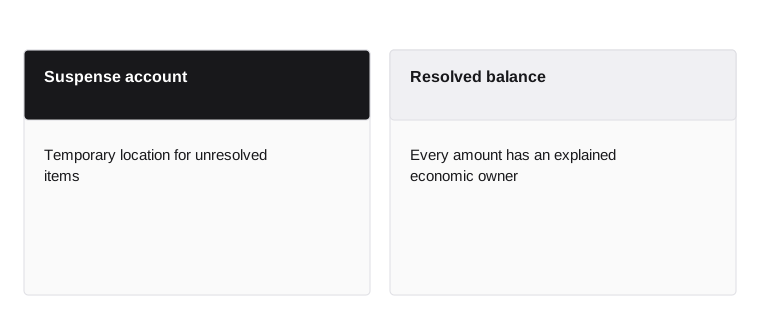
- Suspense account
- Temporary location for unresolved items
- Resolved balance
- Every amount has an explained economic owner
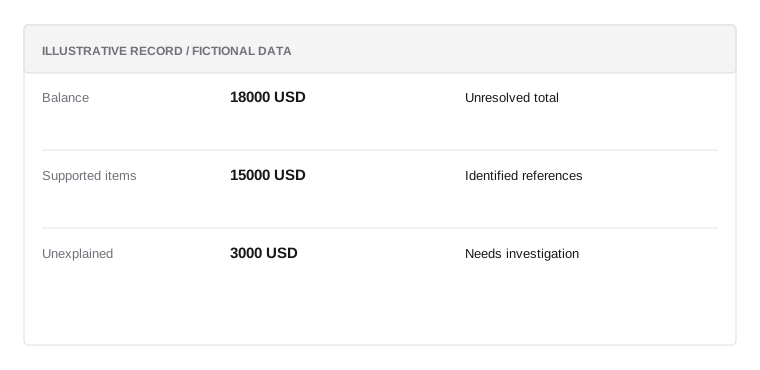
Suspense review
Illustrative data; not a real customer record or a prescribed policy.
- Balance18000 USD
Unresolved total
- Supported items15000 USD
Identified references
- Unexplained3000 USD
Needs investigation
A total alone cannot explain ownership
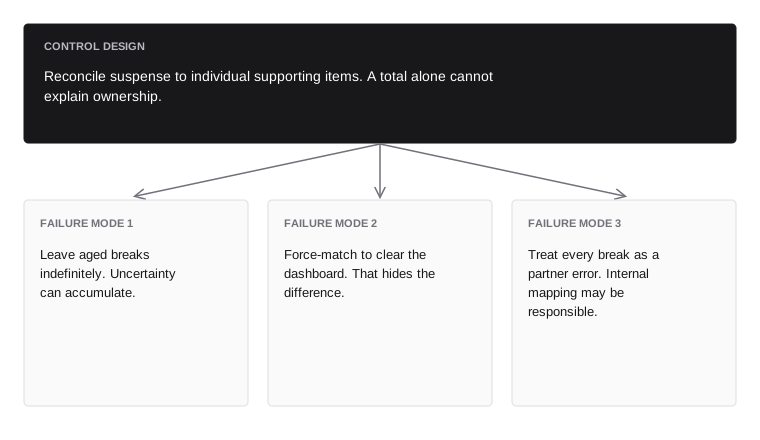
Reconcile suspense to individual supporting items. A total alone cannot explain ownership.
- Failure mode 1avoid
- Leave aged breaks indefinitely. Uncertainty can accumulate.
- Failure mode 2avoid
- Force-match to clear the dashboard. That hides the difference.
- Failure mode 3avoid
- Treat every break as a partner error. Internal mapping may be responsible.
Stress partner and funding concentration
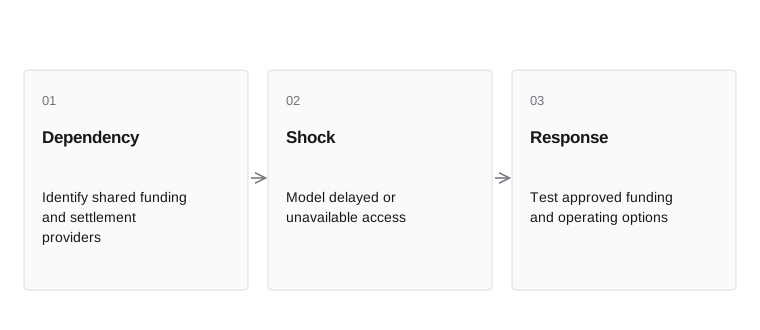
- DependencyIdentify shared funding and settlement providers
- ShockModel delayed or unavailable access
- ResponseTest approved funding and operating options
A single bank, processor, or funding source can support several products. Its failure can create correlated liquidity and operational problems. Map dependencies beneath the visible product lines.
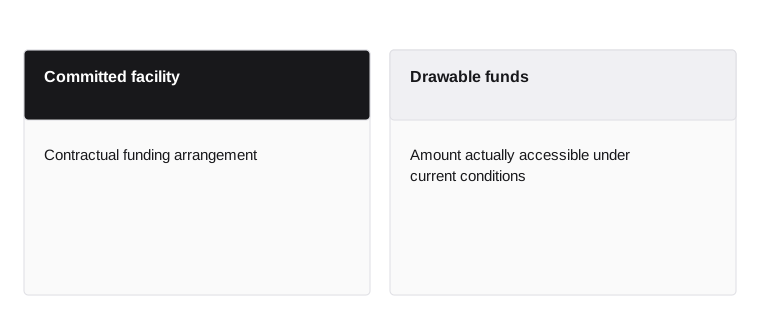
Stress delayed settlement, account restrictions, reduced credit availability, and higher refunds. Separate contractual access to a facility from the ability to draw it under stress. Test contact and approval procedures. A funding plan that requires an unavailable executive at midnight is not fully executable. The response should preserve legal restrictions and customer obligations.
Inside the mechanism. Stress the loss of funding and settlement capacity together when they share a dependency. A backup arrangement is useful only if it is available under the same stress and can handle the needed currency, volume, and timing. Record contractual limits and operational readiness. Diversification by provider name can be misleading when the providers rely on the same underlying bank or infrastructure.
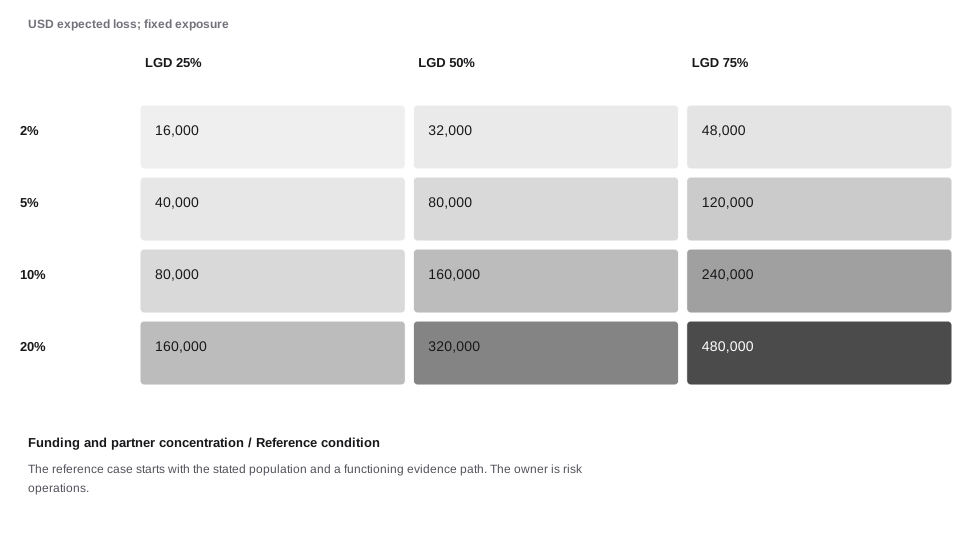
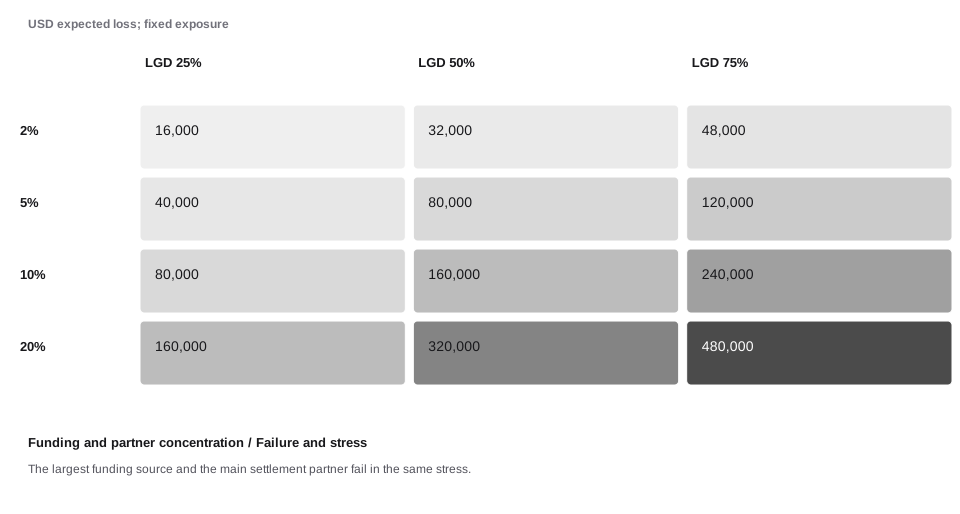
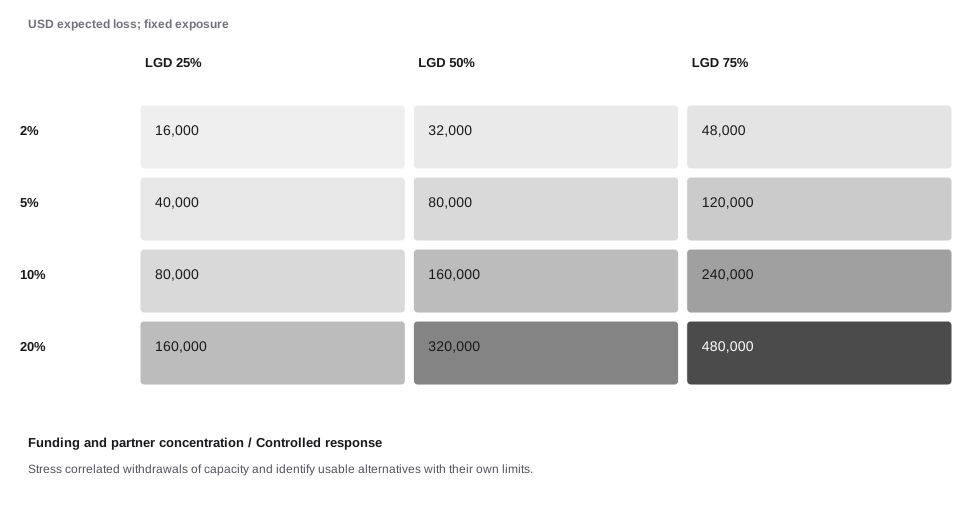
A concrete example. Available funding can decline at the same time that settlement needs rise. A concentration assessment should model the dependency and the timing of its failure. The case has $3,200,000 of exposure. Its stated one-year PD and LGD imply $69,440.00 of expected loss, while the cover analysis leaves $1,550,000.00 of stress exposure. Monthly cash coverage is 1.79×. These are separate measures: one describes an average under probability assumptions, one describes available cover, and one describes a period’s funding capacity.
When the assumption fails. The largest funding source and the main settlement partner fail in the same stress. Stress correlated withdrawals of capacity and identify usable alternatives with their own limits. The following worked sequence shows the reference condition, a stress condition, and a response condition with explicit synthetic data. These are comparative assumptions, not measured causal effects.
Available funding can decline at the same time that settlement needs rise. A concentration assessment should model the dependency and the timing of its failure.
- Committed facility
- Contractual funding arrangement
- Drawable funds
- Amount actually accessible under current conditions
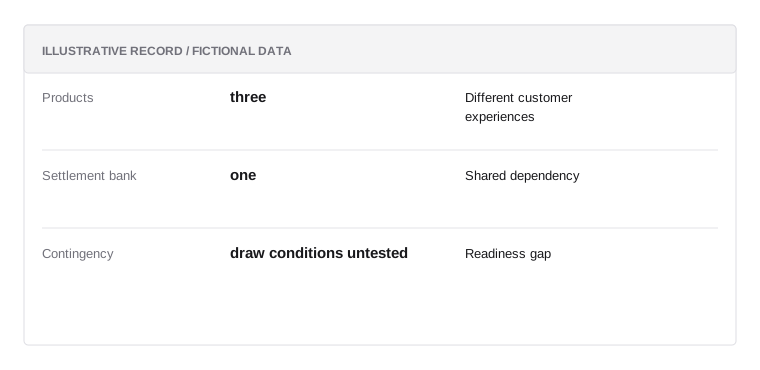
Partner stress
Illustrative data; not a real customer record or a prescribed policy.
- Productsthree
Different customer experiences
- Settlement bankone
Shared dependency
- Contingencydraw conditions untested
Readiness gap
A contract alone does not prove immediate liquidity
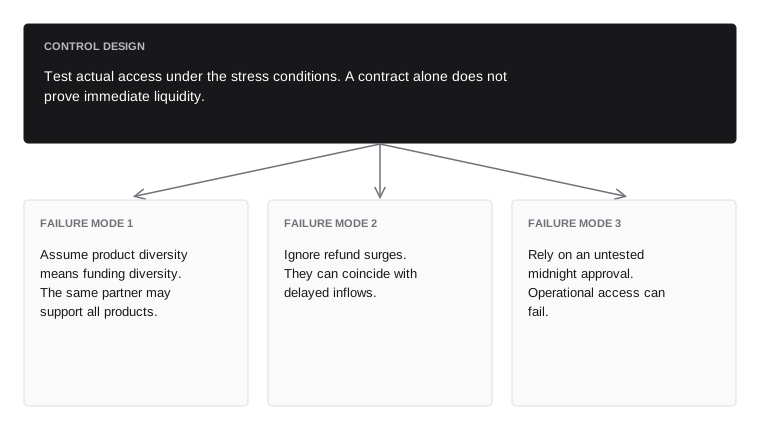
Test actual access under the stress conditions. A contract alone does not prove immediate liquidity.
- Failure mode 1avoid
- Assume product diversity means funding diversity. The same partner may support all products.
- Failure mode 2avoid
- Ignore refund surges. They can coincide with delayed inflows.
- Failure mode 3avoid
- Rely on an untested midnight approval. Operational access can fail.
Separate reserves capital and liquidity
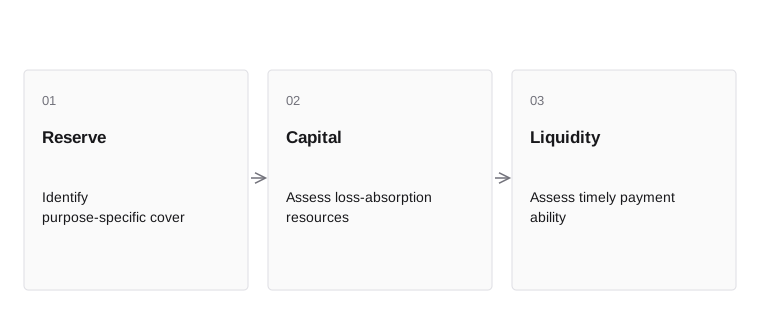
- ReserveIdentify purpose-specific cover
- CapitalAssess loss-absorption resources
- LiquidityAssess timely payment ability
A reserve can cover specified exposure under its terms. Capital absorbs losses at the firm level under the relevant accounting and regulatory framework. Liquidity meets obligations when due. These concepts interact but are not interchangeable.
A firm may have enough capital and insufficient same-day cash. A merchant reserve may be liquid but unavailable for the platform’s unrelated operating expense. Use distinct measures and avoid counting the same resource as protection for several simultaneous obligations. The decision should show what each resource can legally and operationally do.
Capital, reserves, and liquidity serve different purposes. Capital can absorb losses without necessarily being held as immediately usable cash. A merchant reserve can support a defined claim while remaining subject to eligibility and access conditions. Liquidity concerns the ability to meet cash obligations when due. A sound report keeps these measures distinct and then explains how they interact in a stress event. Calling all three a buffer hides which problem each resource can actually solve.
Inside the mechanism. Reserves, capital, and liquidity are related but distinct. A reserve can restrict merchant availability; capital can absorb losses; liquidity can meet payments when due. Map ownership, permitted use, valuation, and timing before recognizing an amount in each view. Do not count one restricted balance as several independent protections. A solvent institution can still face an immediate funding shortfall.
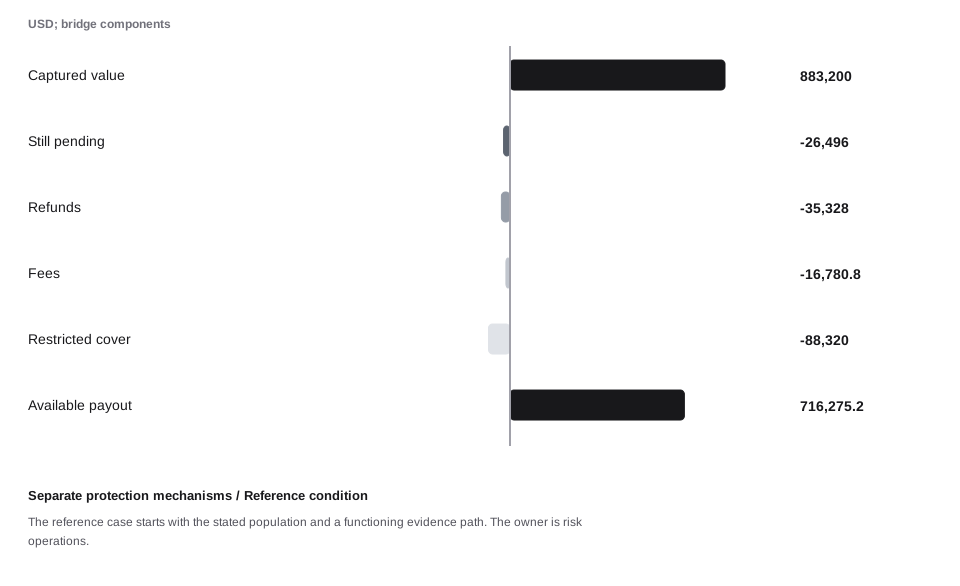
A concrete example. A reserve restricts availability, capital absorbs losses, and liquidity meets payments when due. Counting the same money as independent protection in all three views overstates resilience. The batch begins with $920,000 of instructions and $883,200.00 of captured value. At the observation cutoff, $26,496.00 remains pending. After the stated refunds, fees, and restrictions, $716,275.20 is available for payout. The unresolved instruction count is 2; an unknown external result is handled separately from a known decline.
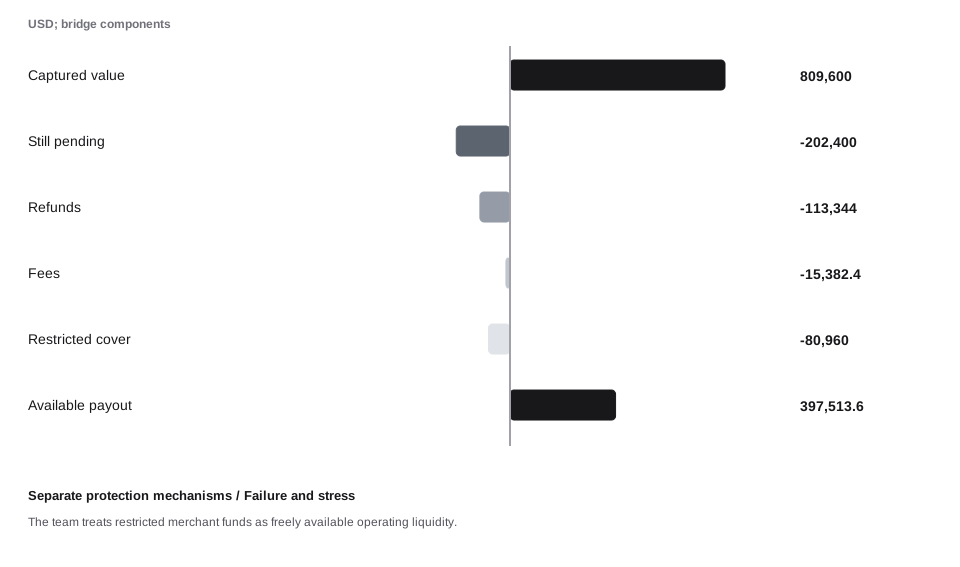
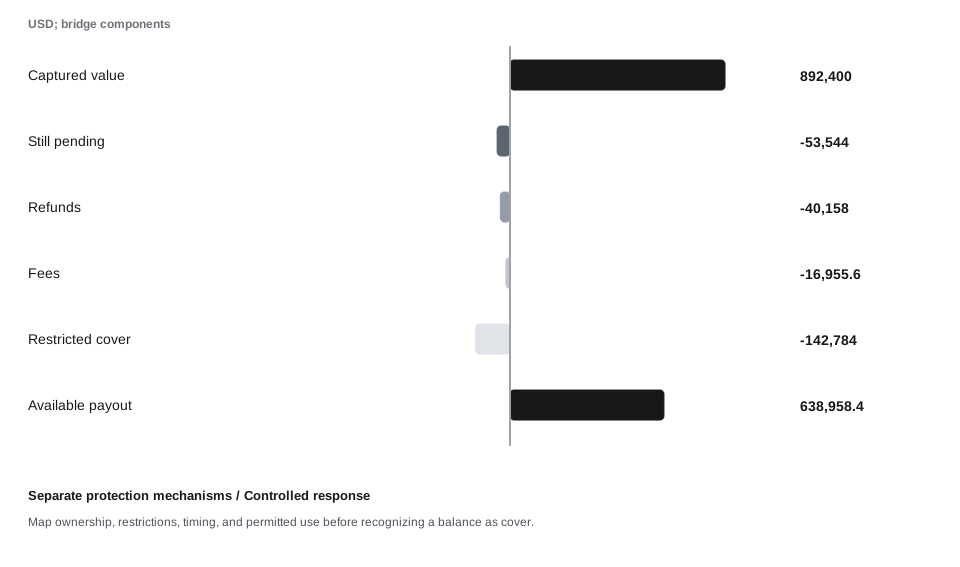
When the assumption fails. The team treats restricted merchant funds as freely available operating liquidity. Map ownership, restrictions, timing, and permitted use before recognizing a balance as cover. The following worked sequence shows the reference condition, a stress condition, and a response condition with explicit synthetic data. These are comparative assumptions, not measured causal effects.
A reserve restricts availability, capital absorbs losses, and liquidity meets payments when due. Counting the same money as independent protection in all three views overstates resilience.
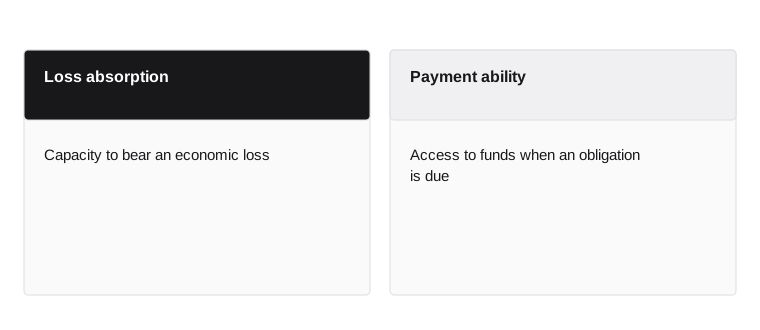
- Loss absorption
- Capacity to bear an economic loss
- Payment ability
- Access to funds when an obligation is due
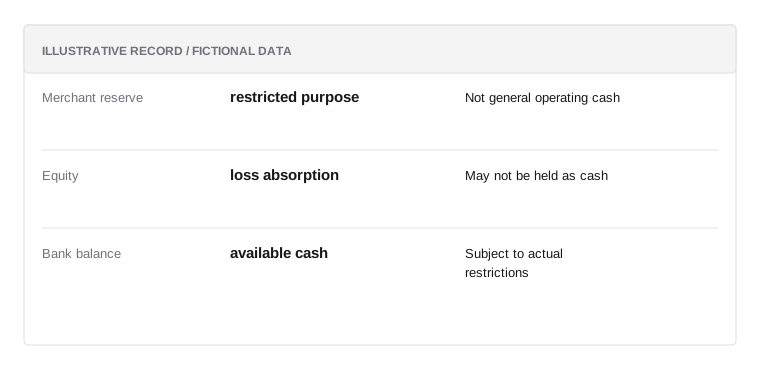
Resource classification
Illustrative data; not a real customer record or a prescribed policy.
- Merchant reserverestricted purpose
Not general operating cash
- Equityloss absorption
May not be held as cash
- Bank balanceavailable cash
Subject to actual restrictions
One balance cannot perform every role automatically
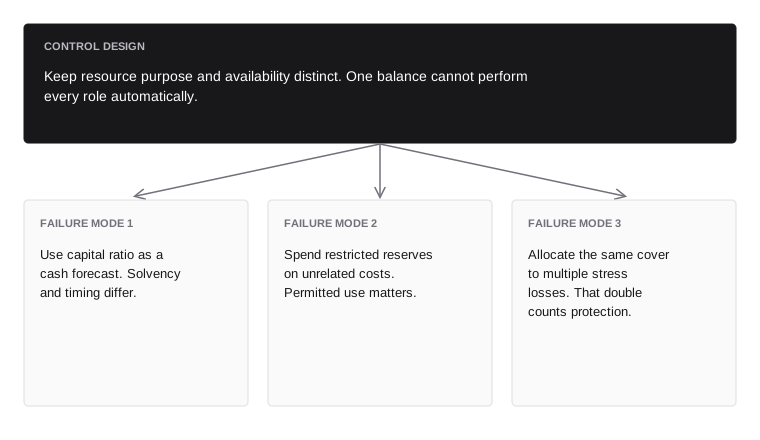
Keep resource purpose and availability distinct. One balance cannot perform every role automatically.
- Failure mode 1avoid
- Use capital ratio as a cash forecast. Solvency and timing differ.
- Failure mode 2avoid
- Spend restricted reserves on unrelated costs. Permitted use matters.
- Failure mode 3avoid
- Allocate the same cover to multiple stress losses. That double counts protection.
Communicate funds status accurately
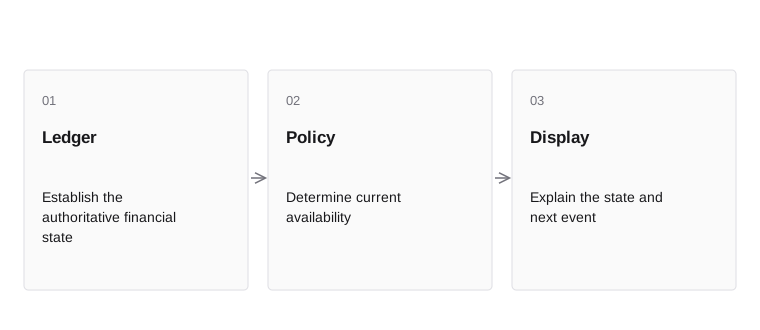
- LedgerEstablish the authoritative financial state
- PolicyDetermine current availability
- DisplayExplain the state and next event
Customers need to distinguish pending, available, reserved, paid out, returned, and restricted funds. The displayed state should come from the authoritative ledger and policy, with clear explanations of relevant conditions.
Do not show a projected settlement as spendable merely to make the interface feel instant. If the product advances funds before settlement, record that as a separate exposure and promise. During an incident, keep status messages aligned with known facts and update them as evidence changes. Clear funds language reduces support load and prevents customers from planning around money they cannot use.
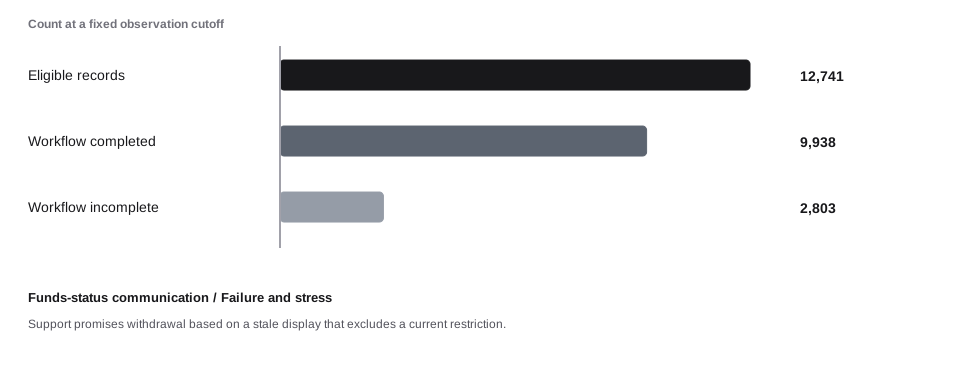
Inside the mechanism. Funds status should come from an authoritative availability model. Pending, settled, restricted, reserved, and available amounts should have clear meanings in the interface and support tools. A customer-facing estimate needs the conditions that can change it. Reconcile changes in status to the underlying events so support does not promise a withdrawal based on a stale or incomplete balance.
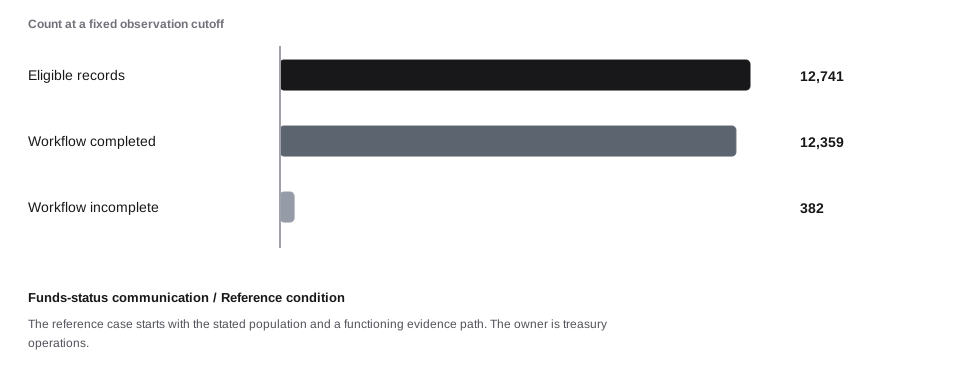
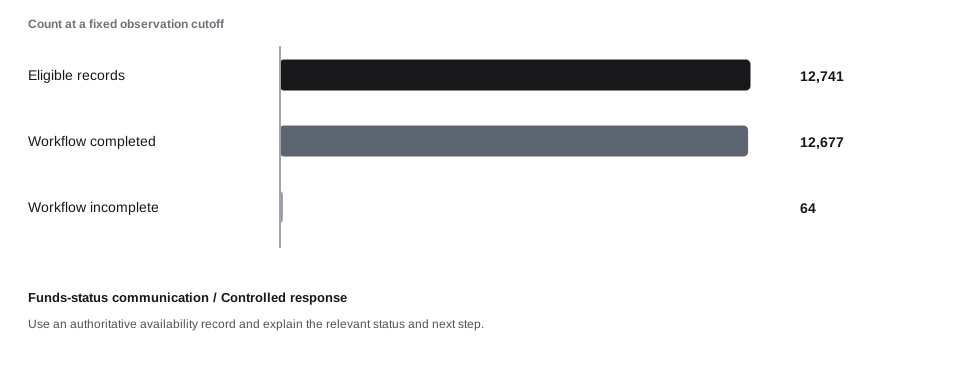
A concrete example. Customers need a clear distinction between pending, settled, held, and available amounts. The interface and support response should use the same underlying state. The case identifies 12,741 eligible records from a source population of 13,700. The required workflow completes for 12,359, but 185 completed records miss the illustrative internal target. Another 382 remain incomplete. Communication evidence covers 12,235 generated notices. Scope, completion, timeliness, and delivery are four separate properties of the customer outcome.
When the assumption fails. Support promises withdrawal based on a stale display that excludes a current restriction. Use an authoritative availability record and explain the relevant status and next step. The following worked sequence shows the reference condition, a stress condition, and a response condition with explicit synthetic data. These are comparative assumptions, not measured causal effects.
Customers need a clear distinction between pending, settled, held, and available amounts. The interface and support response should use the same underlying state.
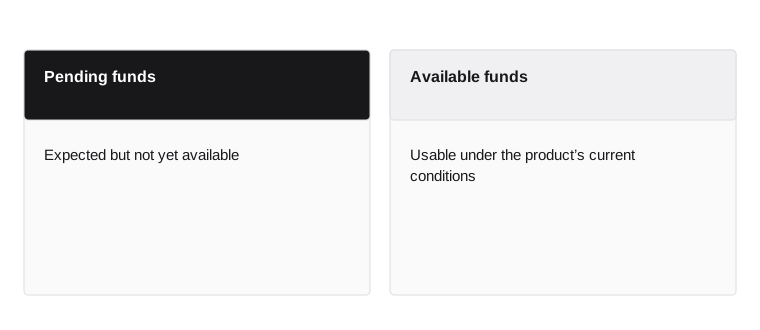
- Pending funds
- Expected but not yet available
- Available funds
- Usable under the product’s current conditions
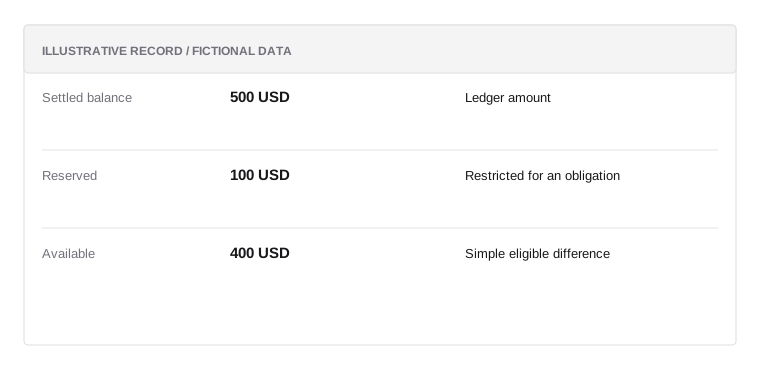
Balance screen record
Illustrative data; not a real customer record or a prescribed policy.
- Settled balance500 USD
Ledger amount
- Reserved100 USD
Restricted for an obligation
- Available400 USD
Simple eligible difference
Visual speed must not invent usable money
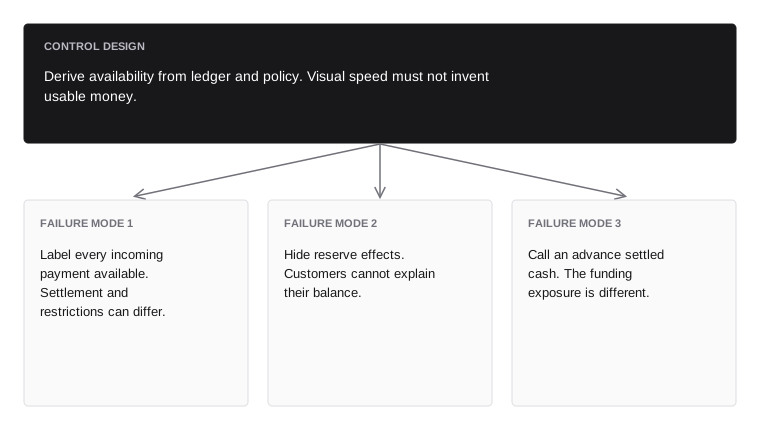
Derive availability from ledger and policy. Visual speed must not invent usable money.
- Failure mode 1avoid
- Label every incoming payment available. Settlement and restrictions can differ.
- Failure mode 2avoid
- Hide reserve effects. Customers cannot explain their balance.
- Failure mode 3avoid
- Call an advance settled cash. The funding exposure is different.
Chapter connections
This chapter builds on Case operations and human decisions. Continue with Operational resilience and failure design to follow the next part of the system. Use the glossary for terminology and risk mathematics for formulas and worked calculations.