
Consumer protection, errors, and complaints
Design a clear path from customer report to a supported resolution.
One report, two distinct processes
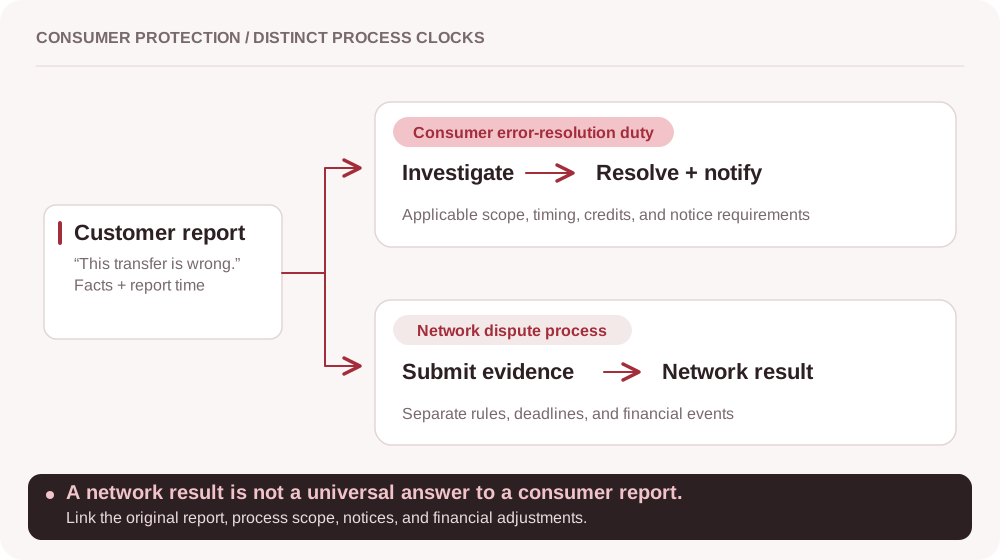
Enlarge to read every label and explore the connections
A customer report can trigger legal error-resolution duties and a network dispute process. Track their scope, clocks, and completion rules separately.
Capture the report in the customer’s language.
Determine the product and account scope.
Track consumer duties separately from network status.
A customer calls a transfer wrong. The first task is to understand the report and route it under the right rules. The customer should not need to know the name of a regulation to reach the correct process.
Determine the product and account scope
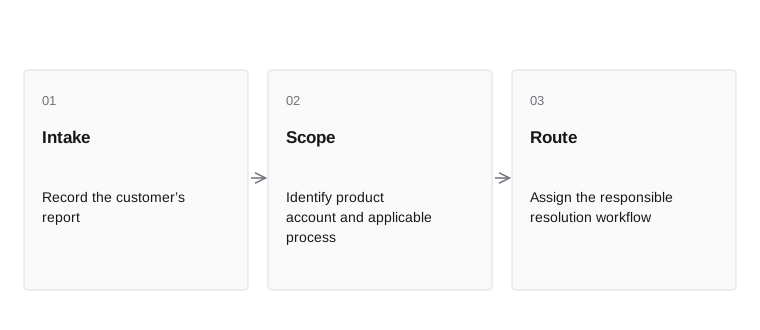
- IntakeRecord the customer’s report
- ScopeIdentify product account and applicable process
- RouteAssign the responsible resolution workflow
Consumer error-resolution rights depend on the relevant law, product, account, transaction, and facts. Regulation E covers specified electronic fund transfers and related requirements; other products and processes can have different rules. A card-network dispute process does not replace every statutory duty.
Build intake fields that establish the relevant scope without asking the customer to classify the law. Record the account type, transaction reference, alleged error, report time, and supporting facts. Route ambiguity to a qualified owner. Avoid a universal reimbursement or denial rule based only on an internal fraud label.
Inside the mechanism. Start with the actual product, account, transfer, consumer status, and institution. Similar user interfaces can sit over different legal arrangements. Store the facts that determine which workflow applies and route uncertainty for review. A generic complaint category should not override a more specific applicable process. The customer’s terminology need not match the regulation for the facts to require attention.
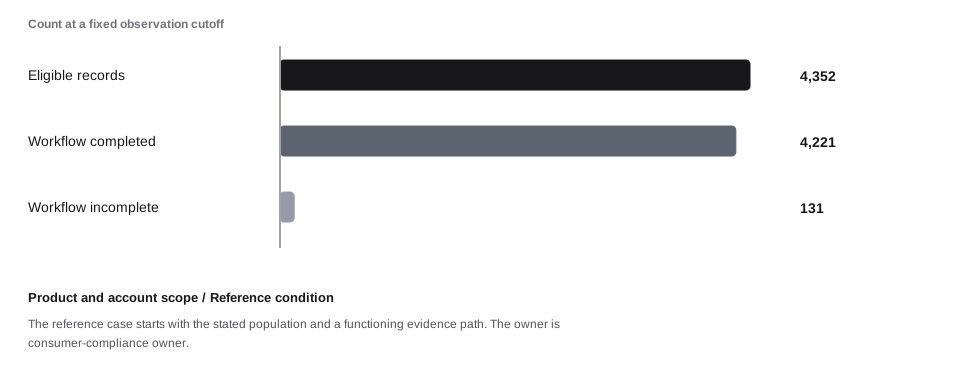
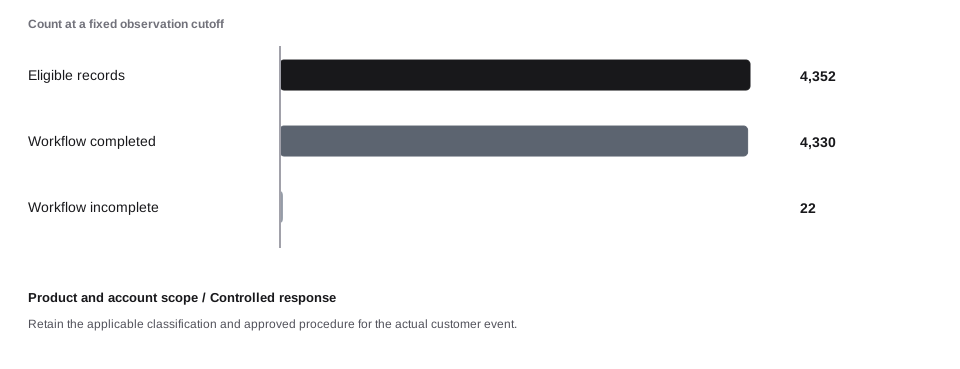
A concrete example. Consumer error-resolution duties depend on the product, account, activity, and facts. A shared payment interface may serve several different legal scopes. The case identifies 4,352 eligible records from a source population of 6,800. The required workflow completes for 4,221, but 63 completed records miss the illustrative internal target. Another 131 remain incomplete. Communication evidence covers 4,179 generated notices. Scope, completion, timeliness, and delivery are four separate properties of the customer outcome.
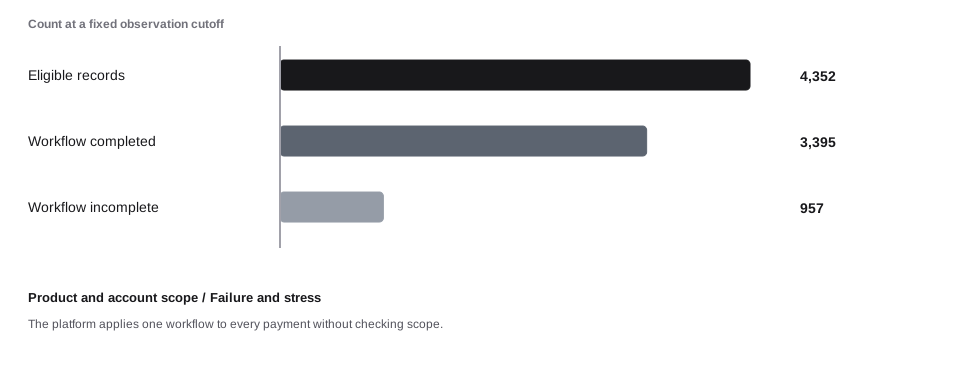
When the assumption fails. The platform applies one workflow to every payment without checking scope. Retain the applicable classification and approved procedure for the actual customer event. The following worked sequence shows the reference condition, a stress condition, and a response condition with explicit synthetic data. These are comparative assumptions, not measured causal effects.
Consumer error-resolution duties depend on the product, account, activity, and facts. A shared payment interface may serve several different legal scopes.
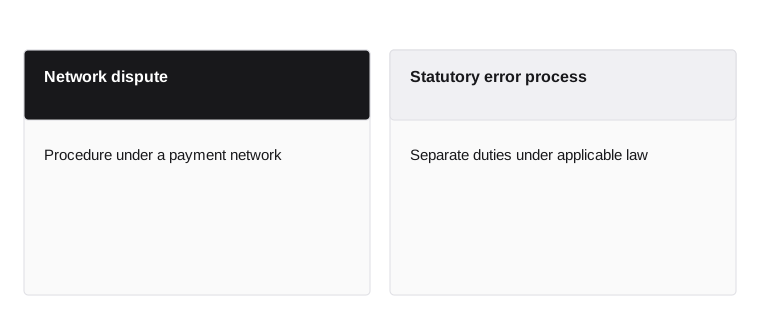
- Network dispute
- Procedure under a payment network
- Statutory error process
- Separate duties under applicable law
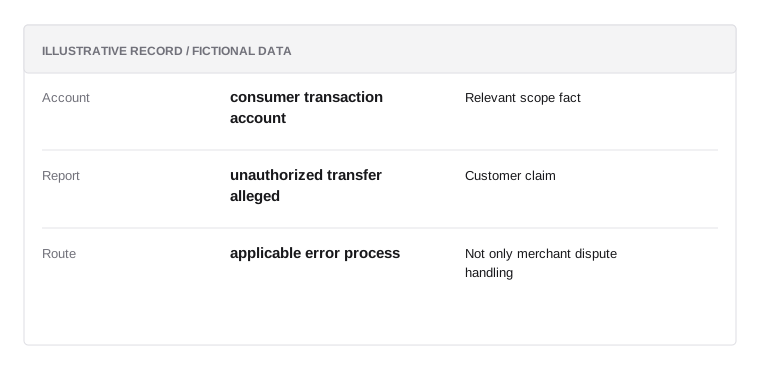
Error intake
Illustrative data; not a real customer record or a prescribed policy.
- Accountconsumer transaction account
Relevant scope fact
- Reportunauthorized transfer alleged
Customer claim
- Routeapplicable error process
Not only merchant dispute handling
The customer need not name the regulation
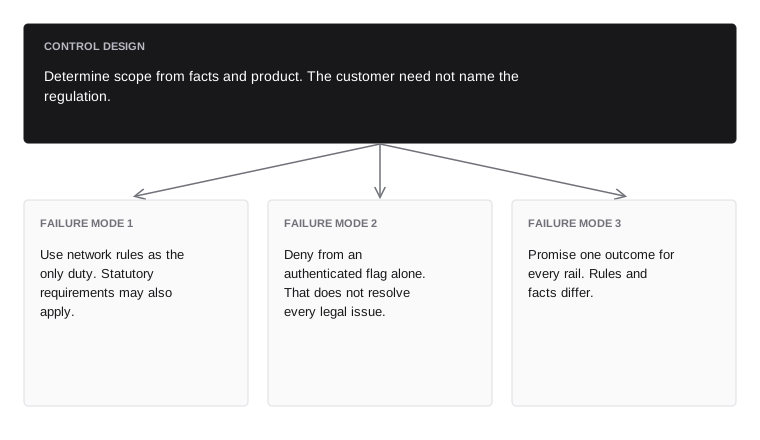
Determine scope from facts and product. The customer need not name the regulation.
- Failure mode 1avoid
- Use network rules as the only duty. Statutory requirements may also apply.
- Failure mode 2avoid
- Deny from an authenticated flag alone. That does not resolve every legal issue.
- Failure mode 3avoid
- Promise one outcome for every rail. Rules and facts differ.
Capture the report without friction
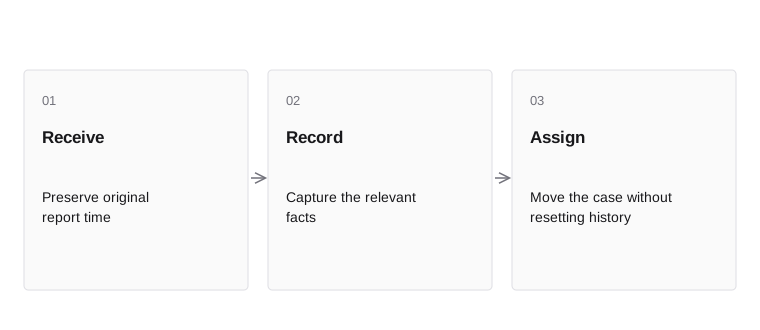
- ReceivePreserve original report time
- RecordCapture the relevant facts
- AssignMove the case without resetting history
A customer report may arrive by phone, message, branch, or another supported channel. Preserve the original time and content. Internal reassignment should not erase the report date or force the customer to restart the process.
Use a shared reference and a clear acknowledgment. Collect the information necessary for investigation while following the applicable requirements for any written confirmation or documentation. Do not create extra intake barriers merely because the case tool prefers a complete form. The workflow should distinguish missing helpful evidence from a report that has already triggered a duty.
Customer language rarely arrives in the institution’s preferred taxonomy. A person may say “the money vanished” when the issue involves a duplicate transfer, an unexpected amount, a pending hold, or an unfamiliar payment. Intake should preserve the customer’s statement and collect the facts needed for classification. It should not require the person to know the legal label before the institution can recognize a potentially covered issue.
Make the handoff durable. A chat transcript, telephone note, or support ticket may contain information that starts an important process. Define how that information reaches the responsible team and how the original receipt time is preserved. Routing delays should not silently reset the institution’s understanding of when it learned about the report.
Inside the mechanism. Intake should identify the customer and the alleged event with the information reasonably available. Preserve the receipt time and the original allegation. Do not require an internal reason code from the customer before routing the matter. In the Regulation E error-resolution framework, a qualifying oral notice can start the process; waiting for a written statement must not become an unsupported reason to delay investigation.
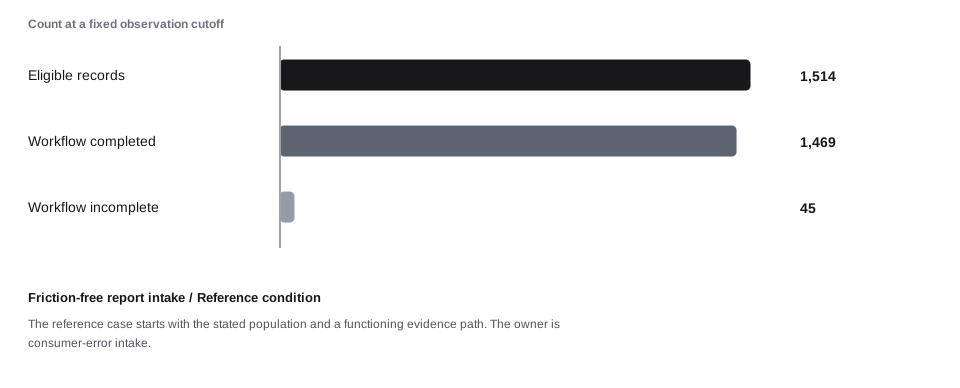
A concrete example. Customers describe what happened in their own words. The institution needs to recognize a potentially covered issue without requiring the customer to know the legal category. The case identifies 1,514 eligible records from a source population of 1,720. The required workflow completes for 1,469, but 22 completed records miss the illustrative internal target. Another 45 remain incomplete. Communication evidence covers 1,454 generated notices. Scope, completion, timeliness, and delivery are four separate properties of the customer outcome.
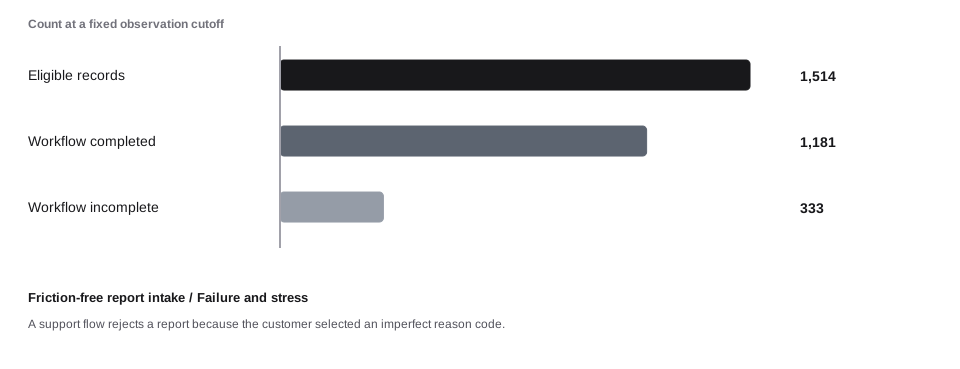
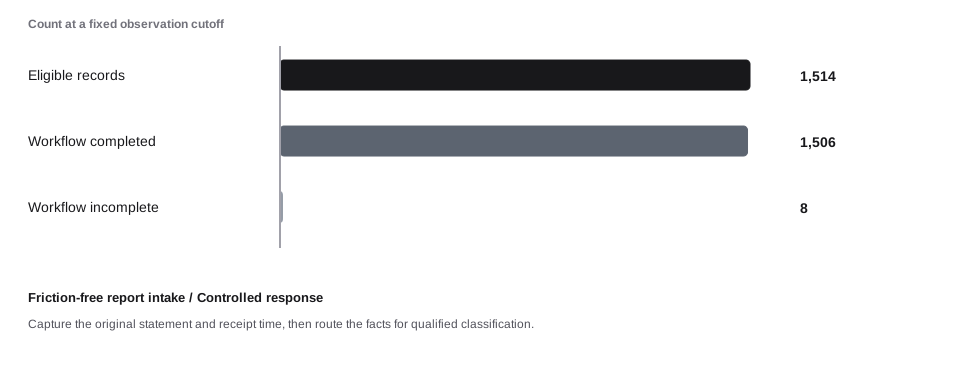
When the assumption fails. A support flow rejects a report because the customer selected an imperfect reason code. Capture the original statement and receipt time, then route the facts for qualified classification. The following worked sequence shows the reference condition, a stress condition, and a response condition with explicit synthetic data. These are comparative assumptions, not measured causal effects.
Customers describe what happened in their own words. The institution needs to recognize a potentially covered issue without requiring the customer to know the legal category.
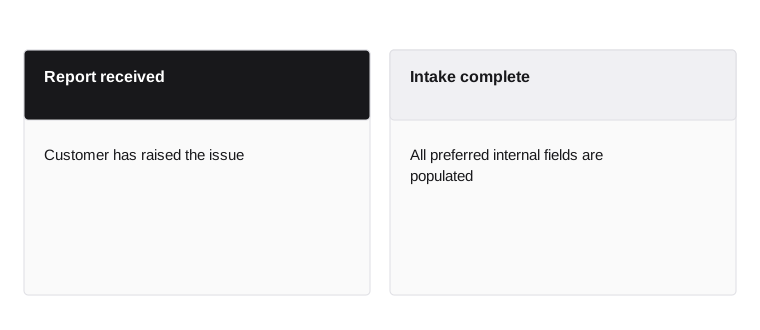
- Report received
- Customer has raised the issue
- Intake complete
- All preferred internal fields are populated
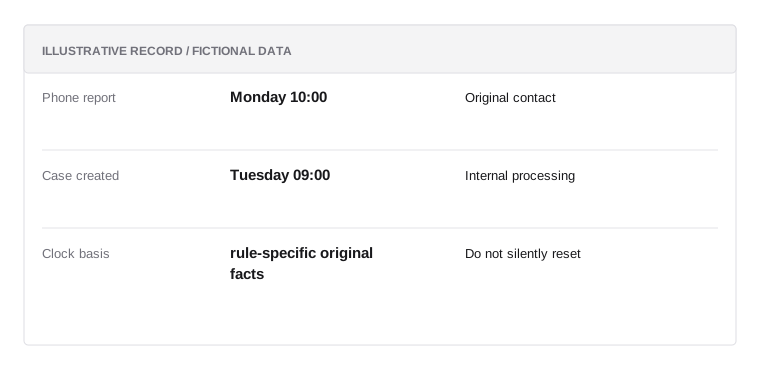
Channel handoff
Illustrative data; not a real customer record or a prescribed policy.
- Phone reportMonday 10:00
Original contact
- Case createdTuesday 09:00
Internal processing
- Clock basisrule-specific original facts
Do not silently reset
Internal tooling must not rewrite the customer event
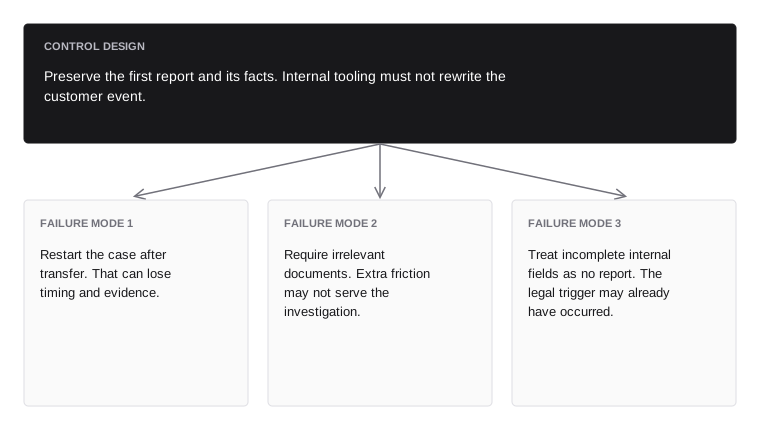
Preserve the first report and its facts. Internal tooling must not rewrite the customer event.
- Failure mode 1avoid
- Restart the case after transfer. That can lose timing and evidence.
- Failure mode 2avoid
- Require irrelevant documents. Extra friction may not serve the investigation.
- Failure mode 3avoid
- Treat incomplete internal fields as no report. The legal trigger may already have occurred.
Investigate the actual alleged error
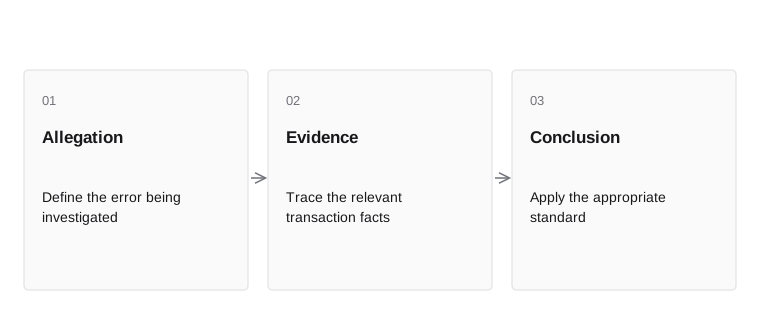
- AllegationDefine the error being investigated
- EvidenceTrace the relevant transaction facts
- ConclusionApply the appropriate standard
The investigation should address the reported issue: unauthorized use, wrong amount, duplicate transfer, missing credit, or another covered error. Authentication, device, and merchant records are evidence with limits. A correct password does not answer every question about authority or deception.
Build an evidence plan specific to the allegation. For a duplicate transfer, compare logical operation identifiers and ledger entries. For a missing credit, trace settlement and posting. Keep the conclusion tied to the facts and applicable standards. Avoid using a generic system worked response when the relevant records were never examined.
Inside the mechanism. Investigate the alleged error using relevant evidence rather than a proxy for customer credibility. Authentication logs, device history, transfer records, and customer statements can answer different parts of the factual question. A successful login alone does not resolve every possible error. Keep the allegation, findings, unresolved conflicts, and determination distinct, and preserve the basis for the resulting financial action.
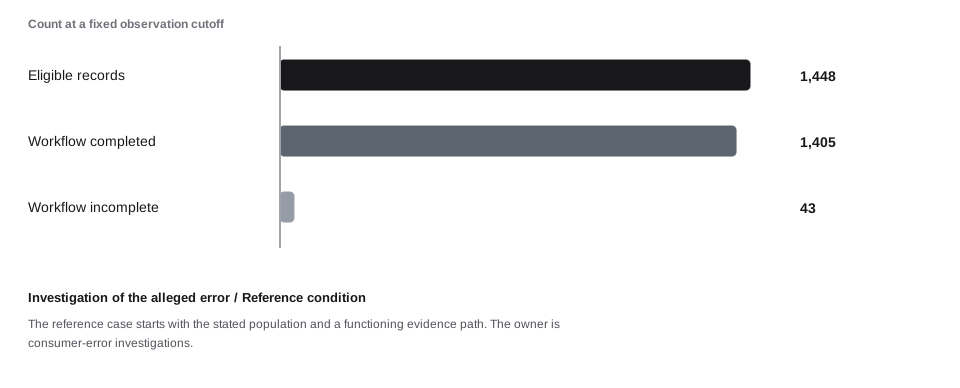
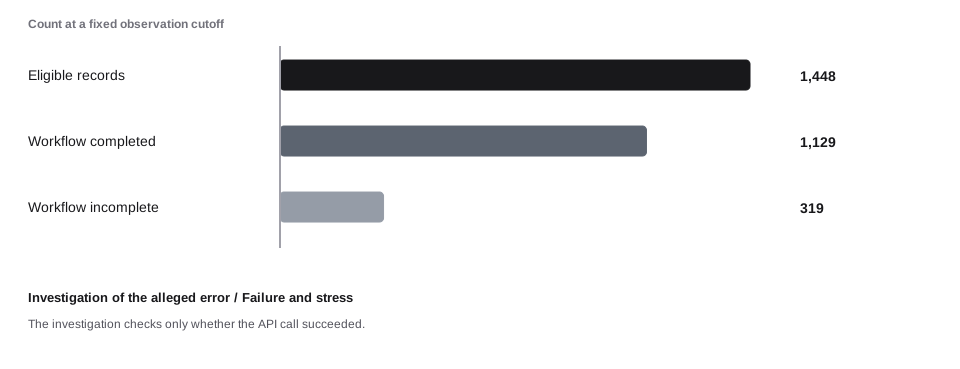
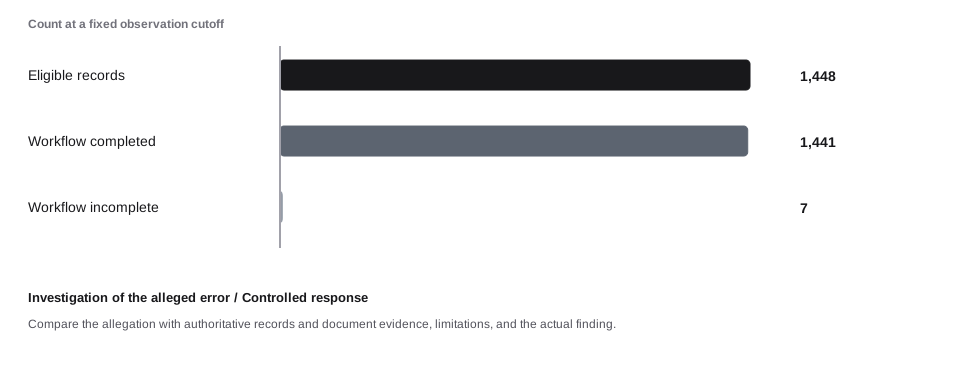
A concrete example. The review should address the error the customer actually reports. A technically valid message does not answer every claim about authorization, amount, timing, or duplication. The case identifies 1,448 eligible records from a source population of 1,540. The required workflow completes for 1,405, but 21 completed records miss the illustrative internal target. Another 43 remain incomplete. Communication evidence covers 1,391 generated notices. Scope, completion, timeliness, and delivery are four separate properties of the customer outcome.
When the assumption fails. The investigation checks only whether the API call succeeded. Compare the allegation with authoritative records and document evidence, limitations, and the actual finding. The following worked sequence shows the reference condition, a stress condition, and a response condition with explicit synthetic data. These are comparative assumptions, not measured causal effects.
The review should address the error the customer actually reports. A technically valid message does not answer every claim about authorization, amount, timing, or duplication.
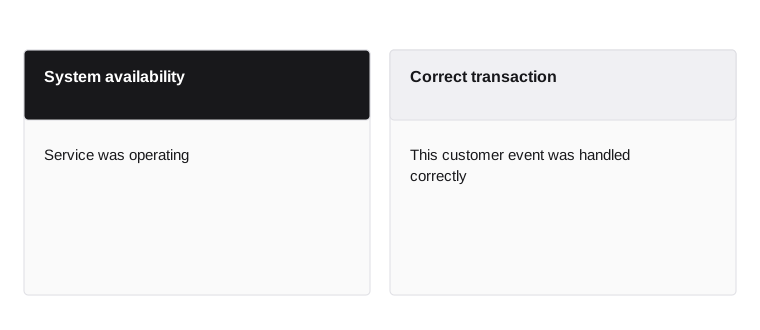
- System availability
- Service was operating
- Correct transaction
- This customer event was handled correctly
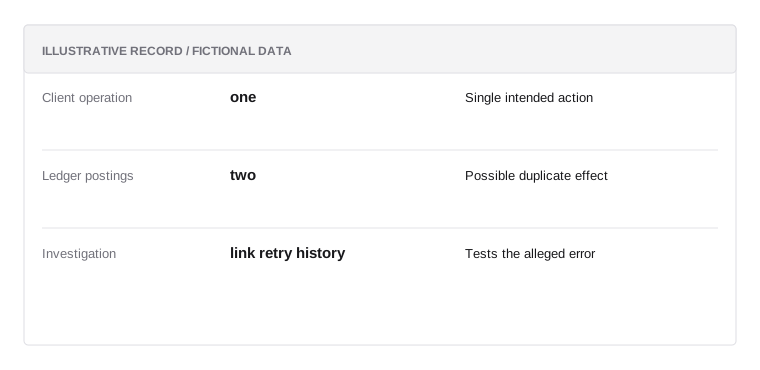
Duplicate-transfer evidence
Illustrative data; not a real customer record or a prescribed policy.
- Client operationone
Single intended action
- Ledger postingstwo
Possible duplicate effect
- Investigationlink retry history
Tests the alleged error
Generic uptime evidence does not resolve it
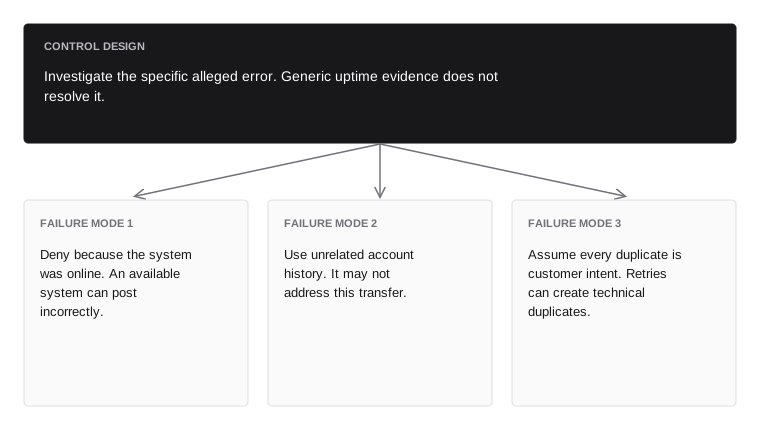
Investigate the specific alleged error. Generic uptime evidence does not resolve it.
- Failure mode 1avoid
- Deny because the system was online. An available system can post incorrectly.
- Failure mode 2avoid
- Use unrelated account history. It may not address this transfer.
- Failure mode 3avoid
- Assume every duplicate is customer intent. Retries can create technical duplicates.
Model credits notices and final outcomes
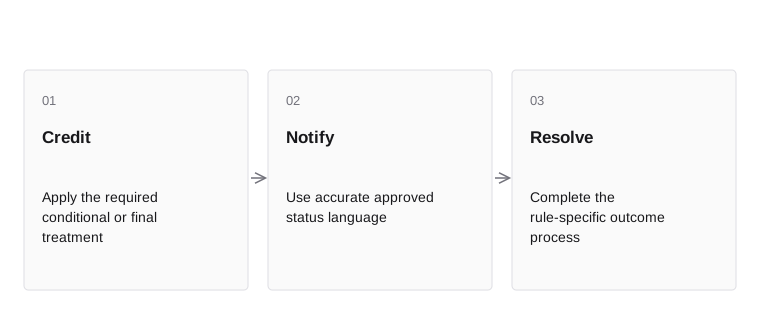
- CreditApply the required conditional or final treatment
- NotifyUse accurate approved status language
- ResolveComplete the rule-specific outcome process
Some error-resolution processes can require provisional credit under defined conditions. Provisional and final credit are different states. The applicable deadlines, exceptions, notices, and reversal conditions must come from the relevant rule and facts.
Use a ledger-backed workflow that records the type of credit and links it to the case. Customer messaging should explain the actual status without promising finality prematurely. If a later change is permitted, apply the required process and preserve the evidence. An operational shortcut that edits a balance without a linked case creates confusion and weakens review.
Financial adjustments and notices must remain consistent with the case outcome. If a provisional credit is used under the applicable process, the ledger should identify its nature and link it to the investigation. A later change requires the approved transition, customer communication, and any applicable timing or access treatment. Store actual amounts and dates rather than reconstructing them from ticket comments. Support can then explain what the customer can use now and what remains subject to the investigation.
Inside the mechanism. Model provisional credit, final correction, notice generation, notice delivery, and any permitted reversal as separate events. Their clocks and conditions depend on the applicable rule and facts. A case closure should not automatically reverse a credit or imply notice delivery. Reconcile the customer balance and the communication record to the final determination, including any fees or other effects that require correction.
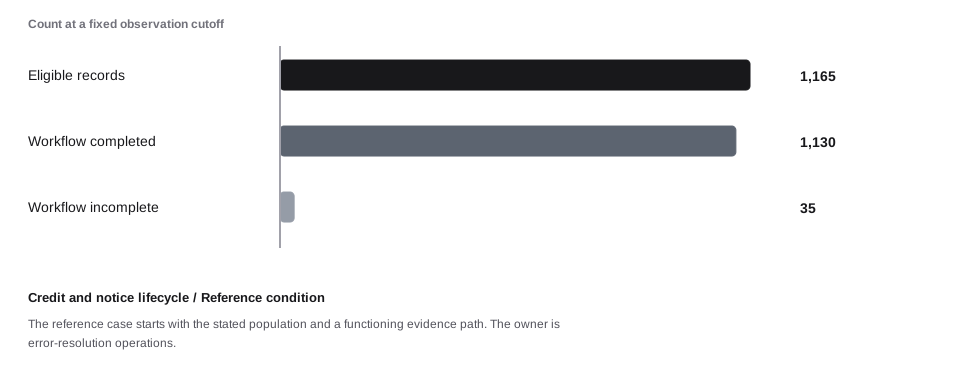
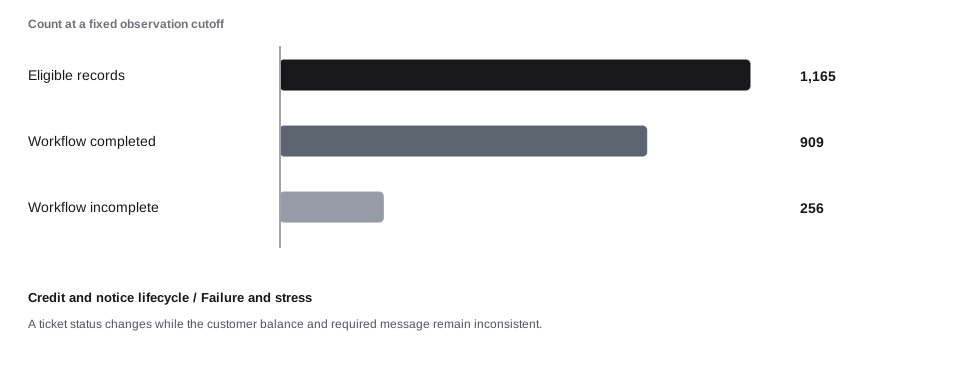
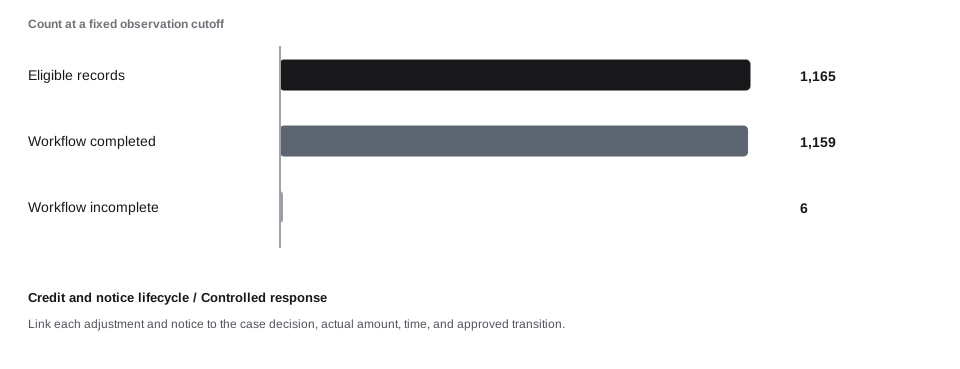
A concrete example. A case can involve provisional or final financial adjustments and communications under the applicable process. The ledger and support state must tell the same story. The case identifies 1,165 eligible records from a source population of 1,280. The required workflow completes for 1,130, but 17 completed records miss the illustrative internal target. Another 35 remain incomplete. Communication evidence covers 1,119 generated notices. Scope, completion, timeliness, and delivery are four separate properties of the customer outcome.
When the assumption fails. A ticket status changes while the customer balance and required message remain inconsistent. Link each adjustment and notice to the case decision, actual amount, time, and approved transition. The following worked sequence shows the reference condition, a stress condition, and a response condition with explicit synthetic data. These are comparative assumptions, not measured causal effects.
A case can involve provisional or final financial adjustments and communications under the applicable process. The ledger and support state must tell the same story.
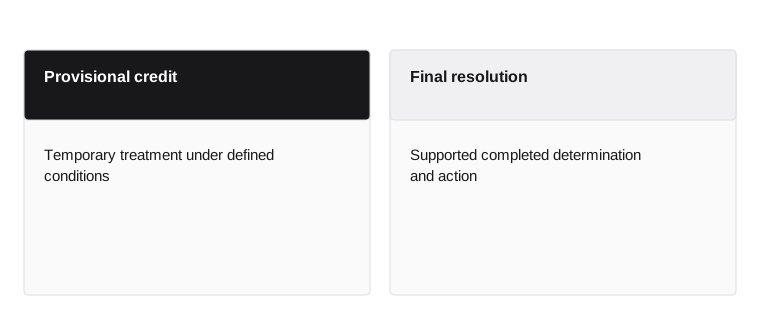
- Provisional credit
- Temporary treatment under defined conditions
- Final resolution
- Supported completed determination and action
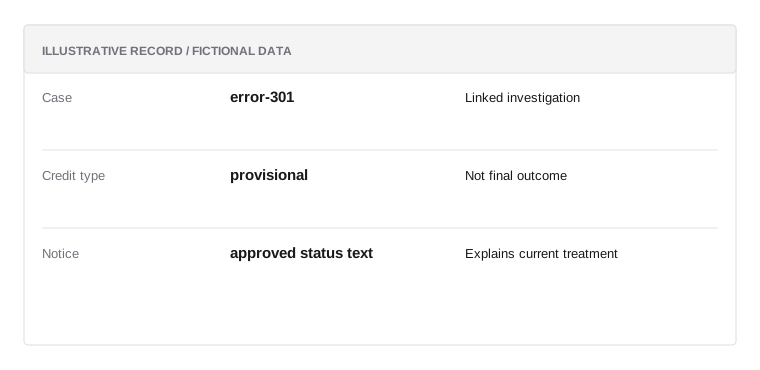
Credit record
Illustrative data; not a real customer record or a prescribed policy.
- Caseerror-301
Linked investigation
- Credit typeprovisional
Not final outcome
- Noticeapproved status text
Explains current treatment
Customer understanding and ledger treatment depend on it
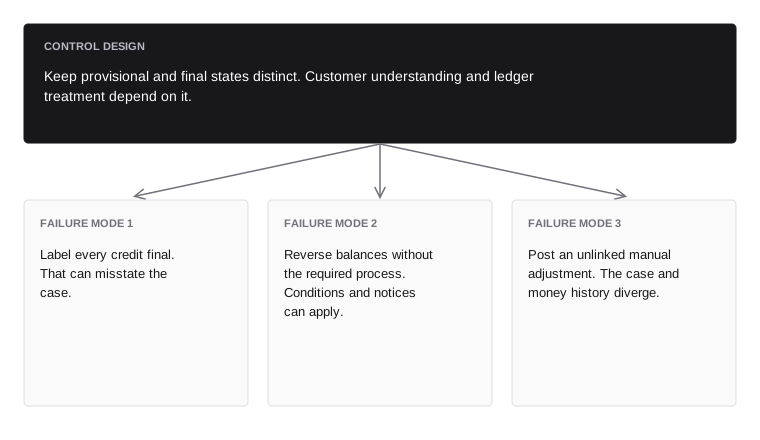
Keep provisional and final states distinct. Customer understanding and ledger treatment depend on it.
- Failure mode 1avoid
- Label every credit final. That can misstate the case.
- Failure mode 2avoid
- Reverse balances without the required process. Conditions and notices can apply.
- Failure mode 3avoid
- Post an unlinked manual adjustment. The case and money history diverge.
Use complaints as product evidence
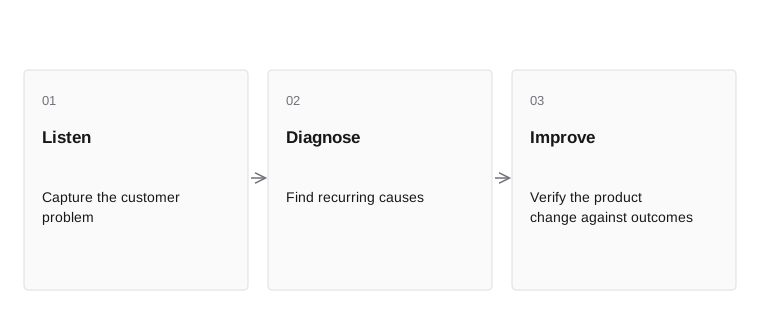
- ListenCapture the customer problem
- DiagnoseFind recurring causes
- ImproveVerify the product change against outcomes
Complaints can reveal confusing descriptions, broken cancellation, inaccessible recovery, delayed funds, or unfair treatment. Categorize the issue and root cause without treating every complaint as proof of wrongdoing.
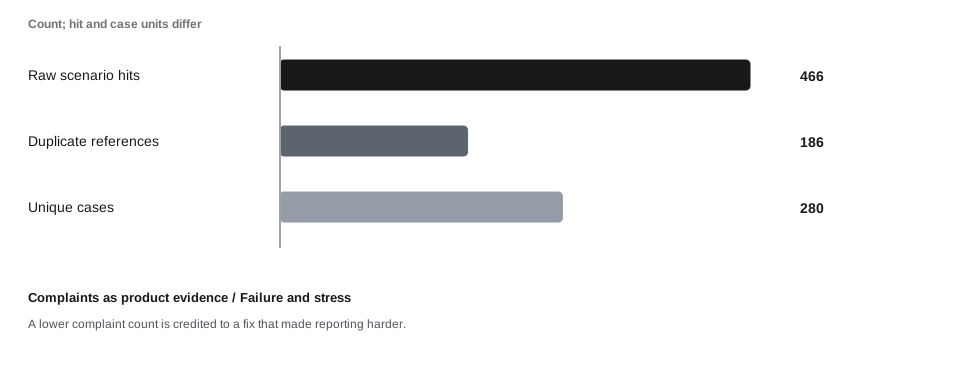
Analyze rates with relevant denominators and compare themes across channels. A drop in complaints may reflect a harder contact path rather than better service. Feed confirmed patterns into product and control changes. Track whether the change reduces the underlying harm, not only the number of messages reaching the queue.
Inside the mechanism. Complaints can reveal a product defect before aggregate loss metrics move. Group supported themes by journey step, product version, partner, and failure mechanism. Keep serious individual cases visible even when their count is small. A rising complaint rate may also reflect easier reporting, so interpret it with exposure and channel changes. The useful output is a verified product or process correction, not only a lower complaint count.
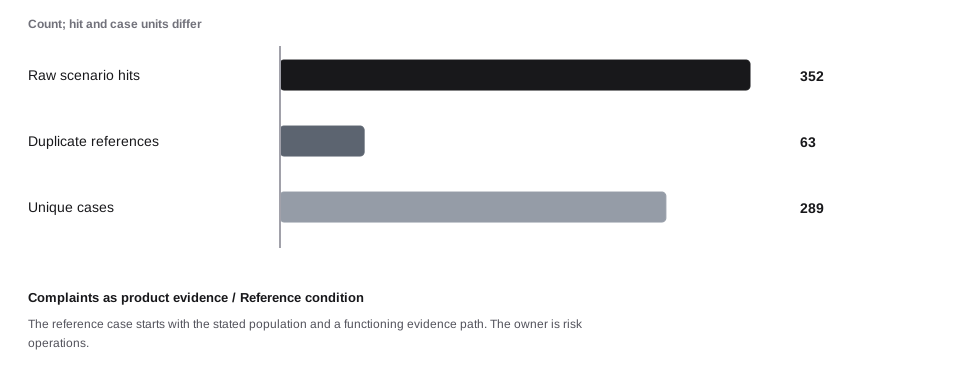
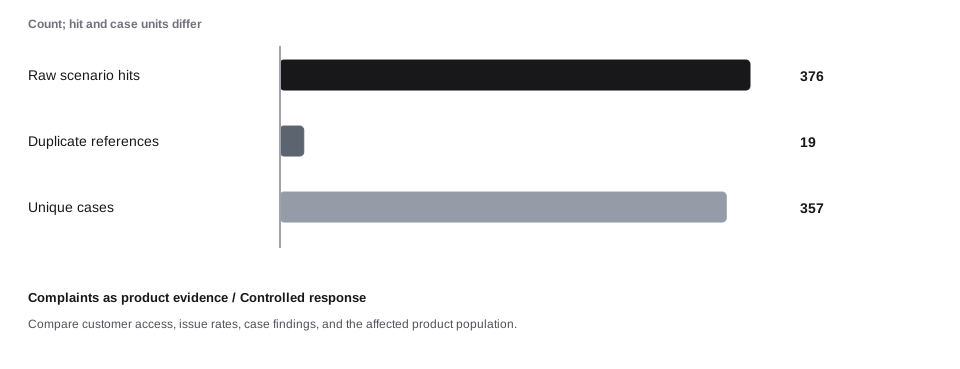
A concrete example. Repeated complaints can reveal confusing labels, failed handoffs, or systematic defects. The count needs context about exposure, channel access, and classification quality. The daily source population is 6,200 items, but 124 are outside the completed monitoring run. The included population creates 352 hits and 289 unique cases. With 52 cases already open and capacity for 290, the queue closes at 51. Coverage, duplicate work, and staffing are separate causes; reducing one number does not prove that the overall control improved.
When the assumption fails. A lower complaint count is credited to a fix that made reporting harder. Compare customer access, issue rates, case findings, and the affected product population. The following worked sequence shows the reference condition, a stress condition, and a response condition with explicit synthetic data. These are comparative assumptions, not measured causal effects.
Repeated complaints can reveal confusing labels, failed handoffs, or systematic defects. The count needs context about exposure, channel access, and classification quality.
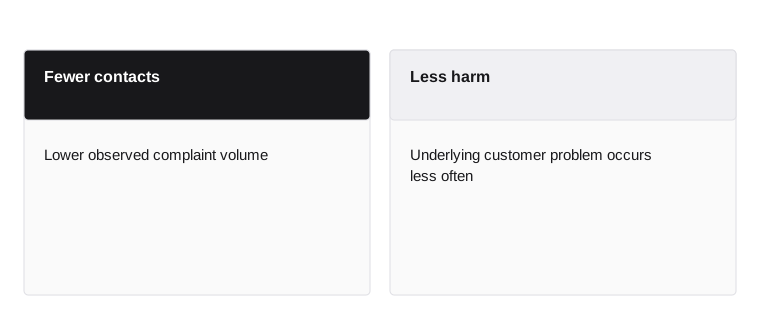
- Fewer contacts
- Lower observed complaint volume
- Less harm
- Underlying customer problem occurs less often
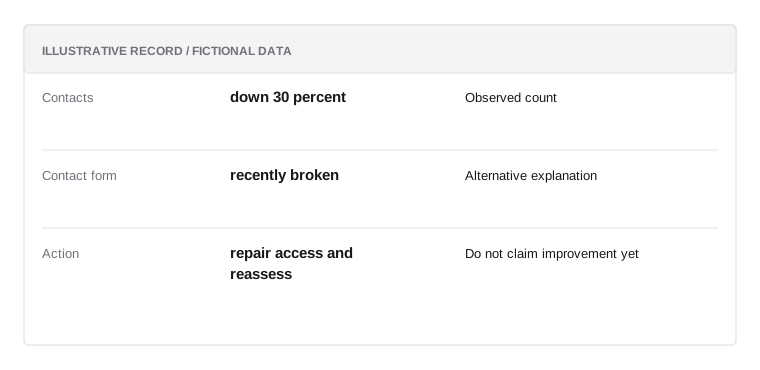
Complaint trend
Illustrative data; not a real customer record or a prescribed policy.
- Contactsdown 30 percent
Observed count
- Contact formrecently broken
Alternative explanation
- Actionrepair access and reassess
Do not claim improvement yet
Lower volume can hide a broken channel
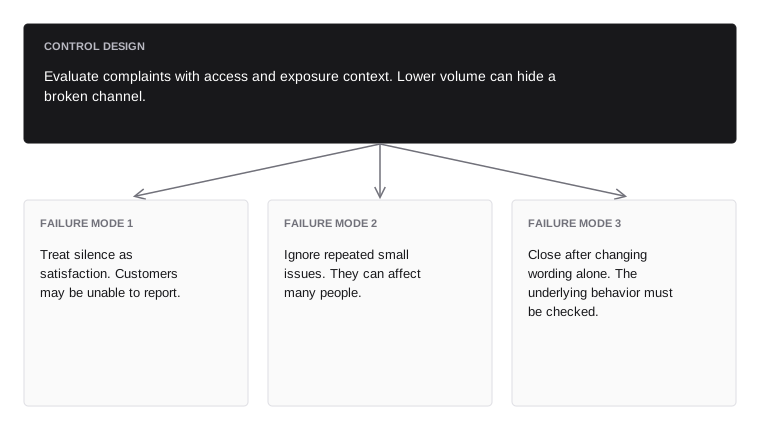
Evaluate complaints with access and exposure context. Lower volume can hide a broken channel.
- Failure mode 1avoid
- Treat silence as satisfaction. Customers may be unable to report.
- Failure mode 2avoid
- Ignore repeated small issues. They can affect many people.
- Failure mode 3avoid
- Close after changing wording alone. The underlying behavior must be checked.
Chapter connections
This chapter builds on Compliance architecture and policy as code. Continue with Fair lending, explainability, and adverse action to follow the next part of the system. Use the glossary for terminology and risk mathematics for formulas and worked calculations.