
Merchant obligation ledger
Record balanced obligations
One purchase, several independent states
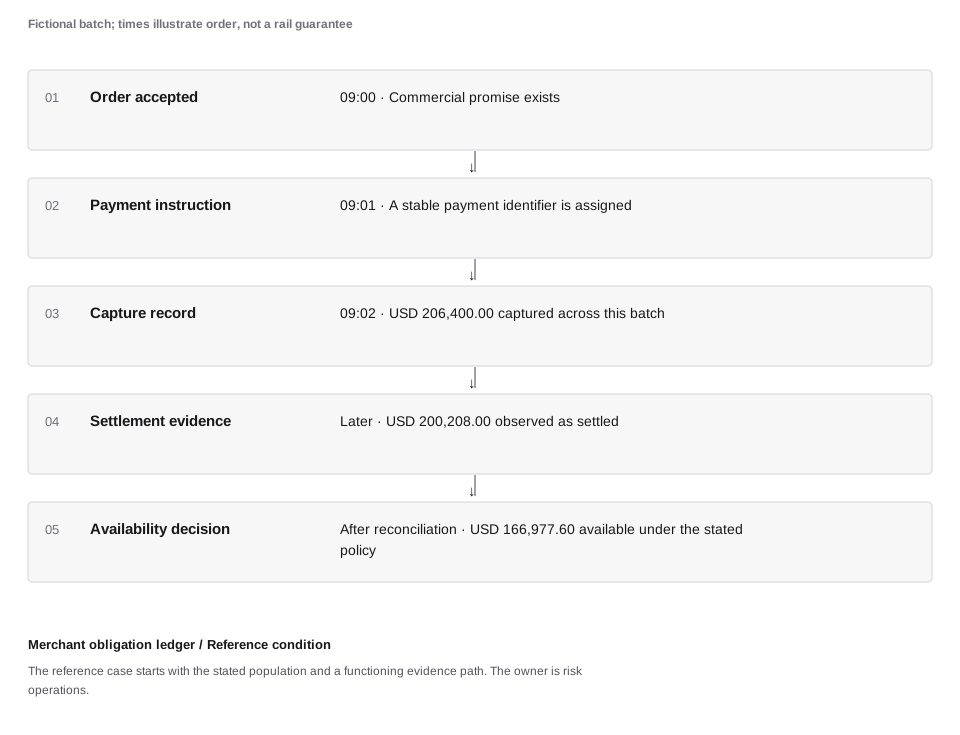
This case concerns record balanced obligations. A success response, a completed capture, and settlement evidence are different observations. The sequence gives each event its own record instead of forcing all of them into one status field.
Figure data and text version
| Event | Time | Recorded fact |
|---|---|---|
| Order accepted | 09:00 | Commercial promise exists |
| Payment instruction | 09:01 | A stable payment identifier is assigned |
| Capture record | 09:02 | USD 206,400.00 captured across this batch |
| Settlement evidence | Later | USD 200,208.00 observed as settled |
| Availability decision | After reconciliation | USD 166,977.60 available under the stated policy |
The ledger records what the platform owes and the assets supporting those obligations. A balanced entry can still encode an incorrect external assumption.
The reference case starts with the stated population and a functioning evidence path. The owner is risk operations.
All amounts, rates, capacity limits, and outcomes in this case are synthetic. The three conditions are separate assumptions for comparison. A better result in the response condition is not measured proof that the proposed control causes that improvement. The figures expose the calculation and its limits; a real deployment needs its own evidence.
Read the result
The batch begins with $215,000 of instructions and $206,400.00 of captured value. At the observation cutoff, $6,192.00 remains pending. After the stated refunds, fees, and restrictions, $166,977.60 is available for payout. The unresolved instruction count is 2; an unknown external result is handled separately from a known decline.
Model inputs and calculated values
Inputs below are the case-specific values. Each figure states the condition-specific assumptions and units used in its calculation. Calculated values are rounded for display.
| Input | Value |
|---|---|
| gross | 215,000 |
| population | 2,200 |
| feeRate | 0.021 |
| Calculated value | Result |
|---|---|
| gross | 215,000 |
| capture | 206,400 |
| pending | 6,192 |
| refund | 8,256 |
| fee | 4,334.4 |
| reserve | 20,640 |
| available | 166,977.6 |
| cash | 187,617.6 |
From captured value to available payout
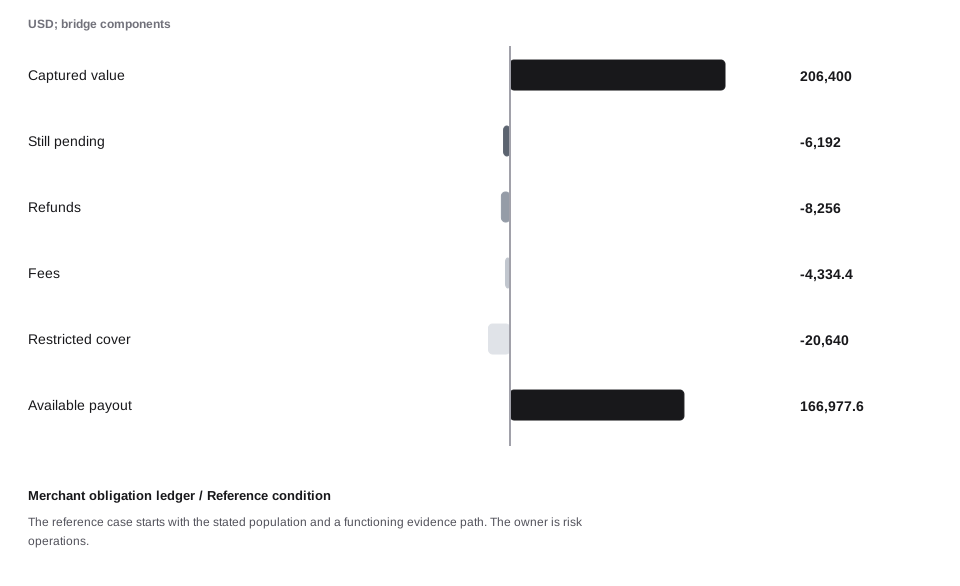
Captured value of $206,400.00 becomes $166,977.60 available after pending settlement, refunds, fees, and eligible restrictions. This is a financial bridge: the bars display each component’s amount, not a cumulative balance. Reserves are restrictions on availability, not an additional fee.
Figure data and text version
| Component | USD |
|---|---|
| Captured value | 206,400 |
| Still pending | -6,192 |
| Refunds | -8,256 |
| Fees | -4,334.4 |
| Restricted cover | -20,640 |
| Available payout | 166,977.6 |
Balanced postings are necessary but not sufficient
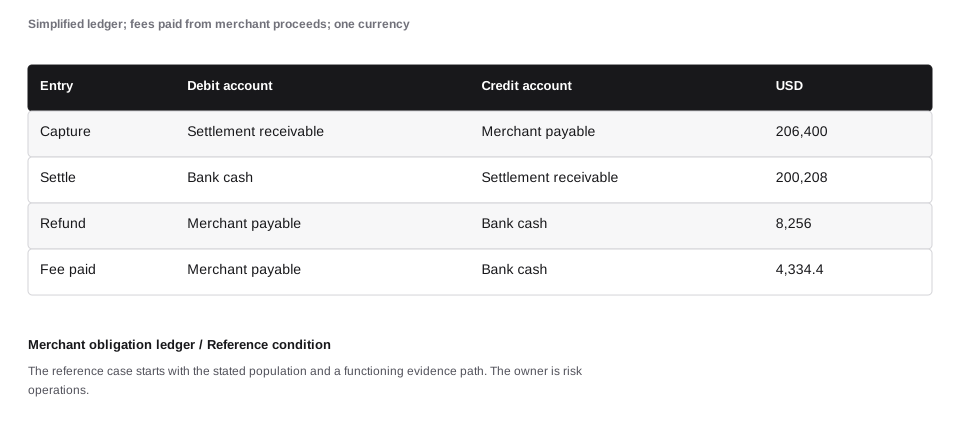
The first entry records a settlement receivable and a merchant obligation for $206,400.00. Later entries move the observed settled amount to cash and record fees and refunds. Debits equal credits within each posting; external evidence is still required to establish that settlement occurred.
Figure data and text version
| Entry | Debit account | Credit account | USD |
|---|---|---|---|
| Capture | Settlement receivable | Merchant payable | 206,400 |
| Settle | Bank cash | Settlement receivable | 200,208 |
| Refund | Merchant payable | Bank cash | 8,256 |
| Fee paid | Merchant payable | Bank cash | 4,334.4 |
Recorded value and usable value differ
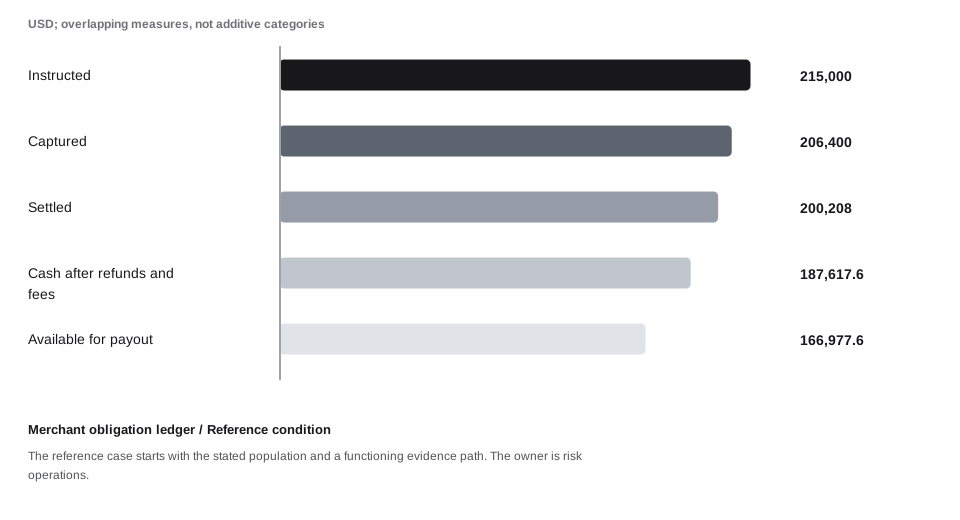
Gross instructions total $215,000, but only $206,400.00 has been captured. Pending value cannot be counted as settled cash in this illustration. The final availability decision also includes the stated restriction. These amounts are different views of one batch, so do not add the bars together.
Figure data and text version
| View | USD |
|---|---|
| Instructed | 215,000 |
| Captured | 206,400 |
| Settled | 200,208 |
| Cash after refunds and fees | 187,617.6 |
| Available for payout | 166,977.6 |
Timing of receipts and uses
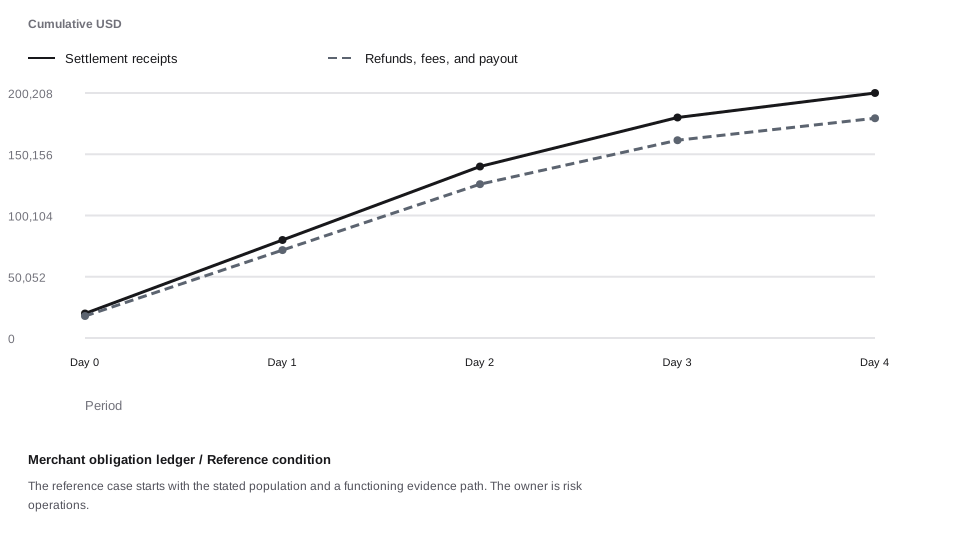
The synthetic ladder stages both receipts and uses over five days. Its purpose is to make timing explicit. The fractions are illustrative scheduling assumptions, not observed payment-rail behavior. A positive total over the full period does not prove that funds are available at every earlier cutoff. Horizontal positions are the labeled observations or scenarios; equal spacing does not imply equal numerical increments.
Figure data and text version
| Period | Cumulative receipts | Cumulative uses |
|---|---|---|
| Day 0 | 20,020.8 | 17,956.8 |
| Day 1 | 80,083.2 | 71,827.2 |
| Day 2 | 140,145.6 | 125,697.6 |
| Day 3 | 180,187.2 | 161,611.2 |
| Day 4 | 200,208 | 179,568 |
A reconciliation identity with explicit components
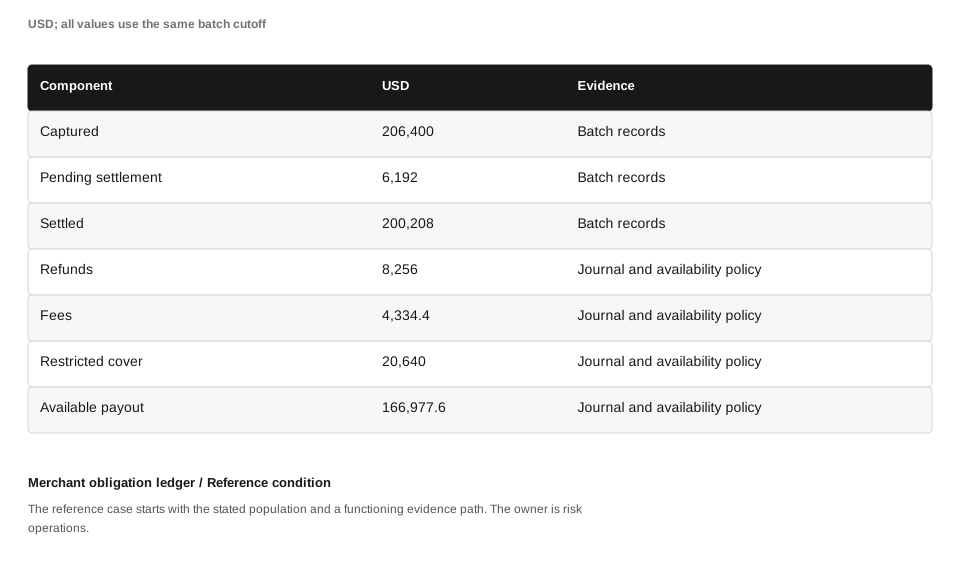
The identity is capture = pending + refunds + fees + restricted cover + available payout, provided cash after fees and refunds is nonnegative. Here both sides equal $206,400.00. The identity locates differences; it cannot validate an incorrect input source.
Figure data and text version
| Component | USD | Evidence |
|---|---|---|
| Captured | 206,400 | Batch records |
| Pending settlement | 6,192 | Batch records |
| Settled | 200,208 | Batch records |
| Refunds | 8,256 | Journal and availability policy |
| Fees | 4,334.4 | Journal and availability policy |
| Restricted cover | 20,640 | Journal and availability policy |
| Available payout | 166,977.6 | Journal and availability policy |
One business action can produce several messages
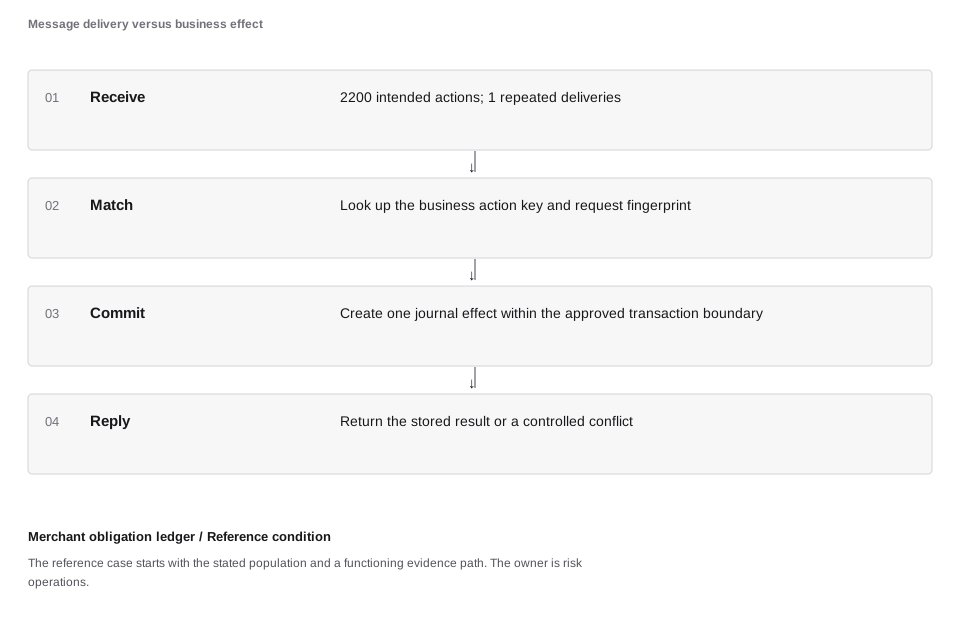
The batch contains 2,200 intended actions and 1 duplicate attempts in this teaching trace. A stable action key identifies the business instruction. A transport identifier identifies one delivery attempt. Treating both identifiers as interchangeable is the route to duplicate financial effects.
Figure data and text version
| Step | Contract |
|---|---|
| Receive | 2200 intended actions; 1 repeated deliveries |
| Match | Look up the business action key and request fingerprint |
| Commit | Create one journal effect within the approved transaction boundary |
| Reply | Return the stored result or a controlled conflict |
Unknown outcomes need their own queue
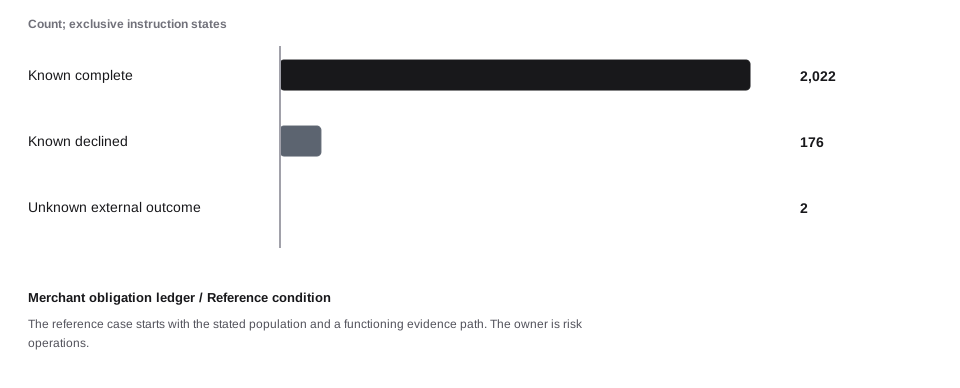
2 of the 2200 instructions have an unknown external outcome at the cutoff. They are not automatically failed. The remaining counts are constructed disjoint states for this example and sum to the total number of intended actions.
Figure data and text version
| State | Count |
|---|---|
| Known complete | 2,022 |
| Known declined | 176 |
| Unknown external outcome | 2 |
A money record carries units and identity
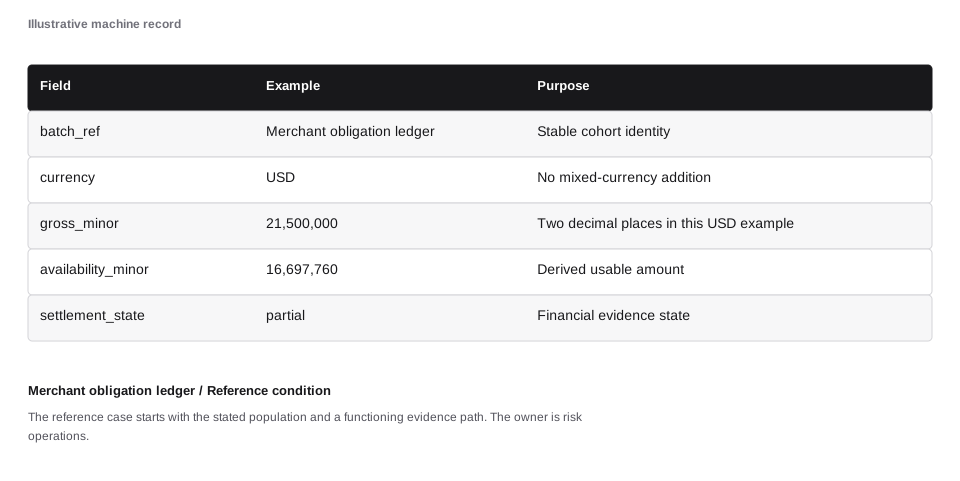
An integer amount is meaningful only with its currency and exponent convention. A provider identifier is meaningful only with its namespace. The data contract keeps the action identity, financial amount, and external observation separate so they can be reconciled.
Figure data and text version
| Field | Example | Purpose |
|---|---|---|
| batch_ref | Merchant obligation ledger | Stable cohort identity |
| currency | USD | No mixed-currency addition |
| gross_minor | 21,500,000 | Two decimal places in this USD example |
| availability_minor | 16,697,760 | Derived usable amount |
| settlement_state | partial | Financial evidence state |
Pending settlement changes available cash
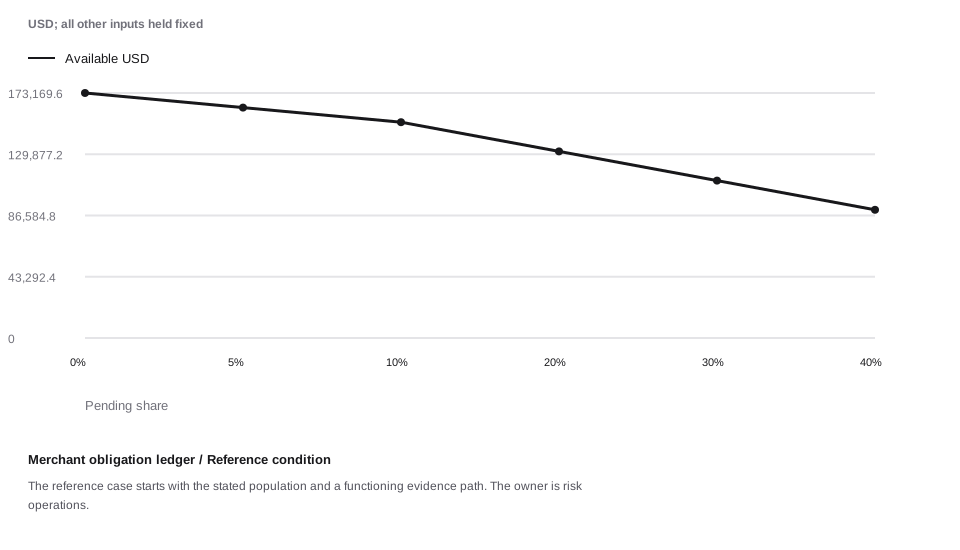
This sensitivity calculation holds capture, refunds, fees, and reserve fixed, then varies the pending share. Available payout is floored at zero. The curve describes the stated formula, not a recommended payout hold or a forecast of return timing. Horizontal positions are the labeled observations or scenarios; equal spacing does not imply equal numerical increments.
Figure data and text version
| Pending share | Available USD |
|---|---|
| 0% | 173,169.6 |
| 5% | 162,849.6 |
| 10% | 152,529.6 |
| 20% | 131,889.6 |
| 30% | 111,249.6 |
| 40% | 90,609.6 |
Economic claims after the event
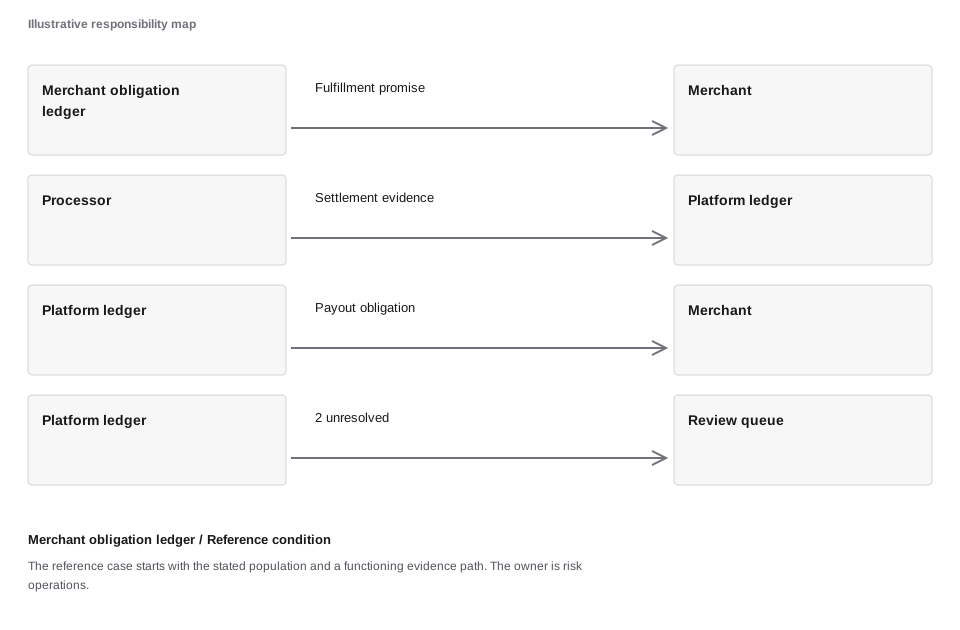
The edges label obligations or evidence relationships. They do not assert that the named firm performs every legal role in every payment arrangement. The purpose is to keep the commercial promise, settlement evidence, and payout obligation visible at the same time.
Figure data and text version
| From | To | Relationship |
|---|---|---|
| Merchant obligation ledger | Merchant | Fulfillment promise |
| Processor | Platform ledger | Settlement evidence |
| Platform ledger | Merchant | Payout obligation |
| Platform ledger | Review queue | 2 unresolved |
The close record preserves unresolved differences
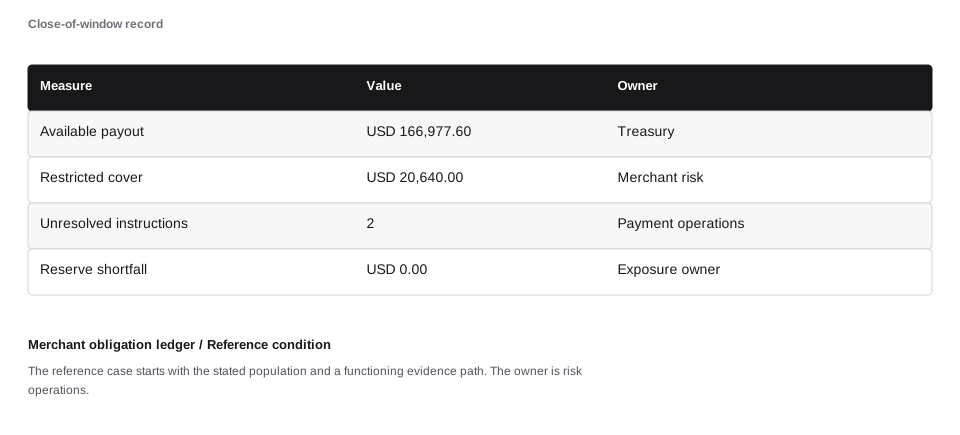
Available payout is $166,977.60; restricted cover is $20,640.00. The illustration also keeps 2 unresolved outcomes and $0.00 of any reserve shortfall visible. A close process should not hide unresolved items merely to force a report to balance.
Figure data and text version
| Measure | Value | Owner |
|---|---|---|
| Available payout | USD 166,977.60 | Treasury |
| Restricted cover | USD 20,640.00 | Merchant risk |
| Unresolved instructions | 2 | Payment operations |
| Reserve shortfall | USD 0.00 | Exposure owner |
Connect the result to the system
Use a receivable state and reconcile the bank and processor records.
Check the population, evidence, permitted action, and actual effect together. A balanced calculation can still use the wrong population; a successful response can still leave an unknown financial outcome. The case’s numerical result applies only to its stated assumptions.
Sources and further reading
The chapter sources support the concepts and scope. They do not prescribe the synthetic model rates.